
The Aeolic Order, or the Aeolian Order, represents an early, distinct architectural system of Classical antiquity that emerged in northwestern Asia Minor (Aeolis) during the 7th and 6th centuries BCE of the Archaic period. While traditionally considered a precursor or "Proto-Ionic" variant by some scholars, contemporary archaeological discourse often treats it as a parallel development or a specific regional manifestation of eastern Greek architectural styles.
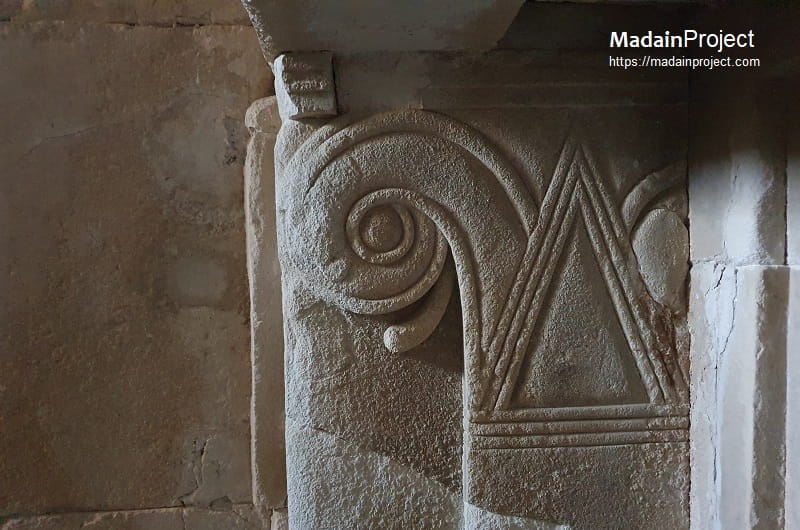
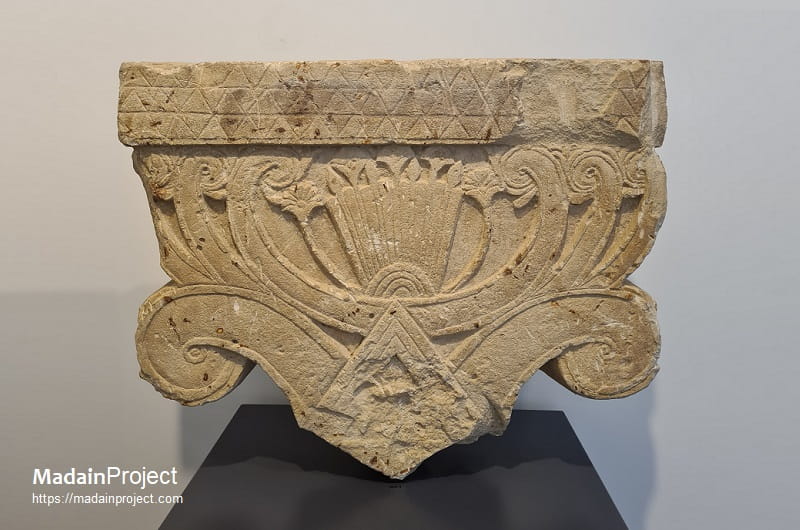
The order is fundamentally defined by its capital, which features two volutes springing vertically from the top of the shaft in opposite directions, rather than being linked by a horizontal band as seen in the standard Ionic order and a palmette rises between the two outer volutes.
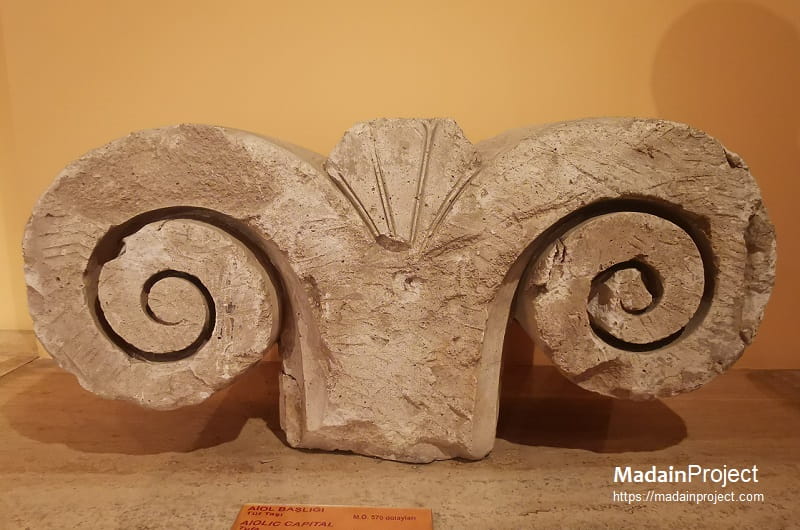
circa 1000-600 BCE
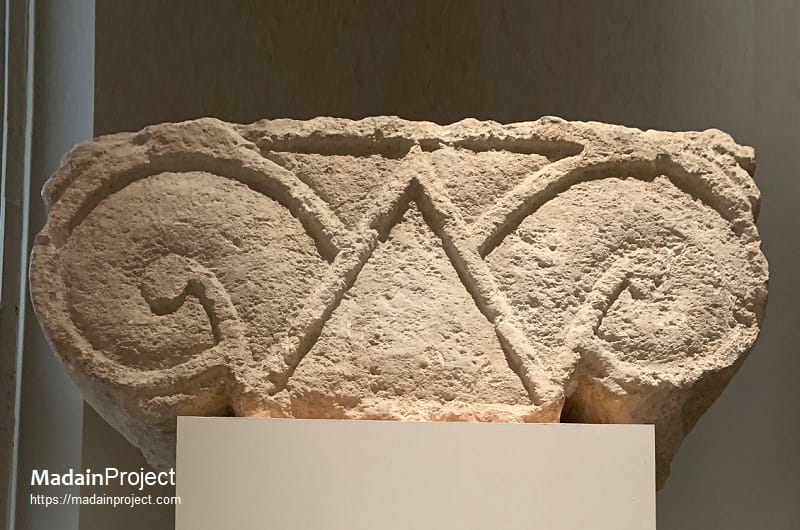
Proto-Aeolic Style (Iron Age Levant)
The architectural form conventionally termed “Proto-Aeolic” (also referred to as volute capitals or, less precisely, “Proto-Ionian”) designates a group of Iron Age stone capitals characterized by opposed volutes and a central palmette or triangular element. This terminology is modern and retrospective, and does not denote a direct or linear developmental stage of the later Greek Aeolic order. The earliest securely dated examples belong to the 9th century BCE and are associated with monumental architecture in the northern Kingdom of Israel, particularly during the reign of Omri. These capitals were employed in ashlar masonry—an architectural technique reserved for royal constructions—and appeared in palatial complexes and fortified city gates at sites such as Hazor, Megiddo, Samaria, and Dan, as well as on Mount Gerizim. In total, twenty-seven examples have been documented within the territorial sphere of the northern kingdom, present day Israel/Palestine.
By the late 8th to early 7th century BCE, the use of these capitals had expanded to neighboring polities. In the Kingdom of Judah, eleven examples have been identified in contexts including the City of David, Ramat Rahel, and the ‘Ain Joweizeh spring near al-Walaja. Contemporary finds in Transjordan demonstrate parallel adoption in the kingdoms of Moab and Ammon. Six capitals have been recovered from Moabite sites such as Mudeibi'a, while fragmentary remains from the Amman Citadel—ancient Rabbath Ammon—attest to their presence in Ammonite royal architecture. These examples are broadly dated to the same late 8th–early 7th century BCE horizon as those in the region of Judah.
Morphologically, these capitals exhibit variation within a shared schema. One well-documented specimen measures 110 × 28 × 60 cm and departs from later canonical forms by incorporating a triangular central element at the juncture of the volutes rather than a fully developed palmette. Such features underscore the experimental and regionally inflected character of the type. Their consistent association with elite architectural contexts suggests that they functioned as markers of political authority and royal patronage across the southern Levant.
Beyond the Levantine core, the distribution of Proto-Aeolic capitals indicates processes of cultural transmission rather than localized invention. Assyrian reliefs from Nineveh and Khorsabad, dating to the Neo-Assyrian period, depict architectural settings—often royal gardens or water installations—featuring comparable volute forms. Although these representations are not direct archaeological parallels, they demonstrate the broader Near Eastern currency of related ornamental motifs.
During the Archaic period (8th–6th centuries BCE), the form appears in Cypriot contexts, notably at Tamassos and Idalion, where it was incorporated into the architectural vocabulary of city-states as well as funerary architecture. Its westward diffusion is further attested, albeit sparsely, in Phoenician colonial settings in the western Mediterranean. Fragmentary remains from Cerro del Villar in southern Iberia have been dated on contextual grounds to between the early 8th and early 6th centuries BCE, indicating maritime transmission of the motif through Phoenician trade networks.
circa 600-500 BCE
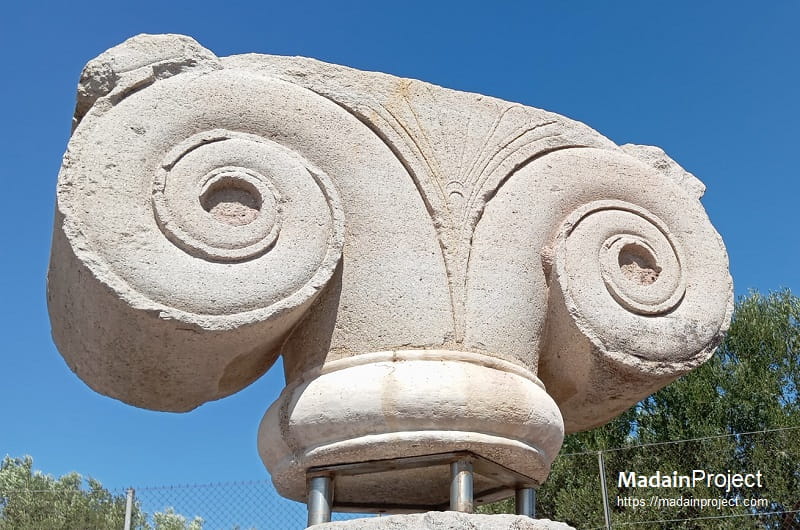
Aeolic Type (Archaic Greek)
The relationship between these Iron Age capitals and the later Archaic Greek Aeolic order is complex and non-linear. The proper Aeolic order emerged in northwestern Asia Minor, particularly in the region of Aeolis and on Lesbos, during the 6th century BCE. Its earliest surviving examples are roughly contemporaneous with the initial codification of the Ionic and Doric orders. Architectural remains from sites such as Klopedi and Mytilene illustrate the mature Aeolic form, which incorporates volutes and a central floral element in a more standardized composition. Although often interpreted as deriving from Syrian and Phoenician prototypes, this developmental trajectory is not universally accepted, and some scholars argue instead for parallel evolution within a shared eastern Mediterranean ornamental tradition.
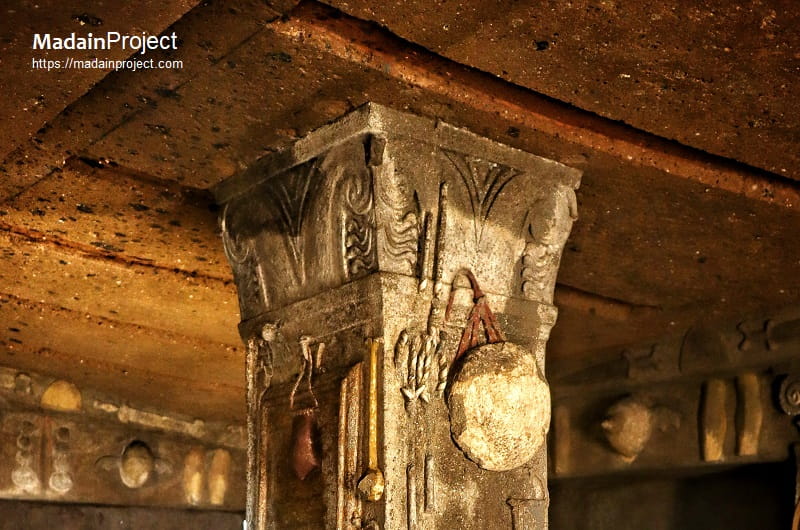
Aeolic elements also appear sporadically in the western Greek world, including early temple architecture in Sicily and regions of Magna Graecia, reflecting the movement of Greek populations and artistic conventions. Analogous but distinct forms are attested in Etruscan funerary architecture, such as the Tomb of the Reliefs, where capitals with prominent volutes lack the central palmette characteristic of both Proto-Aeolic and Aeolic types.
By the end of the Archaic period in the late 6th century BCE, the Aeolic order seems to have been largely fallen out of use, more likely supplanted by the more systematized Ionic order. In light of the broad geographic distribution and varied chronological horizons of these capitals, the designation “Proto-Aeolic” is potentially misleading. A more precise terminology, such as “Iron Age volute capitals from the Levant”, better reflects their primary context and avoids implying a direct genealogical relationship with later Greek architectural orders.



Signup for our monthly newsletter / online magazine.
No spam, we promise.

The Madain Project is an online archive of Abrahamic History and Archaeology.
Abrahamic History & Archaeology is the study of history and archaeology with respect to the three Abrahamic Faiths without considering the religious and theological aspects. The goal of Abrahamic History is to understand how and why the religious doctrines and behaviours have evlovled and changed over time. Searching for patterns in the evolution of significant cultural events such as the development of farming, the emergence of cities, or the collapse of major civilizations for clues of why and how these have influenced the three major Abrahamic religions.
Cloud Drive -
About -
Help -
Editorial Policy -
AI Policy -
Privacy Policy -
Contact
Madain Project: Encyclopedia of Abrahamic History & Archaeology.
Copyright MadainProject 2017 - 2026.


