
The Old Kingdom of Egypt refers to the third through sixth dynasties of ancient Egyptian history, conventionally dated from approximately 2686 BCE to 2181 BCE. It represents the first major phase of centralized pharaonic state formation following the Early Dynastic Period and is traditionally characterized by the consolidation of royal authority, the institutional development of administration, and the construction of large-scale royal pyramids.
The period encompasses the reigns of rulers from Djoser through Pepi II, and it is conventionally divided into the Third, Fourth, Fifth, and Sixth Dynasties.
The Old Kingdom was the formative era of Egyptian monumental architecture, state ideology, and administrative organization. Its political center was located at ancient Memphis, which functioned as the principal administrative capital. Royal mortuary complexes developed along the western edge of the Nile Valley, particularly at Saqqara and Giza Plateau. The period is especially distinguished by the construction of step pyramids, true pyramids, and associated mortuary temples, reflecting an evolving theology of kingship centered on the divine status of the pharaoh.
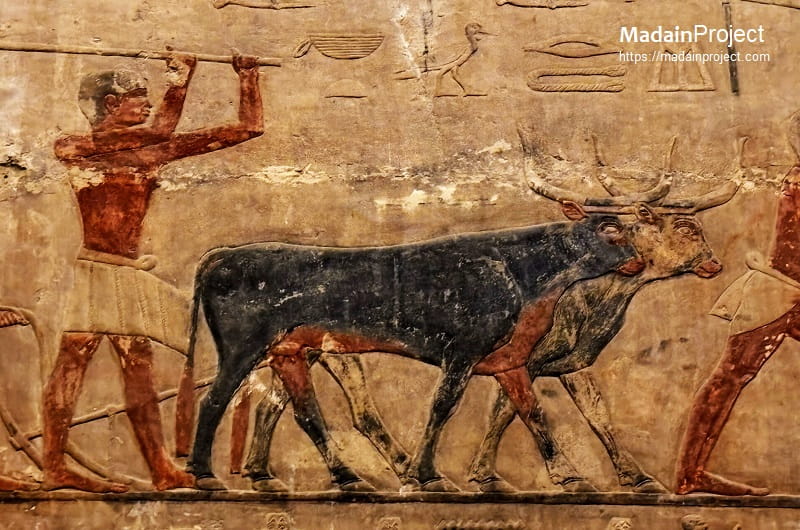
circa 2686-2181 BCE

Third Dynasty
The Third Dynasty marks the effective consolidation of the Old Kingdom state following the political stabilization of the late Second Dynasty. The reign of Djoser represents a decisive transformation in royal mortuary architecture and state ideology. His step pyramid complex at Saqqara, designed under the supervision of Imhotep, constitutes the earliest monumental construction in ancient Egypt executed predominantly in dressed stone. The Step Pyramid of Djoser evolved through successive enlargements from a mastaba structure into a six-tiered pyramid, integrated within a vast enclosed funerary complex that included courtyards, ceremonial buildings, and symbolic architectural elements intended for royal ritual performance.
Led by kings like Djoser, the core rulers include Djoser, Sekhemkhet (Djoserty), Khaba, and Huni. While sometimes listed (in historical records such as the Turin King List), the placement of Nebka/Sanakht is debated, and Huni is accepted as the final ruler.
Administratively, the Third Dynasty demonstrates increasing bureaucratic specialization, including the formalization of titles, the expansion of scribal activity, and greater central oversight of agricultural surplus and quarrying expeditions. State-sponsored resource extraction from regions such as the Sinai Peninsula and the Eastern Desert intensified, reflecting the monarchy’s capacity to organize large labor forces. The period therefore represents the structural foundation of Old Kingdom centralized governance and monumental statecraft.
Fourth Dynasty
The Fourth Dynasty constitutes the zenith of Old Kingdom royal architecture and centralized power. Under Sneferu, pyramid construction underwent systematic architectural experimentation. Sneferu commissioned multiple pyramid projects, including the Bent Pyramid and ultimately the Red Pyramid at Dahshur, widely regarded as the first successfully completed true smooth-sided pyramid. These developments demonstrate significant advances in structural engineering, including refined corbelling techniques, improved internal chamber design, and enhanced stability of limestone casing.
Sneferu’s successors—Khufu, Khafre, and Menkaure—constructed the monumental pyramid complex at the Giza Plateau, including the Great Pyramid of Giza, completed circa 2560 BCE. These funerary complexes were fully integrated architectural systems comprising valley temples, causeways, mortuary temples, satellite pyramids, and extensive subsidiary cemeteries for royal family members and elite officials. The scale of these projects reflects peak centralization of labor, administrative coordination, and resource allocation. The consistent alignment of pyramids with cardinal points and their integration within solar symbolism indicate an increasingly formalized theology linking kingship with cosmic order.
Fifth Dynasty
The Fifth Dynasty introduced profound theological and administrative developments. While pyramid construction continued at sites such as Saqqara and Abusir, the ideological emphasis shifted toward explicit solar theology. Royal monuments increasingly emphasized the cult of Ra, including the construction of open-air sun temples at Abu Ghurab.
A defining textual innovation of the period was the inscription of the Pyramid Texts, first extensively attested in the pyramid of Unas circa 2350 BCE. These inscriptions constitute the earliest known corpus of royal funerary literature and articulate complex theological concepts concerning the king’s posthumous transformation, celestial ascent, and union with divine entities. The texts significantly expanded the ideological framework of kingship beyond architectural symbolism.
Administratively, the Fifth Dynasty reflects gradual structural change. Although central authority remained intact, provincial officials gained increasing prominence. Evidence from tomb inscriptions indicates the rising importance of local elites, expanded administrative titles, and greater regional autonomy in economic management. This shift marks the beginning of long-term decentralizing tendencies that intensified in the subsequent dynasty.
Sixth Dynasty
The Sixth Dynasty is characterized by progressive political decentralization and increasing documentation of internal administration. Royal inscriptions from this period provide detailed records of expeditions, trade missions, military campaigns, and resource extraction, reflecting continued state activity despite structural tensions within the administration.
The long reign of Pepi II, traditionally dated to circa 2278–2184 BCE, is among the longest in Egyptian history. While early stability persisted, the extended duration of his reign coincided with significant decentralization. Provincial governors, or nomarchs, increasingly consolidated hereditary authority within their respective nomes, constructing elaborate tombs that rivaled royal monuments in scale and complexity. Fiscal revenues and administrative control gradually shifted from the central court toward regional power bases.
Although the monarchy retained ideological supremacy, the practical mechanisms of governance weakened. By approximately 2181 BCE, centralized authority effectively collapsed, marking the transition to the First Intermediate Period. This transformation was not abrupt but resulted from cumulative administrative decentralization, economic regionalization, and institutional restructuring during the late Sixth Dynasty. The end of the Old Kingdom therefore represents a systemic political reconfiguration rather than a single catastrophic event.
circa 2686-2181 BCE
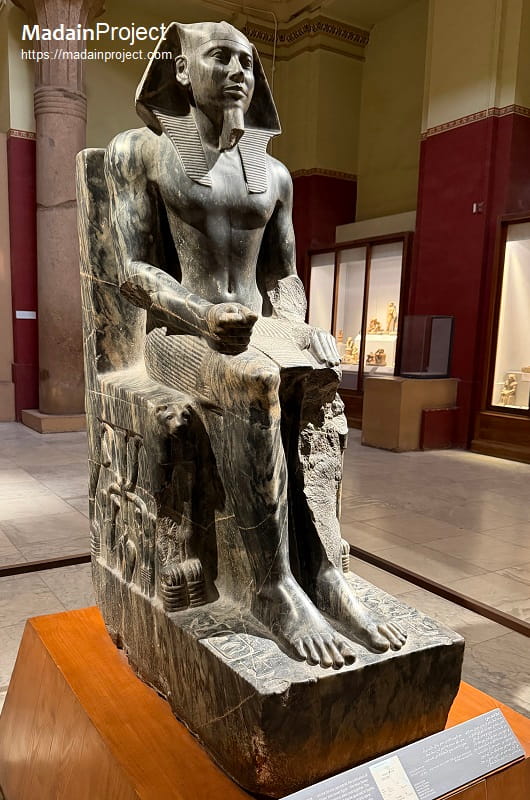
Political Structure
The political structure of the Old Kingdom was grounded in an ideologically absolute monarchy in which the pharaoh was regarded as the earthly embodiment of divine authority and the guarantor of cosmic order (ma’at). Kingship was hereditary within dynastic lines, beginning with the Third Dynasty and continuing through the Sixth Dynasty, with succession generally transmitted from father to son, although occasional irregular transitions occurred. The king exercised supreme executive, judicial, and religious authority, formally controlling land, labor, and surplus production.
The administrative center of the state was Memphis, which functioned as the principal residence of high officials and the locus of central bureaucracy. Governance operated through a hierarchical system of officials headed by the vizier, who supervised taxation, census registration, judicial proceedings, and the coordination of state projects. Regional administration was organized into territorial districts known as nomes, each governed by appointed officials responsible to the central court. During the Fourth and Fifth Dynasties, provincial control remained tightly integrated with the monarchy; however, in the Sixth Dynasty, particularly under Pepi II, nomarchs increasingly consolidated hereditary authority, constructed independent monumental tombs, and exercised greater fiscal autonomy. This gradual decentralization weakened the administrative cohesion of the state and contributed to the political fragmentation that followed circa 2181 BCE.
Religious Ideology
Old Kingdom religious ideology was inseparable from kingship. The pharaoh was considered a divine or semi-divine figure whose legitimacy derived from association with celestial deities, particularly the sun god Ra. Solar theology became increasingly prominent during the Fifth Dynasty, when kings constructed dedicated sun temples, notably at Abu Ghurab, emphasizing direct royal participation in the solar cult.
A major theological development occurred during the reign of Unas, whose pyramid at Saqqara contains the earliest extensive corpus of the Pyramid Texts. These inscriptions articulated complex doctrines concerning the king’s posthumous transformation, celestial ascent, union with divine entities, and protection in the afterlife. The texts represent a shift from purely architectural symbolism toward explicit theological articulation within royal burial chambers. This development profoundly influenced later funerary traditions, including the Coffin Texts of the Middle Kingdom and subsequent religious literature.
Administrative Development
The Old Kingdom witnessed the institutional consolidation of a professional bureaucratic apparatus. The office of vizier functioned as the highest administrative post beneath the king, supervising legal affairs, state archives, agricultural taxation, census operations, and large-scale construction projects. Scribal culture expanded significantly, and written documentation in hieroglyphic script became fundamental to governance. Administrative records, expedition inscriptions, and tomb autobiographies demonstrate increasing complexity in record-keeping and state communication.
Provincial governance evolved alongside central administration. Early in the Old Kingdom, regional officials were typically appointed and closely supervised by the royal court. However, during the Fifth and especially the Sixth Dynasty, nomarchs accumulated hereditary authority and constructed elaborate tomb complexes within their respective regions. This trend is particularly evident during the long reign of Pepi II, when regional elites gained increasing autonomy. The structural transformation of administrative power from centralized royal control toward regional distribution contributed directly to the political fragmentation that followed the end of the Sixth Dynasty.
Economic Foundations
The Old Kingdom economy was based primarily on agricultural production within the Nile Valley, sustained by annual inundation and managed irrigation systems. Land was largely administered under royal authority, and agricultural surplus supported both the state bureaucracy and large-scale building projects. Taxation was typically levied in kind, including grain, livestock, and labor obligations.
State-sponsored expeditions were essential for obtaining raw materials unavailable in the Nile Valley. Quarrying operations in the Eastern Desert and Sinai supplied copper, turquoise, and stone resources. Expeditions to Wadi Hammamat provided greywacke and other hard stones used in royal monuments and statuary. Organized labor mobilization, likely structured through seasonal work rotations rather than permanent slave labor, enabled the construction of pyramids and associated infrastructure. The integration of agricultural surplus, centralized taxation, quarrying expeditions, and administrative coordination formed the economic foundation of Old Kingdom state power.
circa 2686-2181 BCE

Monumental Architecture
The Old Kingdom established the canonical form of Egyptian royal funerary architecture: the pyramid complex. This complex comprised a pyramid serving as the king’s tomb, a mortuary temple attached to the pyramid’s eastern side, a covered causeway connecting the pyramid to a valley temple near the Nile floodplain, and subsidiary structures including boat pits, queens’ pyramids, storage magazines, and enclosure walls. These complexes functioned not only as burial sites but also as ritual centers for the ongoing cult of the deceased king.
Architectural development began with the step pyramid complex of Djoser at Saqqara, designed under Imhotep, and progressed through the experimental pyramid forms of Sneferu at Dahshur, culminating in the smooth-sided pyramids of the Fourth Dynasty at the Giza Plateau, including the Great Pyramid of Giza. These constructions demonstrate advanced mathematical planning, precise orientation to the cardinal directions, sophisticated quarrying and transport systems, and centralized coordination of labor. The scale and standardization of these monuments reflect the administrative capacity of the Old Kingdom state at its height.

Signup for our monthly newsletter / online magazine.
No spam, we promise.

The Madain Project is an online archive of Abrahamic History and Archaeology.
Abrahamic History & Archaeology is the study of history and archaeology with respect to the three Abrahamic Faiths without considering the religious and theological aspects. The goal of Abrahamic History is to understand how and why the religious doctrines and behaviours have evlovled and changed over time. Searching for patterns in the evolution of significant cultural events such as the development of farming, the emergence of cities, or the collapse of major civilizations for clues of why and how these have influenced the three major Abrahamic religions.
Cloud Drive -
About -
Help -
Editorial Policy -
AI Policy -
Privacy Policy -
Contact
Madain Project: Encyclopedia of Abrahamic History & Archaeology.
Copyright MadainProject 2017 - 2026.


