
The Valley Temple of pharaoh Khafre is a monumental ceremonial structure forming the lower temple of the royal funerary complex in the necropolis of Giza Plateau. Constructed during the Fourth Dynasty of the Old Kingdom (circa 2558–2532 BCE), the temple functioned as the architectural and ritual gateway between the Nile floodplain and the desert necropolis where Khafre’s pyramid and pyramid temple were located. In the standard layout of Old Kingdom pyramid complexes, the valley temple stood at the edge of the cultivation and was connected to the mortuary temple near the pyramid by a long processional causeway, forming a unified ritual axis that structured royal funerary ceremonies.
The Valley Temple forms part of the broader funerary complex of Khafre, which includes the pyramid itself, the mortuary temple or the pyramid temple adjoining the pyramid’s eastern side, and a covered causeway connecting these structures. Located at the eastern end of this causeway near the edge of the Nile valley, the temple occupies a strategic position close to the Great Sphinx of Giza, a monumental sculpture that many scholars associate with Khafre’s reign and ideological program of divine kingship.
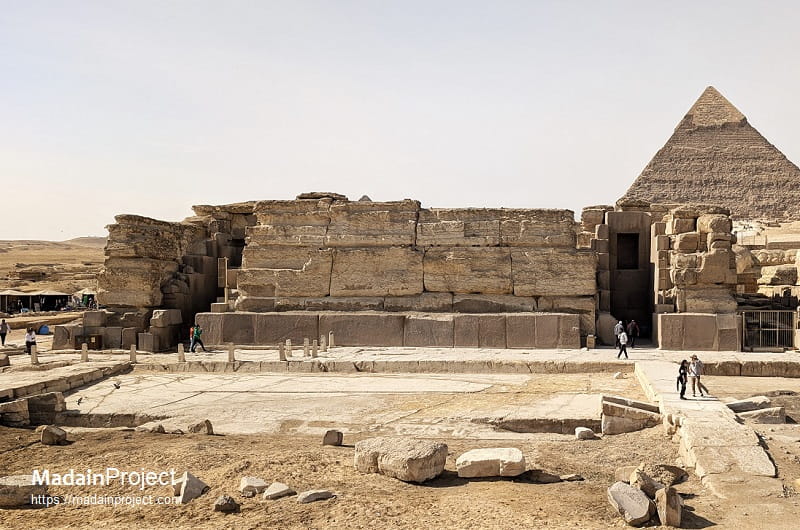
circa 2558-2532 CE
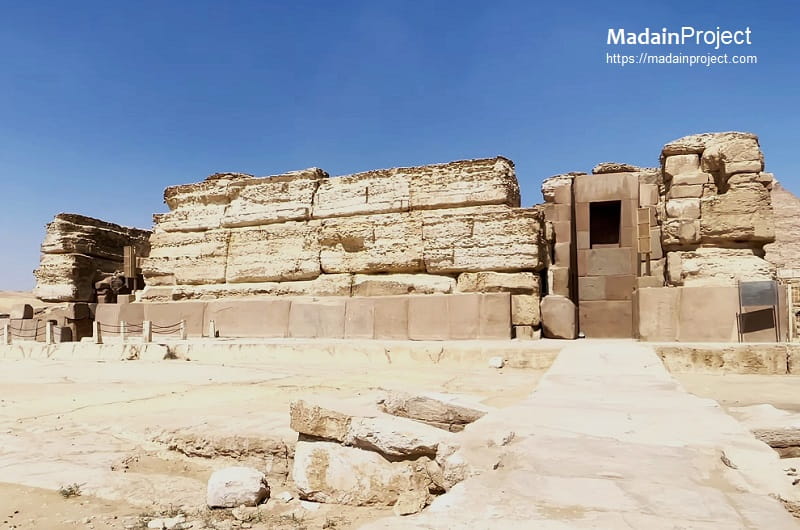
Eastern Facade
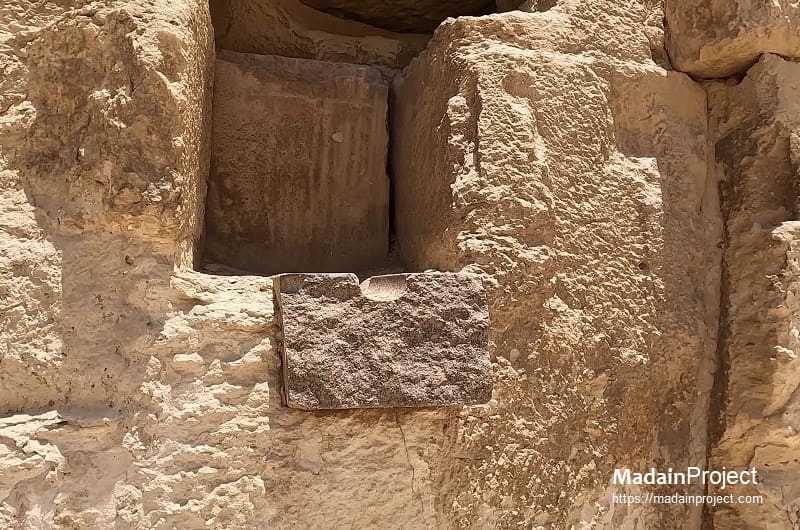
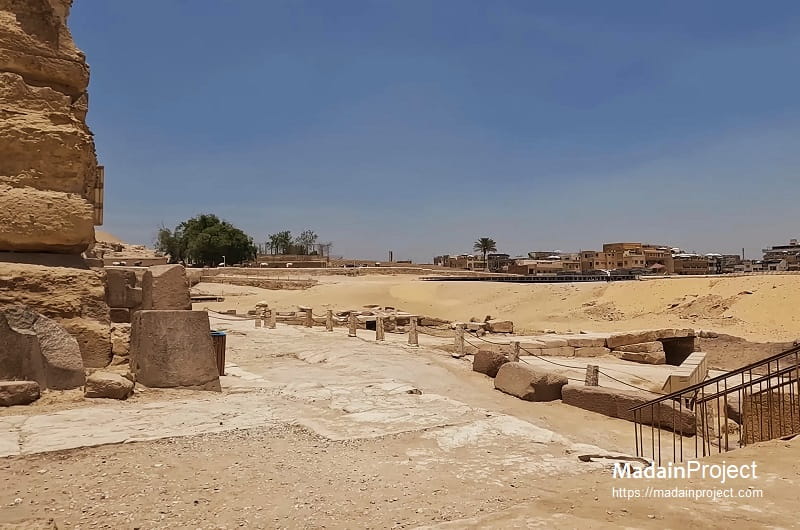
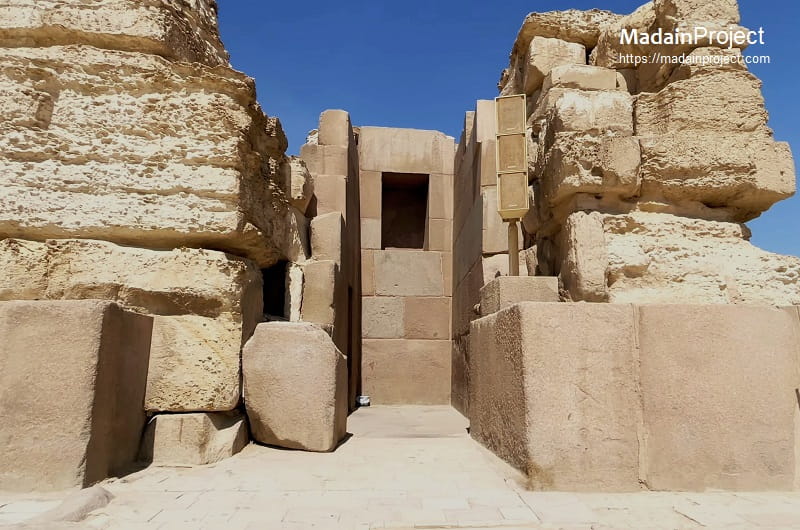
The eastern facade of the Valley Temple of Khafre is characterized by a distinctive dual-portal configuration, featuring two symmetrical entrances situated approximately 20 meters apart. These portals, each measuring roughly 5.5 meters in passage length, were originally secured by monolithic doors of Lebanese cedar, swinging on massive copper or basalt pivots. The thresholds are paved in translucent white alabaster, providing a stark chromatic contrast to the Aswan red granite casing of the walls. Epigraphic evidence from the surrounding doorjambs indicates a theological dichotomy: the northern entrance (inspect) was dedicated to Bastet, the feline deity associated with protection and the Nile Delta, while the southern entrance was consecrated to Hathor, the celestial goddess of the Theban necropolis and feminine regeneration. This dualism likely mirrored the geopolitical unification of Upper and Lower Egypt, ensuring the Pharaoh’s transition was sanctioned by the protective deities of both regions.
Fronting each entrance was a ceremonial quay (inspect) or landing stage, which served as the primary interface for the royal funerary barque arriving from the river Nile via a man-made canal. Archaeological excavations have identified the remains of four monumental sphinxes—two flanking each portal—each estimated to be approximately 8 meters (26 feet) in length. These statues acted as symbolic guardians of the liminal space between the profane world of the river valley and the sacred domain of the pyramid complex. The placement of these sphinxes, combined with the temple's massive inward-sloping (batter) walls, reinforced the structure's appearance as a fortified gateway or pylon prototype. This exterior arrangement was meticulously engineered to channel the funerary procession into the narrow vestibule, thereby regulating the flow of light and participants into the increasingly restricted and somber interior chambers.
circa 2558-2532 CE
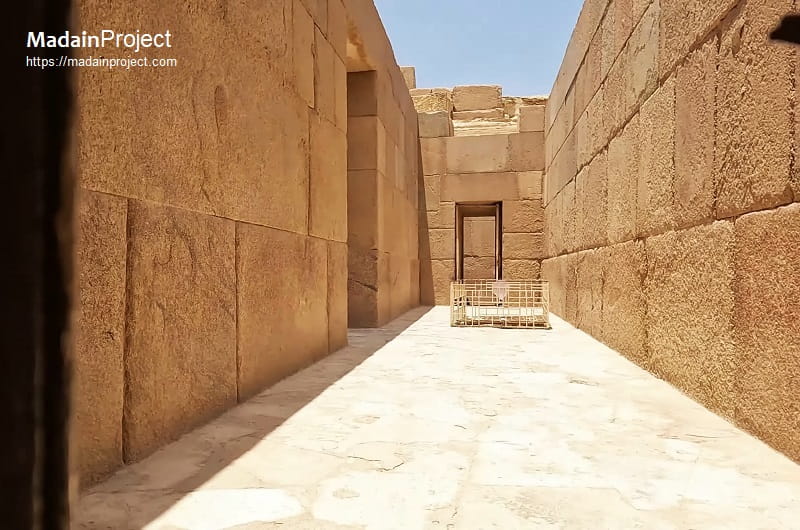
Vestibule
The vestibule of the Valley Temple of Khafre is a north-south transverse corridor measuring approximately 20 meters in length and 4.2 meters in width, functioning as the primary architectural nexus between the twin exterior portals and the interior hypostyle hall. Constructed with a megalithic limestone core and lined with Aswan red granite slabs, the space is defined by its precision-cut orthogonal joinery and a floor of translucent Egyptian alabaster (calcite). Architecturally, the vestibule adheres to the temple’s broader aesthetic of austere monumentality, featuring walls cased in polished Aswan red granite and a floor paved with white alabaster. The two entrance passages, each roughly 5.5 meters long, originally housed monolithic cedar doors and were flanked by pairs of sphinxes, each extending roughly 8 meters in length. Archaeologically, the space is of paramount significance due to Auguste Mariette’s 1860 discovery of a subterranean shaft located within its confines. this vertical shaft descending into the foundation yielded the famous diorite statue of "enthroned" Khafre (inspect), which stands 1.68 meters tall, illustrating the vestibule's role in housing the twenty-three royal sculptures that lined the temple’s periphery. This chamber’s ceiling was composed of granite architraves and massive slabs, punctuated only by narrow clerestory slits that provided minimal, strategic illumination to facilitate the initial funerary rites.
circa 2558-2532 CE

Pillared Hall
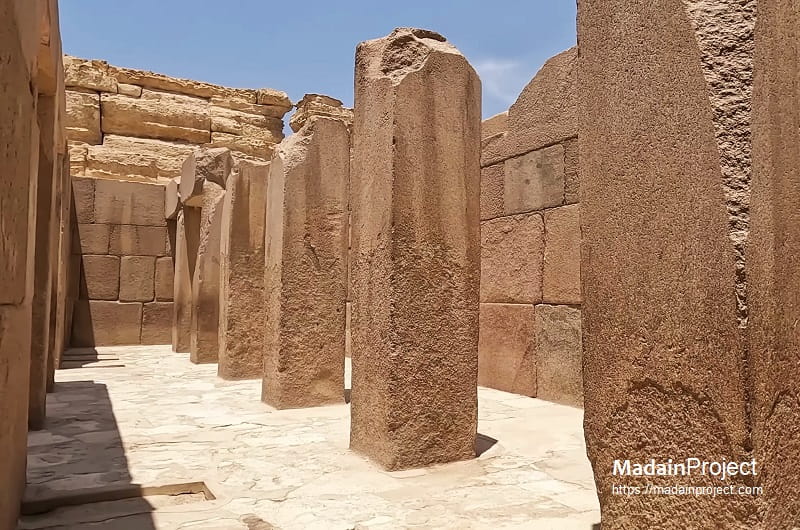
The pillared hall of the Valley Temple of Khafre, frequently designated as the T-shaped hypostyle hall, represents a monumental achievement in lithic construction, defined by its stark rejection of ornamental relief in favor of geometric purity and material permanence. The hall is divided into two primary axes: a wide transverse chamber running north-south, followed by a deeper longitudinal nave extending westward toward the causeway. The structure is supported by sixteen monolithic square pillars carved from Aswan red granite, each standing approximately 4.1 meters (13.5 feet) in height with a width of roughly 1.1 meters. These pillars support massive granite architraves, which in turn held the weight of a flat stone roof, creating an interior space of profound psychological and ritual density. The floor is paved with translucent alabaster (calcite) slabs, which, in the original state of the temple, would have reflected the limited light admitted through narrow oblique clerestory slits located at the junction of the walls and the ceiling.
Functionally and iconographically, the pillared hall served as the primary statue gallery for the royal cult, designed to house twenty-three seated statues of Khafre positioned against the walls. The sockets for these sculptures remain visible in the alabaster pavement, indicating a precise ritual arrangement that allowed the Pharaoh’s ka to inhabit multiple vessels simultaneously. This hall acted as the core of the temple's liturgical program, serving as the site for the daily presentation of offerings and the performance of the "Opening of the Mouth" ritual. The architectural transition from the hall's wide entrance to its narrowing western exit symbolized the funerary procession’s movement from the public-facing quay toward the exclusive sacred precinct of the pyramid, utilizing the rhythmic repetition of granite pillars to enforce a sense of timelessness and cosmic order (Ma'at).
circa 2558-2532 CE
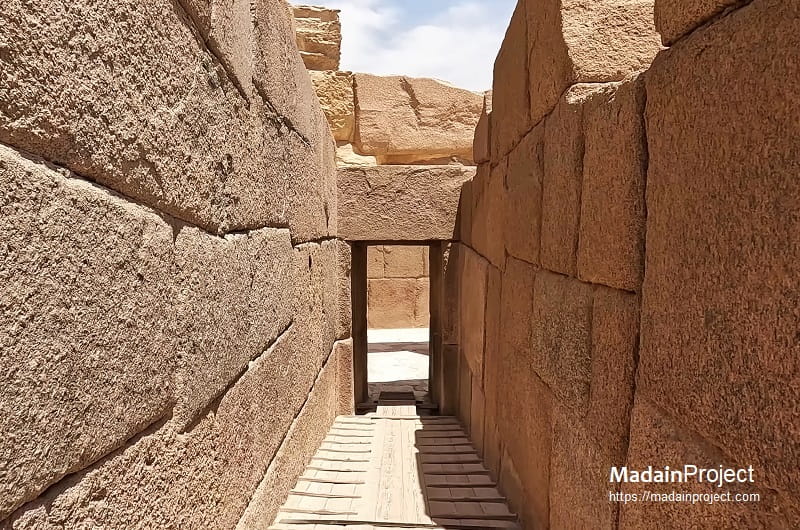
Inclined Passage
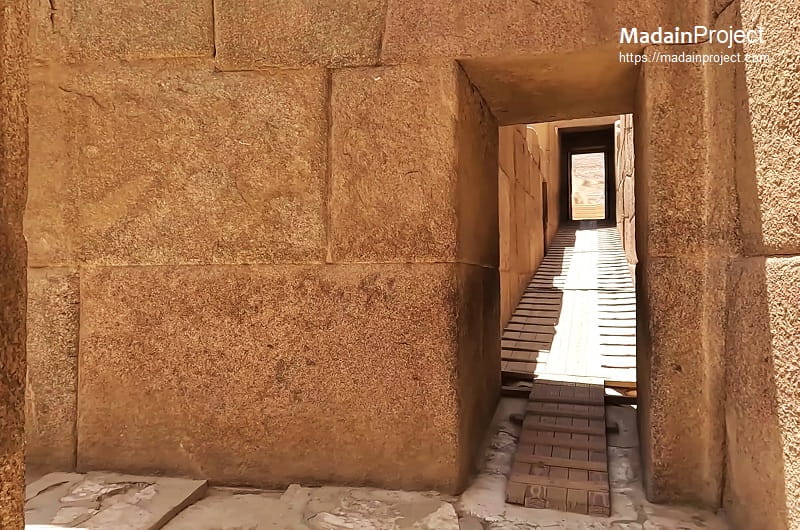
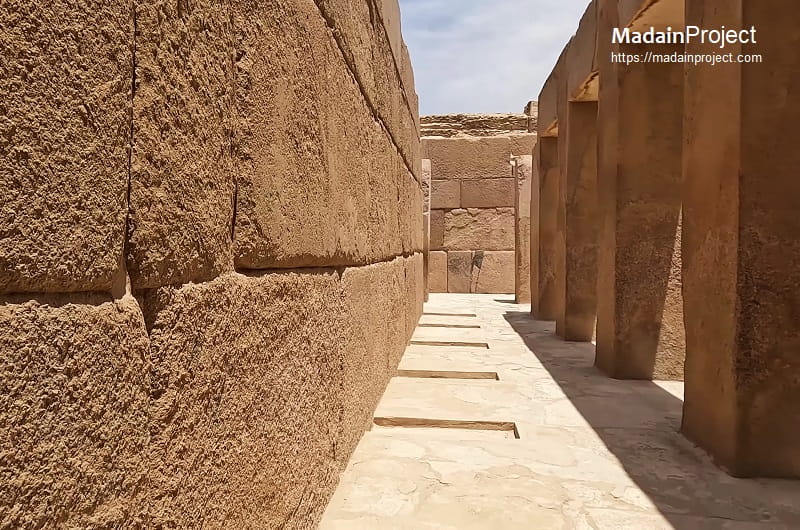
The inclined passage, or the northwest vestibule, situated at the north-western corner of the T-shaped pillared hall of the Valley Temple of Khafre functions as the principal architectural transition between the enclosed ceremonial interior of the temple and the ascending causeway leading toward the pyramid complex on the Giza Plateau. This corridor, which marks the beginning of the approximately 494-metre processional route to the mortuary temple, was carefully engineered to accommodate the gradual elevation change between the low-lying Nile floodplain and the higher desert plateau. Architecturally, the passage measures roughly 2.1 metres in width, creating a deliberately constricted processional space that contrasts with the expansive dimensions of the central hypostyle hall. The walls, constructed from finely fitted blocks of Aswan red granite rising to approximately three metres in height, originally supported a ceiling composed of large stone slabs, thereby producing an interior that was largely dark except for limited illumination provided by narrow light apertures. The floor pavement, executed in white alabaster, maintained the chromatic and material coherence characteristic of the temple’s interior spaces, while an alabaster threshold marked the formal boundary between the hall and the ascending corridor.
The passage subsequently merges with the monumental causeway that connects the valley temple to the mortuary temple adjacent to Khafre’s pyramid. This causeway, approximately 4.5 metres in width, ascends roughly 46 metres in elevation over its 494-metre length, forming a carefully calibrated route that negotiates the natural topography of the plateau. Evidence of sockets and grooves in the masonry indicates that the entrance to the passage was once secured by a substantial barrier, possibly a monolithic granite portcullis or a large wooden door, thereby regulating access between the valley temple and the restricted royal precinct of the pyramid complex. From the perspective of the pillared hall, the corridor creates a strongly defined visual axis that directs attention toward the rising causeway and ultimately toward the pyramid itself, reinforcing the spatial and symbolic unity of the funerary complex.
At the point where the passage begins, the architectural transition is further articulated by a set of subsidiary access points that reveal the functional complexity of the temple. Flanking the main corridor are two secondary doorways that served distinct logistical and liturgical purposes. The southern doorway leads to a suite of two-storey storage chambers or magazines constructed in granite masonry, which were used to house ritual equipment, oils, and offerings necessary for the maintenance of the royal funerary cult. In contrast, the northern doorway opens into a small vestibule from which a staircase ascends to the roof of the temple. Access to the roof likely facilitated observational or ritual activities associated with solar or astronomical symbolism, complementing the ceremonies performed within the enclosed halls below. The presence of these auxiliary passages indicates that the inclined corridor functioned not only as the ceremonial route of the funerary procession but also as an organizational node within the temple’s internal circulation system, enabling priests and temple personnel to move supplies and perform administrative tasks without interfering with the ritual purity of the central processional axis.
In theological terms, the inclined passage constituted a liminal threshold within the spatial and symbolic program of the complex. It marked the boundary between the purification and preparatory spaces of the valley temple—where the body of the king was ritually received—and the elevated domain of the pyramid and mortuary temple, where the royal cult would be perpetually maintained. The progressive ascent along the corridor and the adjoining causeway may therefore be interpreted not merely as a functional ramp designed to facilitate movement across uneven terrain, but as a ritualized path of transition. Through this carefully choreographed architectural sequence, the movement from the shadowed interior of the temple toward the rising causeway visually and symbolically articulated the transformation of the deceased ruler from an earthly sovereign into a divine and celestial being within the Egyptian conception of the afterlife.
circa 2558-2532 CE

Khafre Enthroned
The so-called Khafre Enthroned statue (sometimes also called Statue of Khafra protected by Horus), recovered from the purification shaft within the vestibule of the Valley Temple, remains a definitive masterpiece of Old Kingdom royal portraiture and a pinnacle of diorite-gabbro lithic technology. Standing 1.68 meters in height, the sculpture depicts the Fourth Dynasty monarch in a state of eternal repose, seated upon a throne flanked by lion-paw legs and adorned with the sema-tawy symbol, which represents the heraldic unification of Upper and Lower Egypt.
The figure exhibits a synthesis of idealized musculature and rigid frontality, adhering to the strict canon of Egyptian proportions to convey the immutable nature of divine kingship. Most significantly, the Horus falcon is positioned behind the king's head, its wings enveloping the royal nemes headdress in a profound iconographic statement of the monarch as the "living Horus". This placement creates a theological unity between the god and the ruler, ensuring that the statue served not merely as a likeness, but as a functional ka-vessel capable of receiving offerings and maintaining the king's presence within the temple's ritual program.
Signup for our monthly newsletter / online magazine.
No spam, we promise.

The Madain Project is an online archive of Abrahamic History and Archaeology.
Abrahamic History & Archaeology is the study of history and archaeology with respect to the three Abrahamic Faiths without considering the religious and theological aspects. The goal of Abrahamic History is to understand how and why the religious doctrines and behaviours have evlovled and changed over time. Searching for patterns in the evolution of significant cultural events such as the development of farming, the emergence of cities, or the collapse of major civilizations for clues of why and how these have influenced the three major Abrahamic religions.
Cloud Drive -
About -
Help -
Editorial Policy -
AI Policy -
Privacy Policy -
Contact
Madain Project: Encyclopedia of Abrahamic History & Archaeology.
Copyright MadainProject 2017 - 2026.


