
The Sun Temple of Nyuserre, located at Abu Gorab near ancient Memphis and closely associated with the Abusir necropolis both geographically and functionally, was a royal cult complex commissioned by Nyuserre Ini, the sixth king of Egypt’s Fifth Dynasty. Constructed in honour of the sun god Ra, the temple bore the name Ssp-ib-Rʿ, conventionally translated as “Re’s Favorite Place” or “Joy of Re”. The monument represents one of the most significant surviving examples of Old Kingdom solar cult architecture and reflects the growing ideological prominence of the worship of Ra during the Fifth Dynasty. The temple was excavated between 1898 and 1901 CE by the Egyptologists Ludwig Borchardt and Friedrich Wilhelm von Bissing on behalf of the Berlin Museum.
It is located approximately 650 meters north-west of the only other excavated sun temple dedicated to Userkaf in the Abu Ghurab precinct.
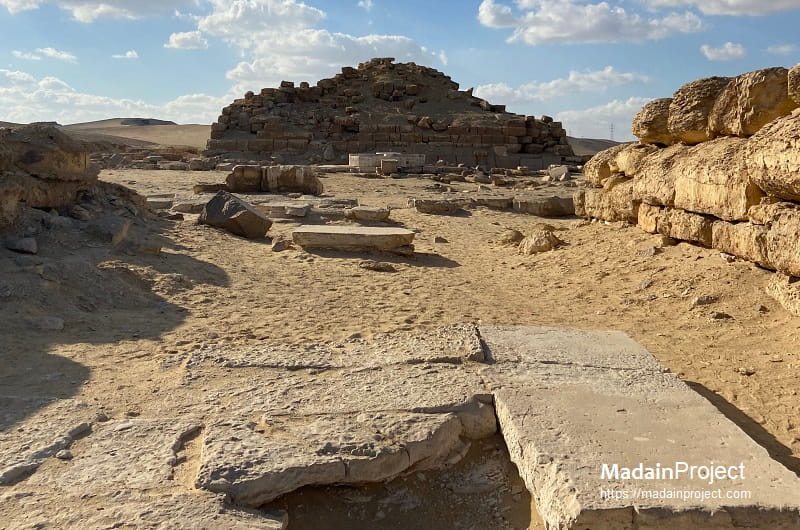
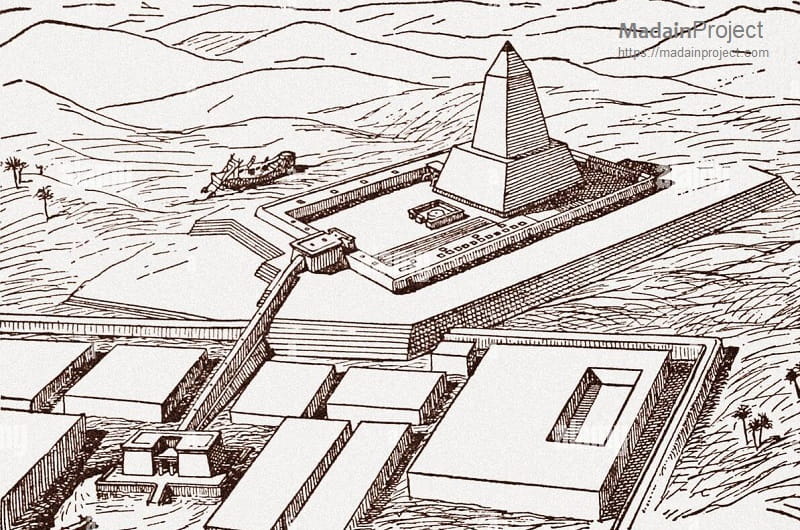
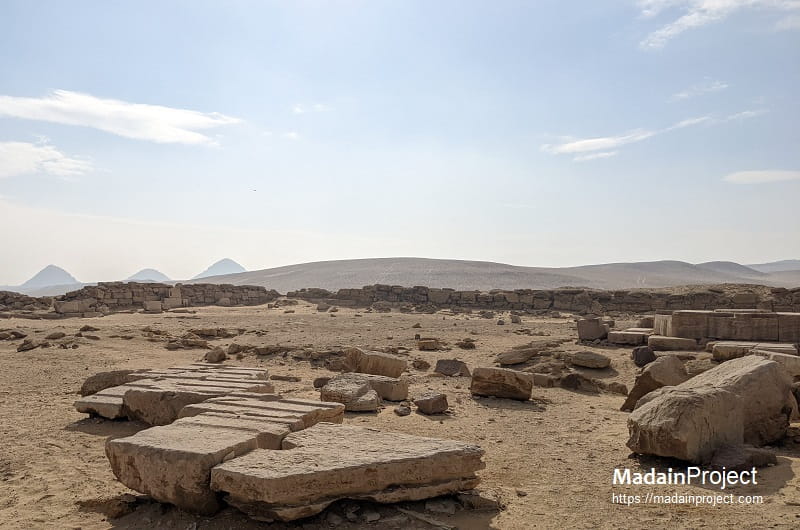
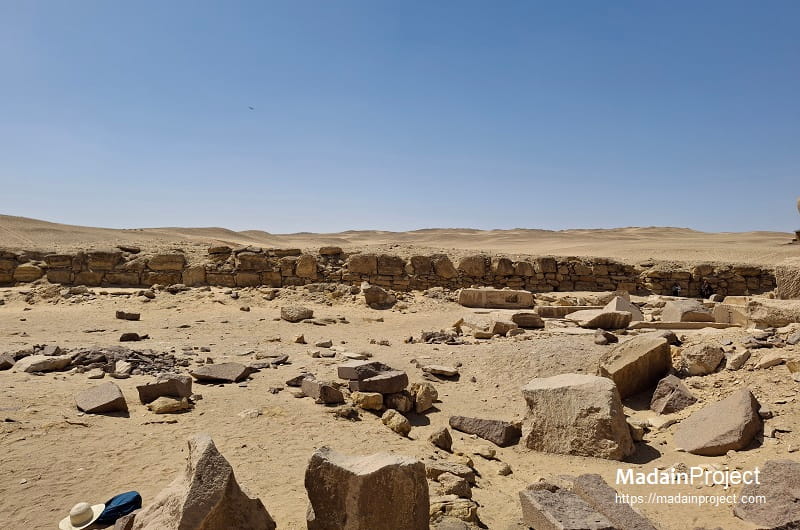
The temple complex comprises a rectangular walled enclosure measuring approximately 100 × 76 metres, with its principal entrance situated on the eastern façade. The structure was primarily constructed of mudbrick faced with limestone and was established on the shores of the ancient Abusir lake bed. The principal sanctuary was erected upon a naturally elevated hill that had been artificially enhanced through the construction of terraces serving as foundational platforms.
Access to the complex was achieved through a Valley Temple situated at the eastern edge of the site. Although this structure is now partially submerged and extensively damaged, archaeological evidence indicates that an entrance corridor extended through the building and connected to a causeway leading toward the main temple precinct. Within the enclosure lay a large open courtyard dominated at its western end by the remains of a monumental stone obelisk. Additional architectural and ritual installations within the complex include an alabaster altar, storerooms, circular alabaster basins, a buried sun barque, and elaborately decorated corridors containing reliefs associated with royal and solar iconography.
circa 2458–2422 BCE
Nyuserre Ini reigned during the latter half of the twenty-fifth century BCE, although the precise dates of his reign remain uncertain. In addition to constructing his pyramid complex approximately one kilometre south of Abu Gorab in the royal necropolis at Abusir, he commissioned the Sun Temple as part of the expanding Fifth Dynasty tradition of solar worship. The temple was probably constructed during the later years of his reign.
The monument was dedicated to sun god Ra and functioned as a ceremonial and ideological centre emphasizing the king’s divine association with the solar deity. Excavations conducted between 1898 and 1901 CE by Ludwig Borchardt and Friedrich Wilhelm von Bissing revealed substantial portions of the complex, including architectural remains and decorated relief fragments. Many of the reliefs recovered during excavation were removed to German collections; however, a considerable number were subsequently destroyed or severely damaged during the Second World War. Consequently, much of the surviving decorative programme exists only in fragmentary condition today.
circa 2458–2422 BCE
Courtyard
The entrance to the temple complex was from the east, which led in to the large courtyard. At the centre of the temple complex was a large open courtyard occupying the principal ceremonial space within the enclosure. The courtyard provided direct visual orientation toward the colossal obelisk positioned at its western end and functioned as the focal area for ritual activities associated with the solar cult. The main entrance was connected to two passages which split at the entrance and ran along the eastern side and then turning north and south. Along the northern side of the courtyard were several storerooms, which may have served practical functions related to the preparation and slaughter of sacrificial animals. Archaeological evidence from the sun temple of Userkaf indicates that daily offerings included two oxen and two geese, suggesting comparable ritual practices at Nyuserre’s temple.
circa 2458–2422 BCE
Obelisk and Pyramidial Pedestal
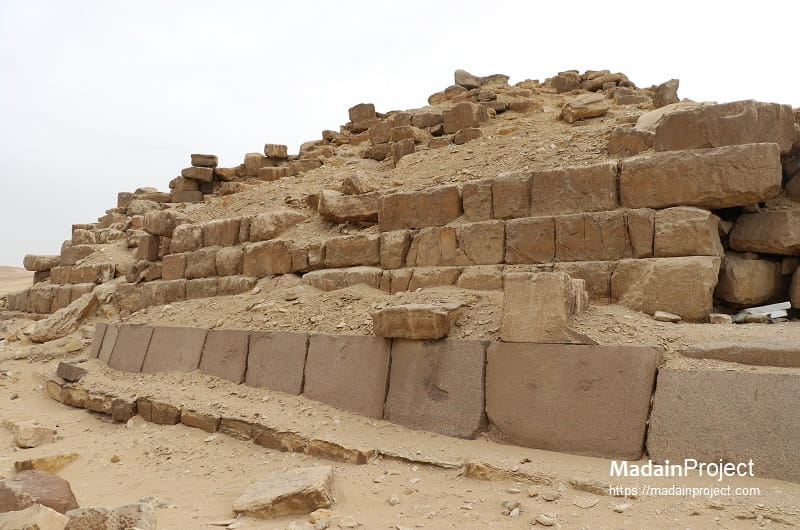
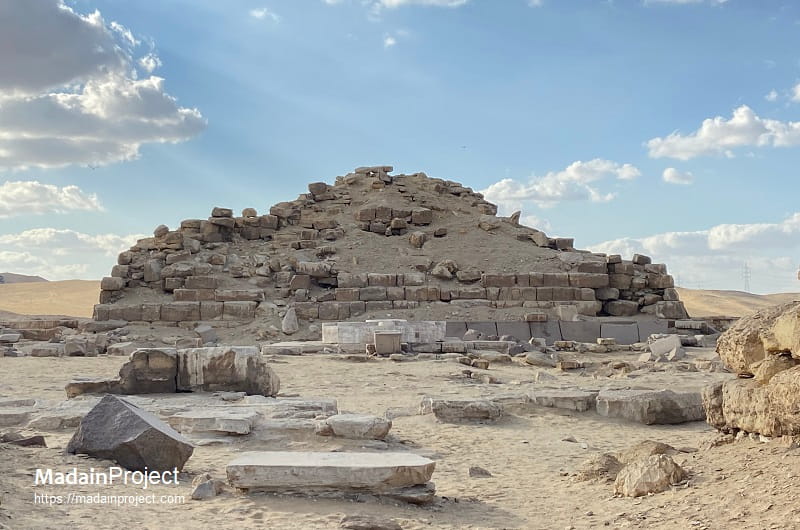
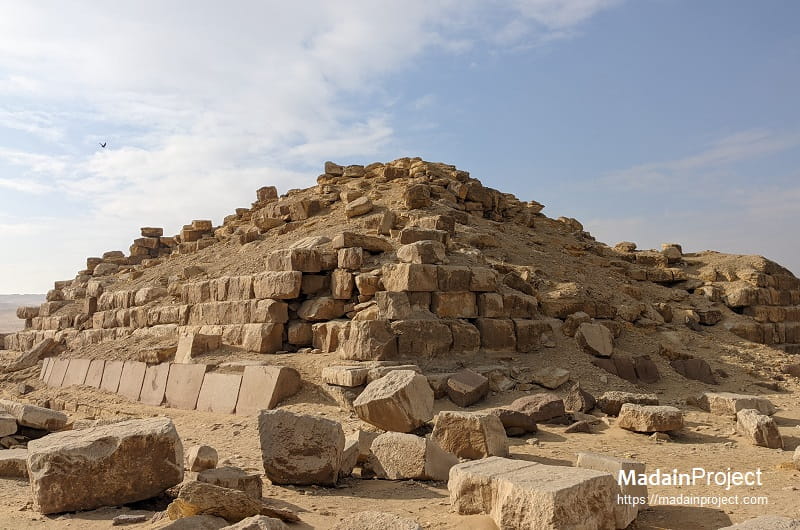
The western end of the courtyard contained the remains of a monumental stone obelisk erected upon a pedestal with a red-granite base, sloping sides, and a square summit. While the pedestal employed granite construction, the obelisk itself consisted of irregularly shaped limestone blocks. Scholarly estimates regarding its original dimensions vary, although the combined height of the pedestal and obelisk is generally believed to have ranged between thirty-five and fifty metres.
There were two chapels at the upper level. The base of the obelisk also contained chambers, dimensions of which are not definitevely known. These chambers possibly ran around the base of the obelisk.
The obelisk served as the dominant symbolic and architectural element of the complex, embodying the solar associations of the cult of Ra.
circa 2458–2422 BCE
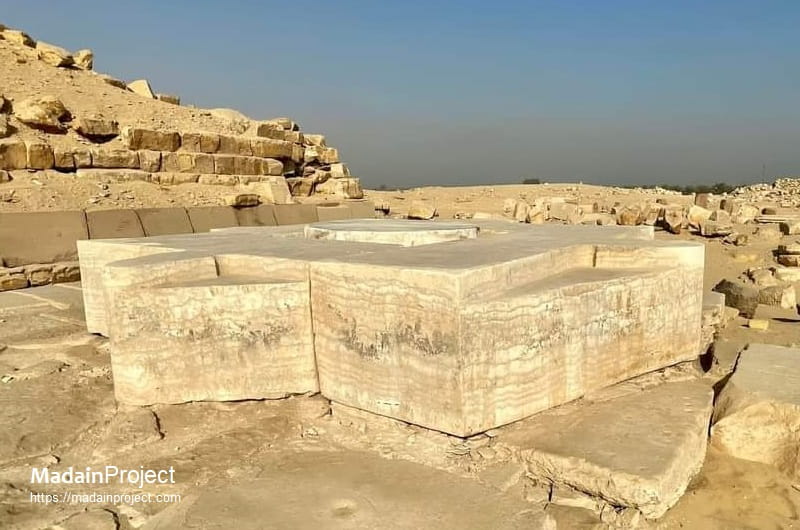
Altar
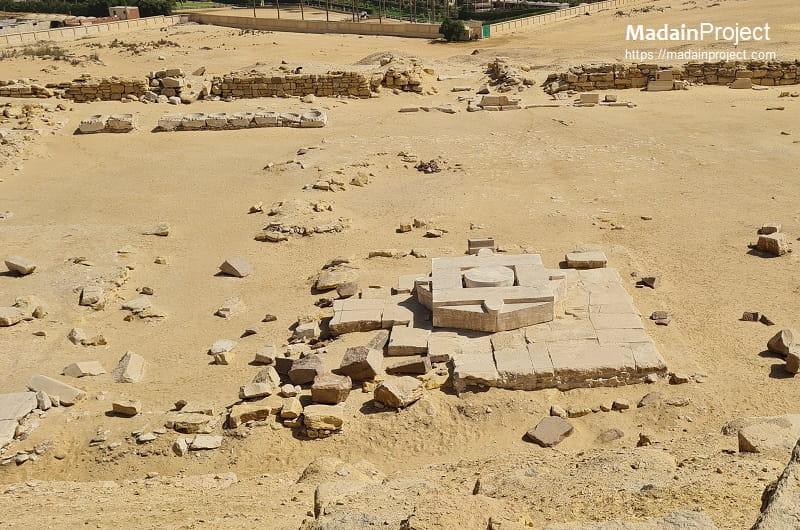
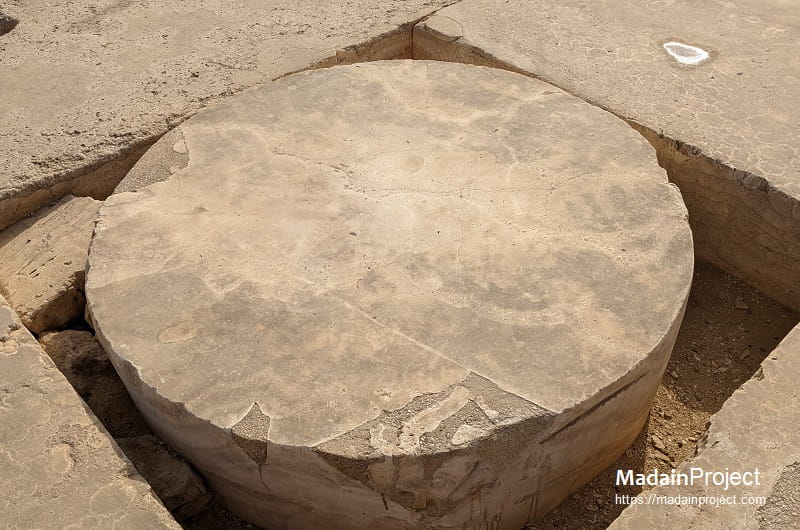
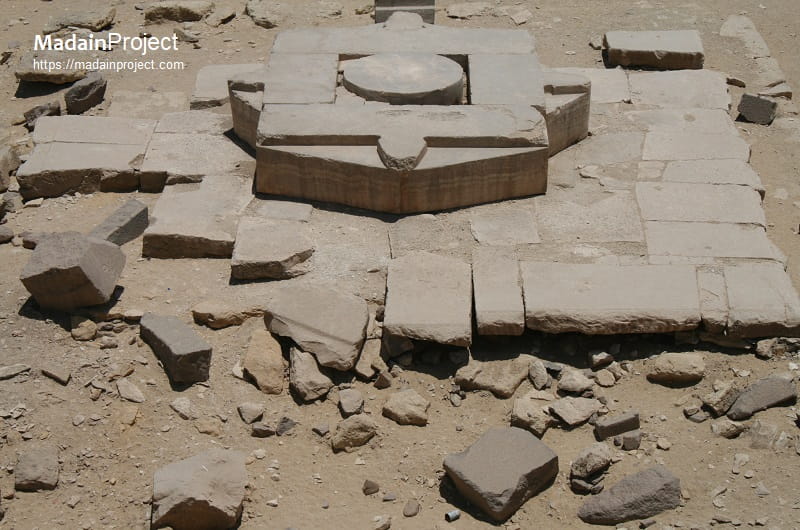
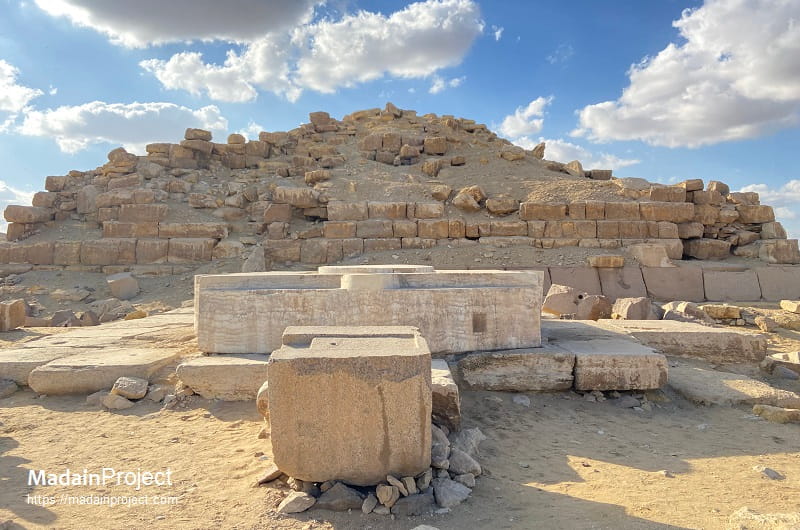
Positioned near the eastern face of the obelisk, either in the centre of the courtyard or near the eastern facade of the obelisk pedestal, was a large alabaster altar composed of five substantial stone blocks. These blocks were arranged to form a symbolic configuration interpreted as the phrase “May Ra be satisfied”. It is comprised of four "hetep" sign shaped stones, arranged around a block of alabaster with a solar disk in the center. The altar functioned as the principal locus for ritual offerings and sacrificial ceremonies conducted within the temple precinct.
circa 2458–2422 BCE

Valley Temple and Causeway
Entrance to the temple complex was mediated through a small Valley Temple situated at the eastern extremity of the site. Although the structure survives only in heavily damaged and partially submerged condition, archaeological remains indicate that it originally contained an entrance corridor extending through the building toward a causeway leading to the principal enclosure. This arrangement conforms to broader Old Kingdom traditions of ceremonial processional access associated with royal religious architecture.
circa 2458–2422 BCE
Sun Barque
To the south of the temple complex archaeologists uncovered a large brick-built sun barque measuring approximately 30 × 10 metres. The vessel had been buried within a mudbrick chamber. The inclusion of the barque reflects the solar symbolism central to the temple’s ideological programme, as solar boats were closely associated with the celestial journey of Ra across the heavens.
circa 2458–2422 BCE
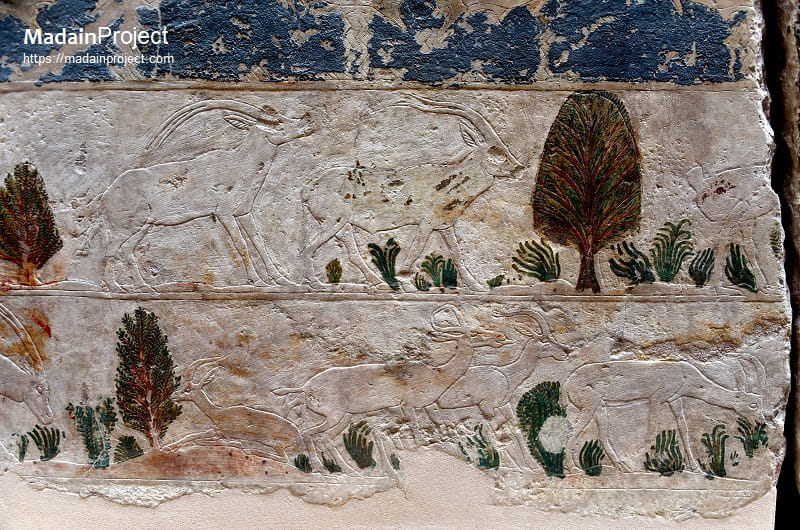
Decorative Program
The covered corridors situated along the eastern and southern edges of the temple were extensively decorated with carved reliefs along their interior walls. These relief programmes prominently depicted scenes associated with the sed-festival, an important royal ritual of renewal and rejuvenation. The imagery emphasized the beneficent relationship between Ra and Nyuserre’s kingship and constitutes one of the most extensive and detailed surviving representations of the sed-festival from the Old Kingdom.
Additional decorated scenes appeared within a passageway connecting the southern section of the temple to the obelisk platform, conventionally designated the “Room of the Seasons.” This chamber contained painted limestone reliefs illustrating two of the three Egyptian seasons: akhet (inundation) and shemu (harvest). These compositions emphasized the sustaining and regenerative role of the sun within the natural world. Accompanying scenes depicted a wide range of seasonal activities, including fishing with nets, trapping birds, constructing papyrus boats, and various stages of the agricultural cycle. The reliefs also contained extensive representations of animal and plant life, constituting one of the earliest substantial corpora of naturalistic and seasonal imagery known from ancient Egypt.
Although the reliefs were skilfully designed and were likely commissioned directly by Nyuserre, they differ stylistically from the standard royal funerary decorative programmes characteristic of the Old Kingdom. Furthermore, despite their artistic sophistication, they are generally regarded as less carefully executed than comparable reliefs from the Fourth and early Fifth Dynasties. One surviving fragmented relief depicts Egyptians trapping birds using a clap net. Although the net itself is missing, six men are represented in the lower register pulling the restraining ropes, while upper registers show captured birds being caged and fragments of a larger pastoral scene involving a cow and calf. Nearly all reliefs recovered from the site were removed during excavation, and many were subsequently destroyed or severely fragmented during the Second World War, resulting in the substantial loss of the temple’s original decorative corpus.
circa 2458–2422 BCE
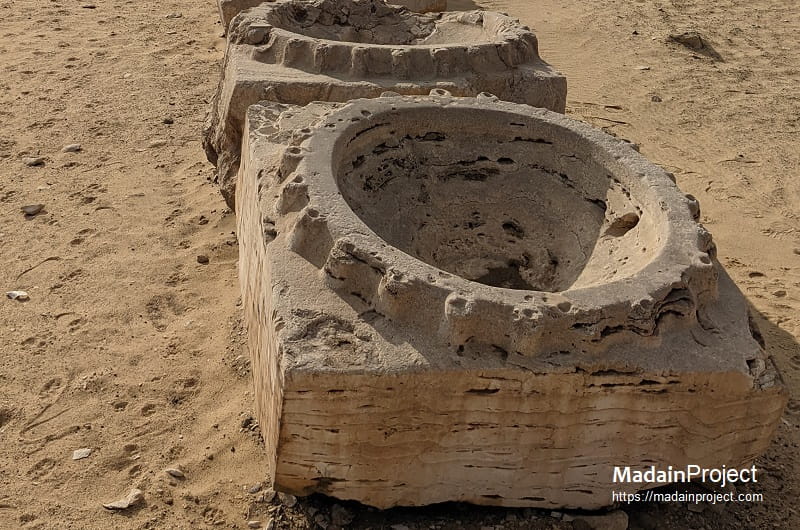
Alabaster Basins
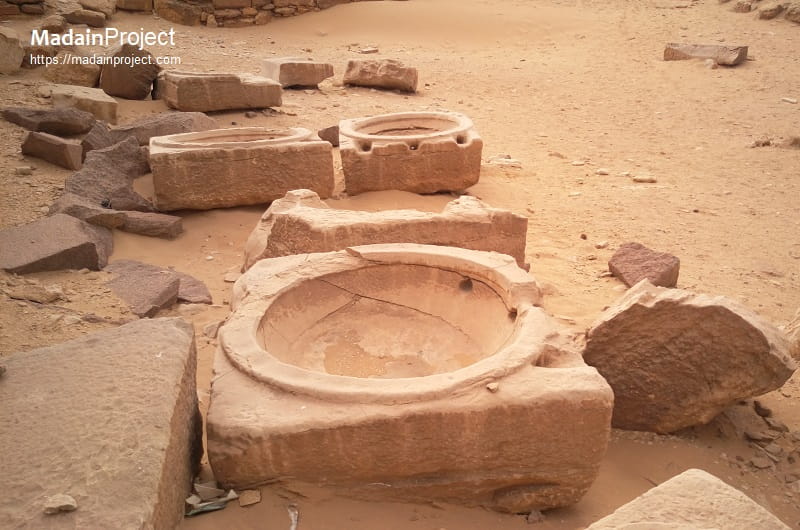
Along the eastern wall of the courtyard stood a series of nine circular alabaster basins, although some scholars have proposed that the original installation may have comprised ten basins. The precise purpose of these features remains uncertain. One interpretation suggests that the basins were employed to collect blood from sacrificial rituals, supported by the presence of grooves cut into the courtyard floor that may have facilitated drainage. However, the absence of knives or associated sacrificial implements has led other scholars to argue that the basins possessed a symbolic or decorative function. A further hypothesis proposes that they served as levelling devices interconnected and filled with water to establish a common reference plane during construction activities. Definitive conclusions regarding their function remain unresolved.
Signup for our monthly newsletter / online magazine.
No spam, we promise.

The Madain Project is an online archive of Abrahamic History and Archaeology.
Abrahamic History & Archaeology is the study of history and archaeology with respect to the three Abrahamic Faiths without considering the religious and theological aspects. The goal of Abrahamic History is to understand how and why the religious doctrines and behaviours have evlovled and changed over time. Searching for patterns in the evolution of significant cultural events such as the development of farming, the emergence of cities, or the collapse of major civilizations for clues of why and how these have influenced the three major Abrahamic religions.
Cloud Drive -
About -
Help -
Editorial Policy -
AI Policy -
Privacy Policy -
Contact
Madain Project: Encyclopedia of Abrahamic History & Archaeology.
Copyright MadainProject 2017 - 2026.


