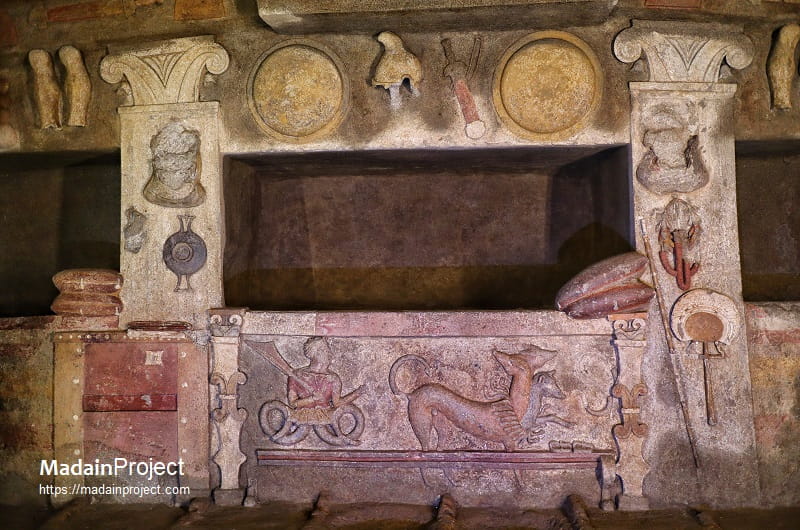
The Banditaccia Necropolis (Necropoli della Banditaccia) is a monumental Etruscan funerary complex situated at present day Cerveteri (ancient Caere), spanning approximately 400 hectares and containing thousands of burials dating from the 9th to the 3rd century BCE. As a UNESCO World Heritage site, it provides the most comprehensive archaeological record of Etruscan urban planning and domestic architecture, as the tombs are intentionally designed to mirror the layout, structural elements, and interior decoration of contemporary residential dwellings.
The site illustrates a chronological transition in funerary typology, evolving from early Villanovan shaft tombs (pozzetti) and trench graves to the monumental Orientalizing tumuli of the 7th century BCE—large circular mounds with stone bases (tamburi)—and finally to the "dice" tombs (tombe a dado) of the 6th–4th centuries BCE, which were arranged in a standardized, rectilinear street grid reflecting sophisticated Hellenistic-style urbanism.
The spatial organization of the necropolis reflects the stratified social hierarchy of Caere. The concentration of elaborate family hypogea, such as the Tomb of the Reliefs and the Regolini-Galassi Tomb, indicates the emergence of a powerful landed aristocracy, while the standardized street-front tombs suggest the later development of a broader middle class.
The necropolis is significant for its use of local volcanic tufa, which allowed for the intricate rock-cut carving of architectural details—including beams, rafters, pillars, and furniture—offering a "city of the dead" (necropolis) that serves as the primary proxy for the lost secular architecture of the Etruscan civilization.
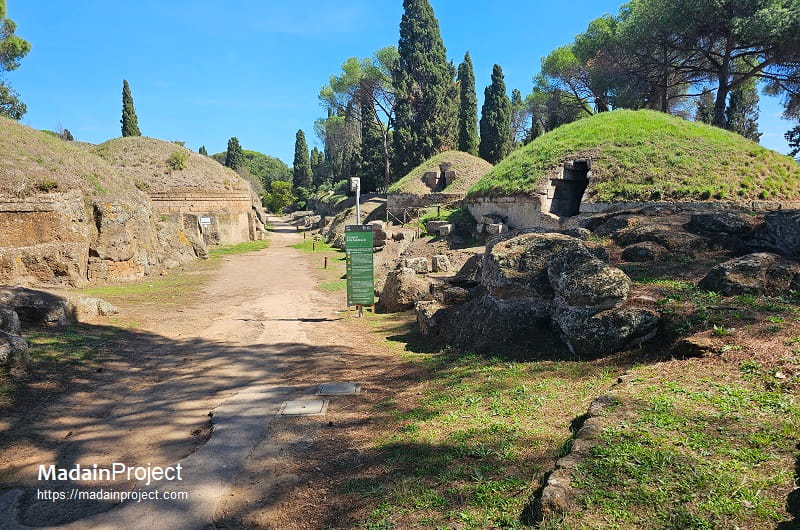
circa 585 BCE
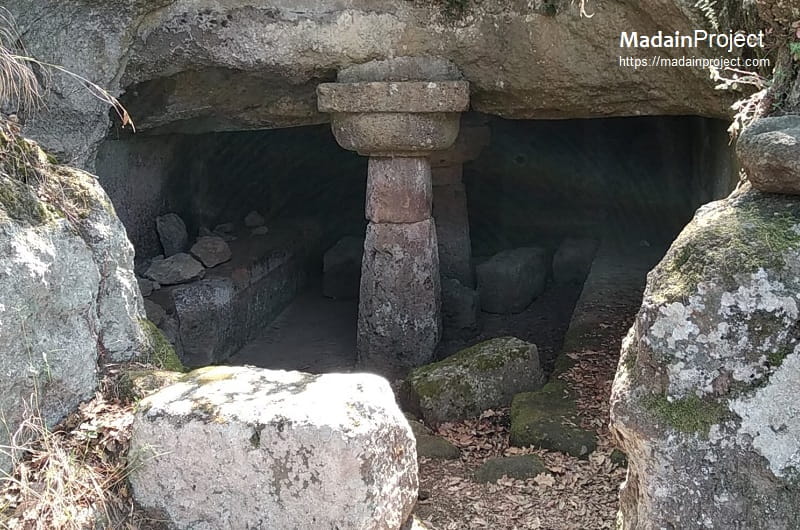
Tomb of the Doric Columns
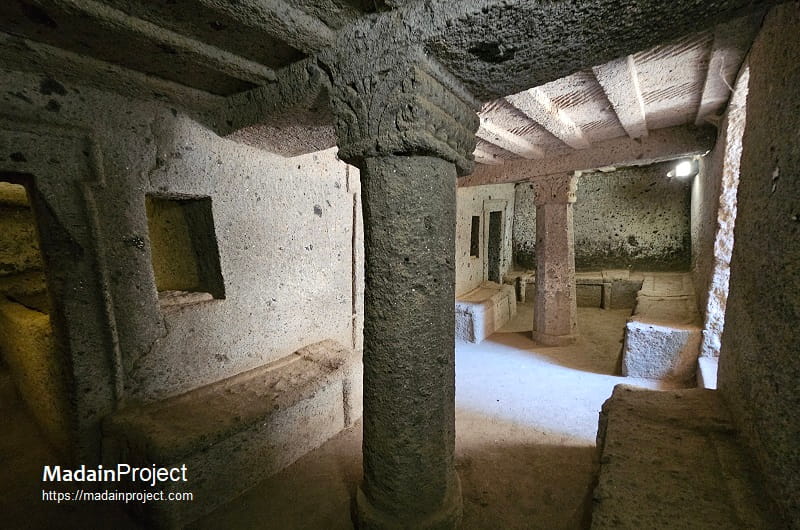
The tomb of the Doric Columns (tomba delle colonne doriche) is a significant 6th-century BCE Etruscan tomb located within the Banditaccia Necropolis. The tomb takes its name from two columns carved directly from the tuff bedrock at the entrance. These columns feature capitals in the Aeolic style (sometimes referred to as a form of Doric or Proto-Doric, often showing Eastern influence). Interior of the tomb includes carved stone beds (klinai) intended for the deceased, arranged along the walls. The ceiling is carved to represent the wooden beams and thatch structure of Etruscan houses, showing advanced engineering and attention to detail. It dates to the beginning of the 6th century BCE (Archaic period). Is notable specifically for its structural mimicry of residential homes and its early architectural columns.
circa 600 BCE
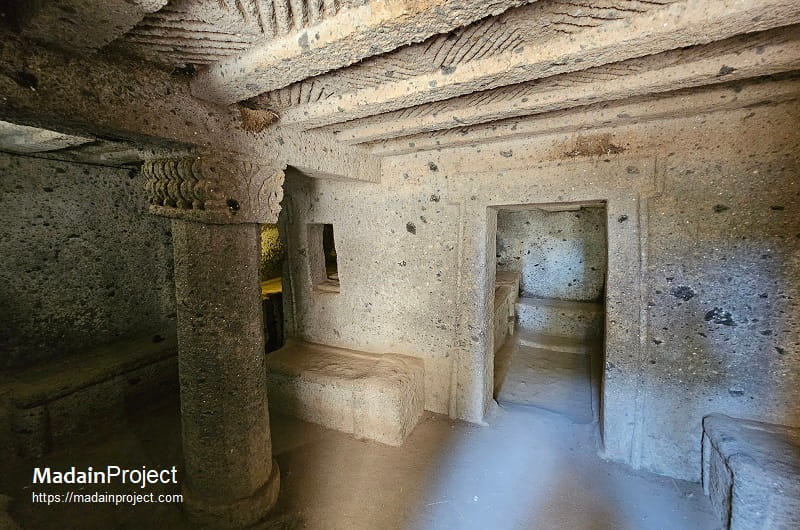
Tomb of the Capitals
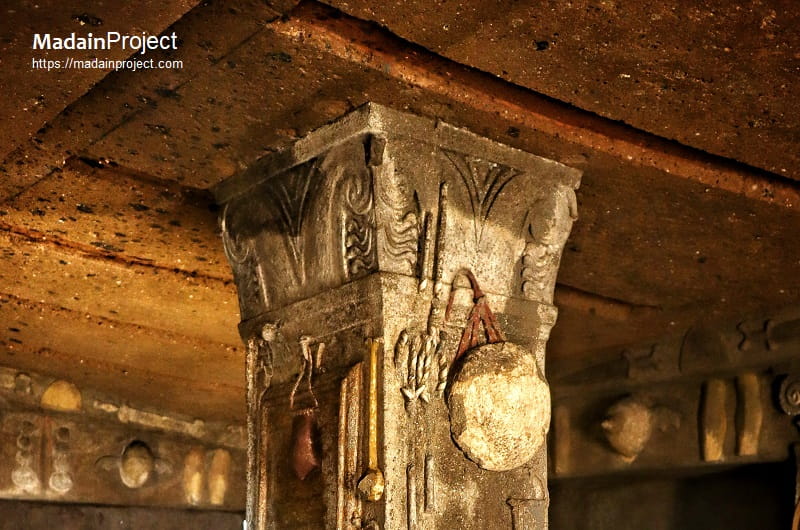
Tomb of the Capitals (tomba dei capitelli) is an Etruscan hypogeal tomb dating back to the end of the 6th century BCE. The tomb takes its name from the two Aeolic style capitals placed in the main room. These capitals are a unique representation of the Aeolian class, which has origins in Phoenician Cyprus. The camber with the Aeolic capitals is accessed from the entrance to the tomb via a small corridor.
It features a short dromos (entrance corridor) leading to an atrium with two small lateral rooms on both sides. Beyond the main atrium, there are three burial chambers, each equipped with male and female funeral beds, with male klinai (banquet beds) located in the main atrium.
At the end of the room are three rooms intended for the burial of the dead. The structure of the tomb is completed by two small rooms placed on the sides of the corridor before the main room.
Of notable import for the purposes of historical architectural documentation is the flat roof, with reliefs that replicate the wooden beams and the thatched roof, faithfully imitating an Etruscan dwelling. In the main room there are also some funeral beds, intended for the bodies of the deceased wrapped in shrouds, and not enclosed in sarcophagi. In the central rear room there are two funeral beds, one intended for a man and the other for a woman, most likely the founders of the family.
The tomb is often compared to the Tomb of the Greek Vases and the Tomb of the Cornice, both of which also reflect the layout of aristocratic homes during the Archaic period.
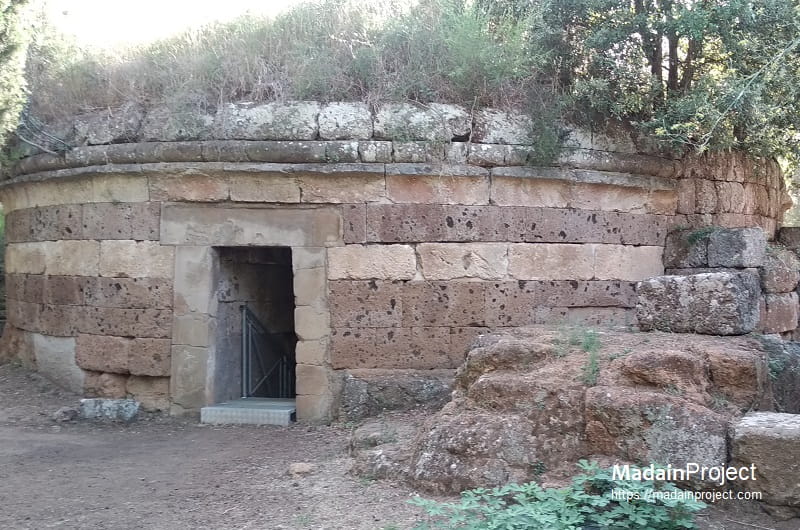
Polichrome Tumulus
The so-called Polichrome Tumulus (tumulo polichrome) is a 6th-century BCE funerary monument located in the Banditaccia Necropolis of Cerveteri. It is most famous for its striking exterior wall, which features alternating bands of three different colored stones: red tuff, white macco, and grey peperino.
Circa 525 BCE
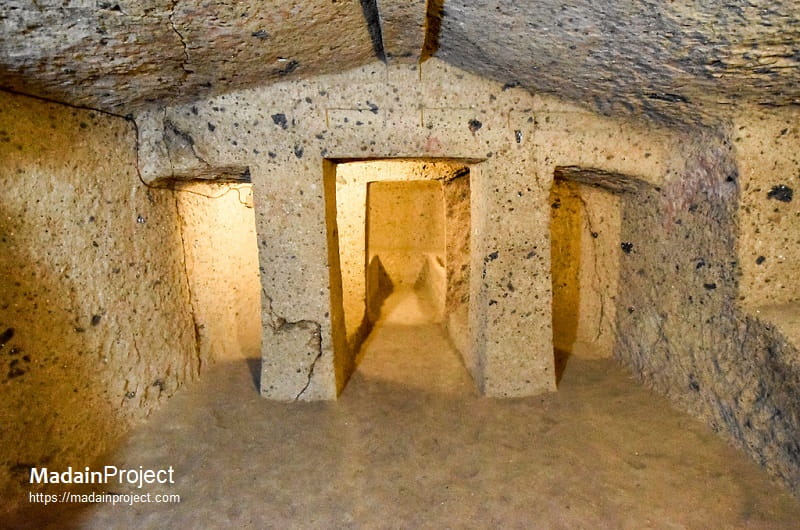
Mengarelli Tumulus
The Mengarelli Tumulus (tumulo Mengarelli) is the only one inside a large unfinished burial mound and consists of a long corridor with two side cells leading into a circular vestibule and to side chambers and to two back rooms, one behind the other. The ceiling of the last one still conserves a "preparatory design" sketched out in charcoal which would later have been used by a carver for putting together a wooden framework in relief. This tomb belongs to a more highly developed age compared with athe so-called Capanna tomb in the large burial mound no. 1, and is an interesting example of a lrge well designed house that in the architecture of the living took theplace of the simple hut dwellings of the previous age.
circa 530-520 BCE
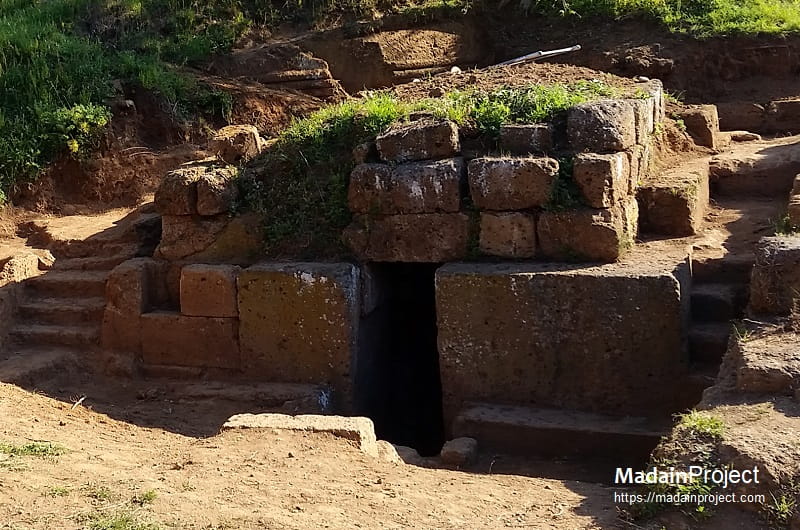
Tomb of the Inscriptions
The Tomb of the Inscriptions, also called the tomb of the graffito inscriptions (Tomba Delle Iscrizioni Graffite) dates back to the second half of the sixth century BCE. It is highly significant to archaeologists because it contains some of the most important surviving examples of early Etruscan literacy and social structure.
The tomb is named for the numerous names and signatures scratched (graffitied) into the tuff walls. The most prominent inscription is written above the main door and mentions a woman named Ramatha Spesias.
The Tomb of the Graffite Inscriptions in the Banditaccia necropolis of Cerveteri was discovered relatively recently in August 1981 CE during a clandestine excavation. Its uniqueness and name stem precisely from the fact that it is currently one of the few examples in Etruria (and the only one in Cerveteri) to have graffiti, rather than painted or engraved, inscriptions. Furthermore, it is one of the few examples of archaic inscriptions in Etruria (except for the complexes of Portonaccio and Pyrgi) and the one with the most complete inscriptions (the Tomb of the Painted Inscriptions in Tarquinia has less than 10 words).
The tomb dates to around 530-515 BCE and represented a turning point in research not only because it increased our knowledge of Etruscan vocabulary, but above all because it allowed for deeper reflection on the most well-known figure of the Etruscan political landscape of the 6th century BCE and his genealogy: Thefarie Velianas. Furthermore, it highlighted the role an Etruscan woman could play in city politics. The longest of the many inscriptions appears to be a sacred inauguration or a rite performed in favor of the deceased; here, the name Ramatha Spesias appears in the first line, the subject of a sentence whose verb is in the past tense (sχạ [ni] ce) followed by a locative phrase that would indicate the tomb itself (𐌉𐌞𐌈: thui: here), followed by stalthi (𐌉𐌈𐌋𐌀𐌕𐌔): this has allowed the inscription to be translated as "in the [tomb] of the sta". Along with Ramatha, other people are named who perform actions ("writes, prescribes") and are indicated by attributes and adjectives ("he who makes offerings to the gods"); among these appears the beneficiary of the actions, who would be the man named Larice Veliinas. The family name has been associated with that of the Pyrgi tablets: Thefarie Velianas, author of the tablets and the dedication of Temple B of the Sanctuary.
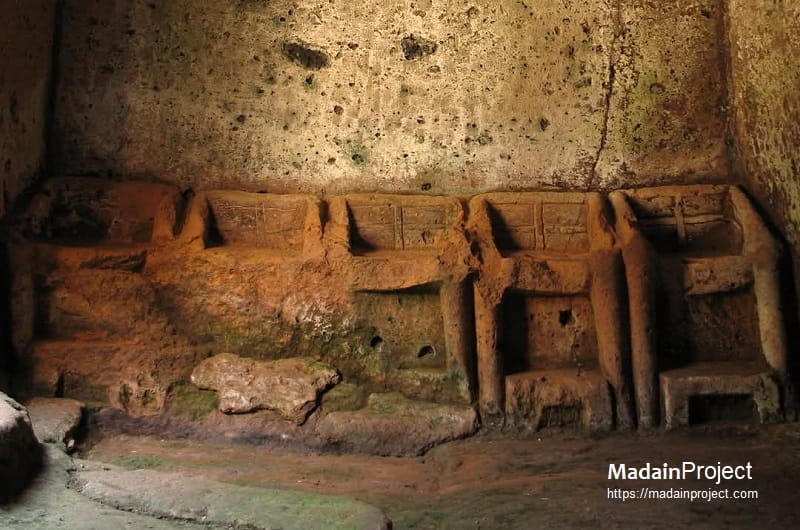
Tomb of the Five Seats
The Tomb of the Five Seats (Tomba delle Cinque Sedie) is an Etruscan hypogeal tomb dating back to the 7th century BCE, discovered in 1865 CE.
The tomb is located inside a tumulus mound measuring more than 20 metres in diameter. It has an architectural structure typical of many tombs in the necropolis: a short Dromos (corridor) which leads to two lateral rooms and a main room at the end of the corridor.
It owes its name to the five chairs sculpted on a wall of the left side room of the tomb, where five statuettes (inspect) may have been placed, three of which are still intact. Today two of these are exhibited at the British Museum in London, and one at the Capitoline Museums in Rome.
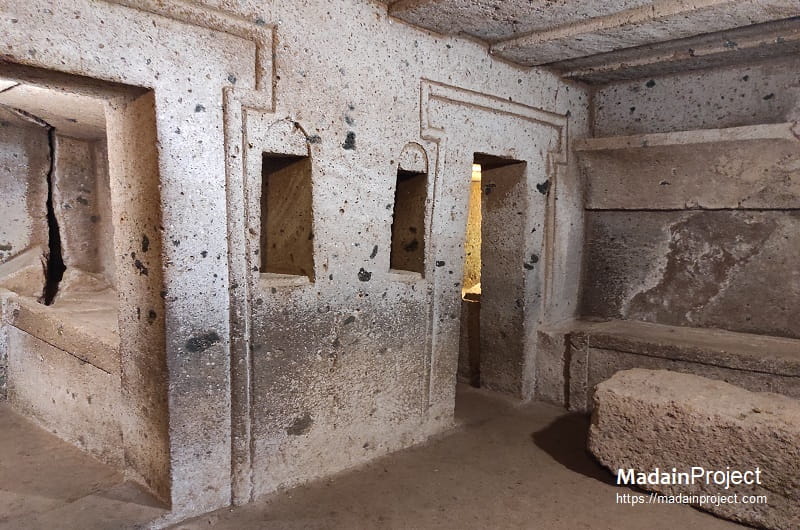
Tomb of the Cornice
The Tomb of the Cornice (tomba della cornice) dates back to the end of the 6th century BCE. The tomb, which owes its name to a cornice that runs along the top of all the walls and was used to display vases and small pieces of furniture, is located inside a small circular mound that ends with a small earthen dome on the top.
The tomb has a very regular structure with a tripartite cell, the same as the tomb of the Greek vases ; a short entrance corridor, which overlooks two symmetrically opposite cells, placed before the main room, rectangular and dug transversally with respect to the entrance corridor.
On the sides of the room there are various benches, intended for urns and sarcophagi, and at the back there are three entrances that lead to as many burial chambers, of which the central one was intended for the founders of the family. On the ceiling there are wooden beams chiseled in imitation of Etruscan houses.
circa 515 BCE
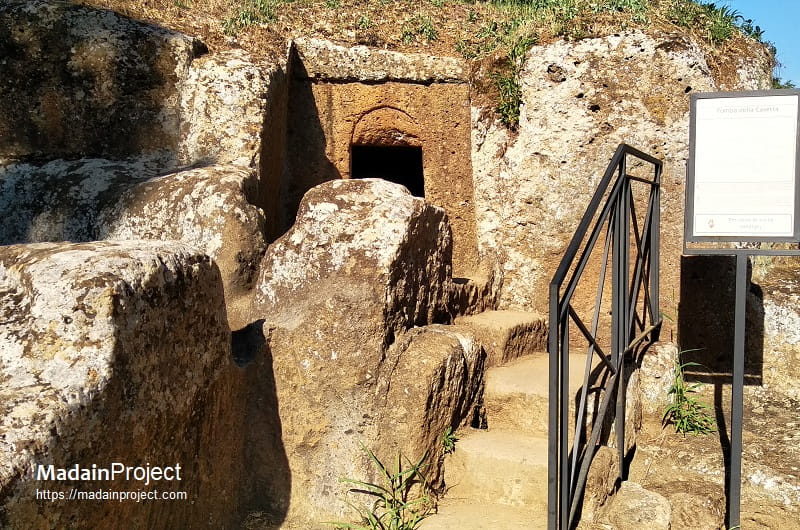
Tomba della Casetta
The Tomba della Casetta (tomb of the cottage) was dug into a tuff bank, has a complex architectural structure: from the short Dromos (corridor) you reach the main funeral room, from which you access three other funeral rooms, arranged according to a cruciform plan. The doors are surmounted by small arches, and the small windows leading to the funeral chamber in line with the room are particularly refined. In the tomb there are 6 funeral beds.
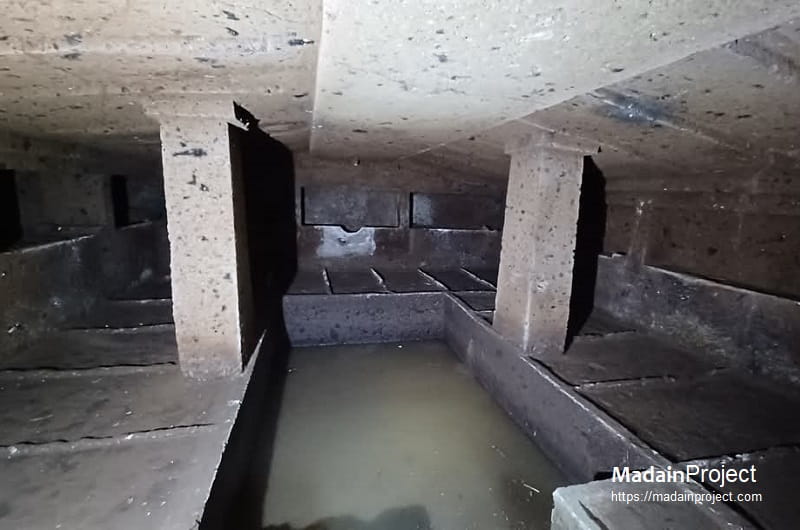
Tomb of the Two Pillars
The tomb of the two pillars (Tomba dei Due Pilastri) is characterized by two pillars supporting its roof.
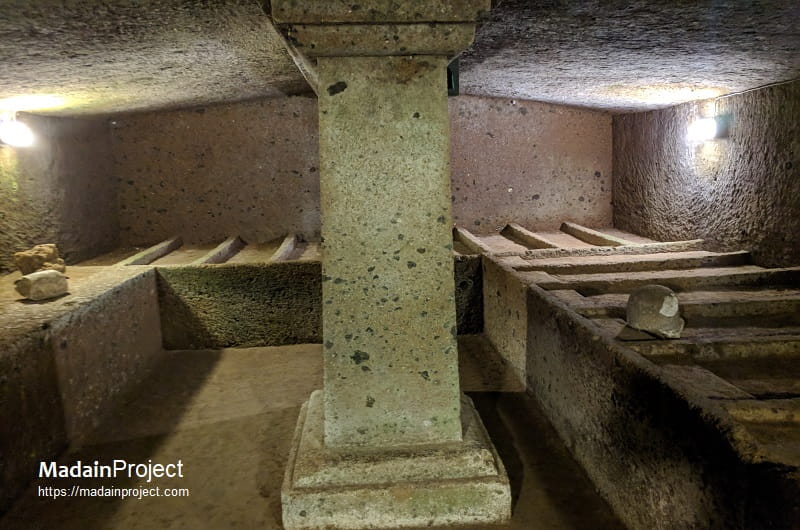
Tomb of the Pillar
The Tomb of the Pillar (tomba del pilastro) is a 4th-century BCE Etruscan hypogeum, characterized by a single central pillar supporting its sloping ceiling.
circa 325 BCE
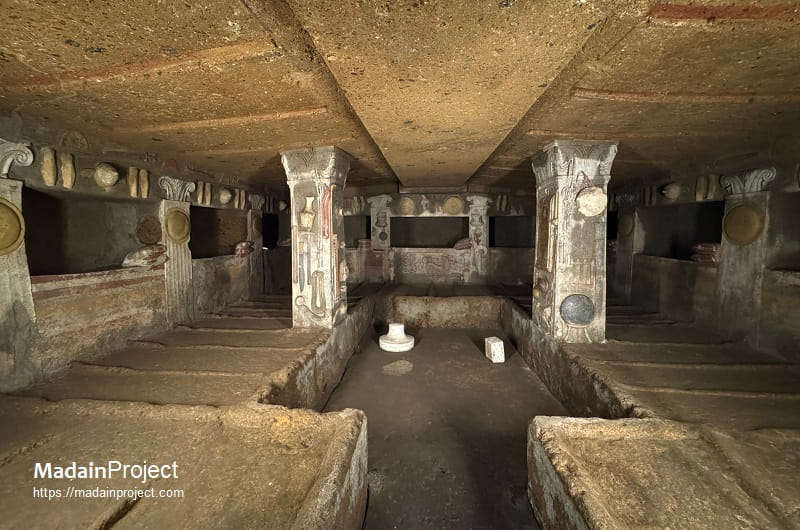
Tomb of the Reliefs
The Tomb of the Reliefs (tomba dei rilievi) can be accessed by descending a stairway. It is a hypogeum crypt or tomb, one of the most important and famous in Etruria, that belonged to the Matuna family, as is recorded on a cippus stone now displayed inside the tomb. The chamber has a double sloping roof supported by two central pillars in Aeolian order, with niches along the sides and decorative bands of painted stucco reliefs on the walls and on the inner facings of the pillars; again executed in Aeolic style. Above the burial niches runs a frieze of weapons, and on the back wall and pillars are depicted a series of household objects that provide a valueable source of information concerning the daily life of the period. In the center, beneath the main burial niche, are figures protrayed from the underworld, Scilla and the three-headed dog, Cerberus (inspect).
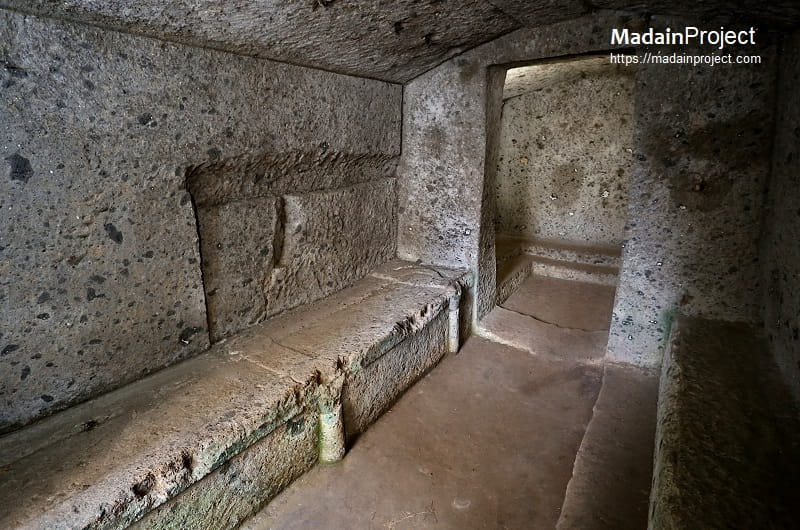
Tomb of the dolia and the andirons
Tomb of the dolia and the andirons (Tomba dei dolii e degli alari) is located inside Tumulus II, among the largest of the necropolis, where the Tomb of the Hut, the Tomb of the Greek Vases and the Tomb of the Funerary Beds were also excavated.
The tomb has a very regular structure; a short entrance corridor, which overlooks two symmetrically opposite cells, placed before the main room, rectangular and dug in line with the entrance corridor, which is followed by another burial chamber. It owes its name to the various dolia found inside it, and to the tomb on the right where various tools for cooking meat were found, such as basins, cauldrons (dolii), spits and andirons (alari).
The Andari room was found intact, and in addition to the tools for cooking meat, it also yielded a lot of precious material; this circumstance disproved the hypothesis that the side rooms were used for the tombs of the servants.
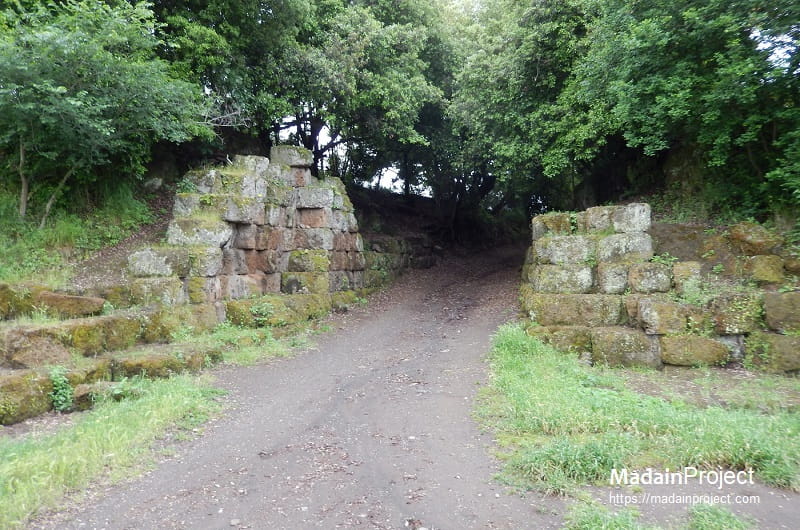
Porta Coperta
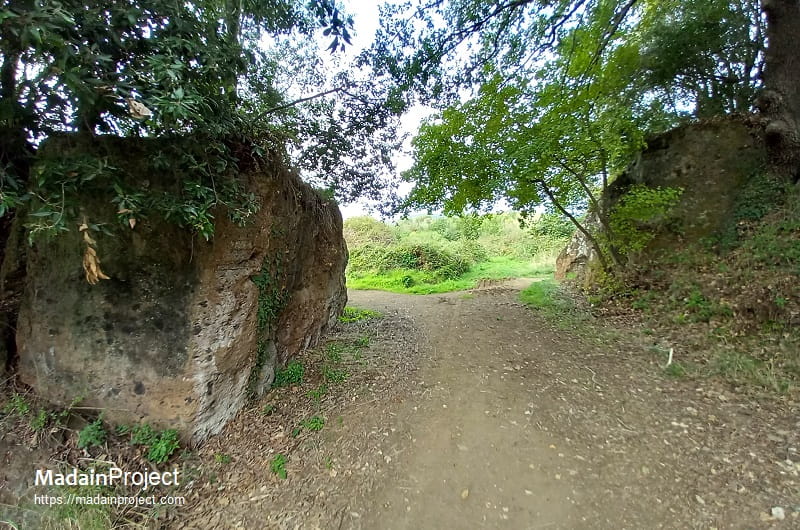
Porta Bufolareccia
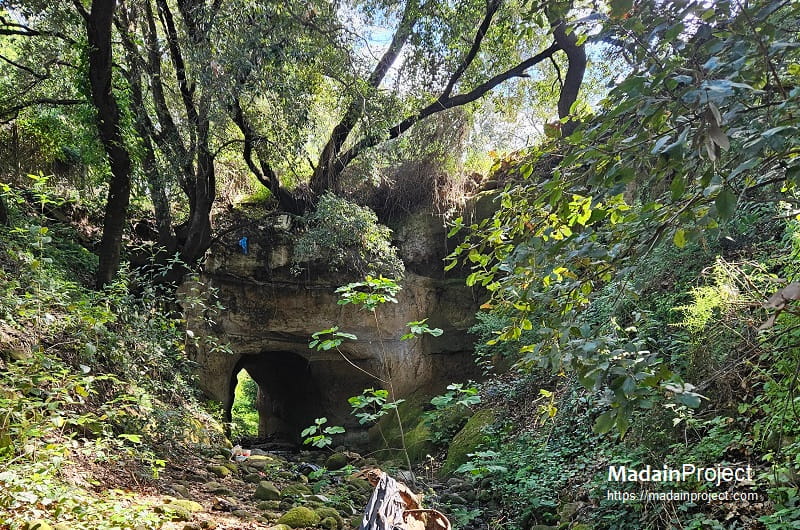
Ponte Vivo
Ponte Vivo, the most important hydraulic structure north of Cerveteri, is about 20 meters long and channels the waters of the Fosso del Marmo. A road runs above the bridge, connecting Cerveteri to the areas towards Tarquinia and Vulci. The city of Cerveteri is connected to the bridge by two roads: one from the northern gate, the other from the Banditaccia necropolis.
circa 625 BCE
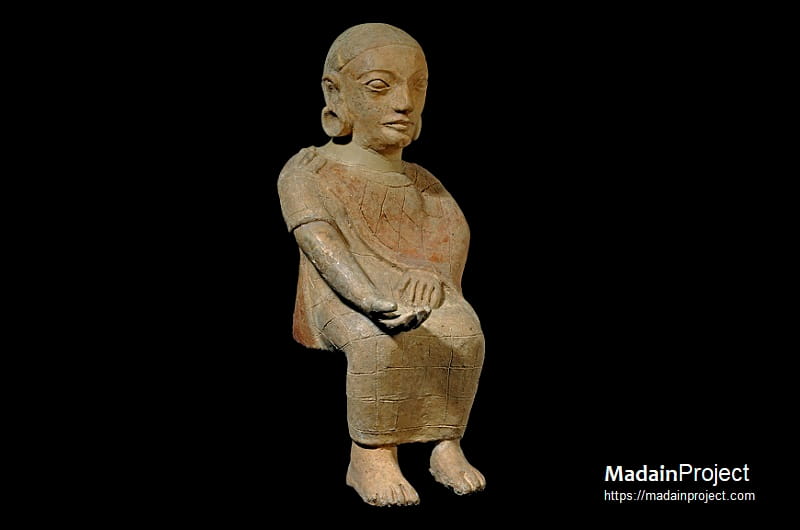
Seated Figures
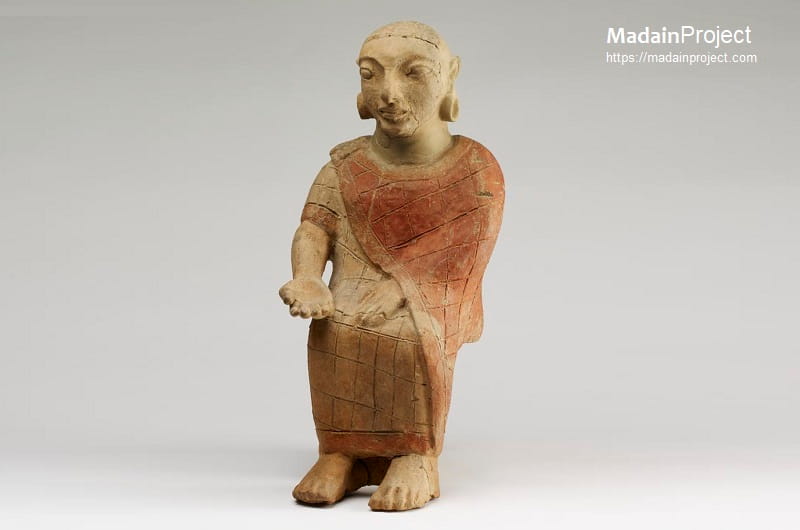
The seated terracotta figures from the Tomb of the Five Chairs (Tomba delle Cinque Sedie) represent a critical early development in Etruscan funerary iconography, dating to the third quarter of the 7th century BCE. These figurines, originally numbering five and measuring approximately 50 cm in height, were placed upon five square, rock-cut chairs equipped with high backrests and footstools. Identified by scholars such as Anthony S. Tuck as ancestral figures, the statues are posed in a ritualistic gesture with the right arm extended and palm upturned, a posture signifying the welcoming and elevation of the newly deceased into the ancestral fold.
This scene is framed within a domestic architectural context; the figures faced two mensae (offering tables), and the presence of a libation altar on the entrance wall suggests the performance of a perpetual funerary banquet. Stylistically, the British Museum notes that while the garments and jewelry are distinctly Etruscan—including chequered mantles fastened by fibulae—the large-scale sculptural technique and facial features indicate significant inspiration from Eastern Mediterranean and Near Eastern artistic traditions. Of the original five, three survive: two are held at the British Museum in London, and one is housed in the Capitoline Museums in Rome.
circa 515 BCE
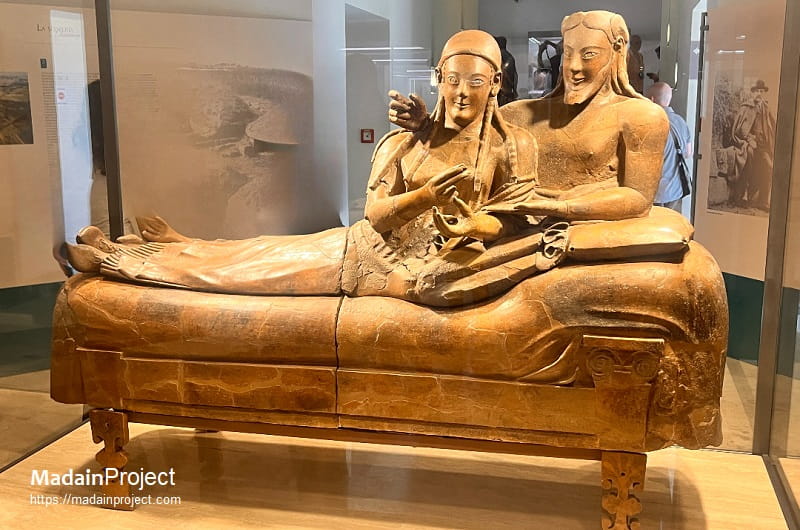
Sarcophagus of the Spouses
The so-called Sarcophagus of the Spouses (Sarcofago degli Sposi) housed in the National Etruscan Museum of Villa Giulia is a definitive example of late 6th-century BCE Etruscan funerary sculpture, discovered in 1881 within the Banditaccia necropolis of Cerveteri. Standing 1.41 meters high and 1.91 meters long, the anthropoid cinerary urn is constructed of polychrome terracotta and was originally fired in four distinct sections to mitigate structural failure in the kiln. Unlike the contemporary Greek kouroi, the figures exhibit a dynamic, outward-reaching composition; the husband’s right arm affectionately rests on his wife’s shoulder, a gesture reflecting the high social status and relative gender parity of Etruscan elite women.
Stylistically, the piece displays Eastern Greek (Ionian) influences, characterized by almond-shaped eyes, the "Archaic smile", and detailed renderings of Etruscan fashion, including the woman’s tutulus (pointed cap) and calcei repandi (pointed shoes). Archeological analysis of the hollowed pupils suggests they once held inlays of glass or precious stones, and the gestural arrangement of the hands indicates they originally supported perishable or lost attributes, such as a drinking cup (patera) or a perfume flask, symbolizing an eternal banquet in the afterlife.
It was discovered in 1881 CE within an unnamed tomb on the Ruspoli family estate in the eastern sector of the Banditaccia Necropolis in Cerveteri. Unlike the Louvre version, which was found earlier in the same necropolis by the Marquis Campana, the Villa Giulia specimen was unearthed by the Boccanera brothers in roughly 400 fragments, scattered both inside and outside the tomb due to previous damage from tomb robbers.
circa 500 BCE
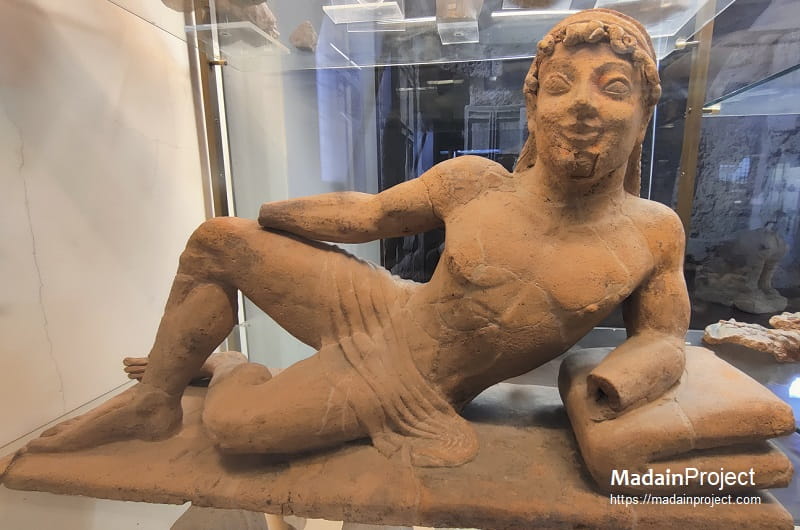
Reclining Youth Funerary Urn
A terracotta cinerary urn lid from the Banditaccia necropolis (Bufolareccia sector, Tomb 91/92), dated to approximately 500–490 BCE, depicts a semi-reclining male youth rendered in the characteristic banqueting pose. The figure lies on his left side upon a kline, with his arm resting on a folded cushion, a posture associated with elite funerary iconography in Etruscan culture. The body, originally covered with polychromy traces still partially visible, is largely nude except for a short tunic draped over the hips with softly pleated folds. The head exhibits stylistic features typical of Caeretan production, including an “archaic smile” and carefully arranged curls shaped in a spiral or “snail” form. Such urns functioned as containers for cremated remains and were placed within tombs, with the sculpted lid both sealing the vessel and representing the deceased in an idealized banqueting context. The youthful figure may be interpreted in light of the Greek concept of the ephebe, denoting an adolescent male transitioning into adulthood through civic and military training. The object is currently preserved in the collections of the Museo Nazionale Cerite.
Signup for our monthly newsletter / online magazine.
No spam, we promise.

The Madain Project is an online archive of Abrahamic History and Archaeology.
Abrahamic History & Archaeology is the study of history and archaeology with respect to the three Abrahamic Faiths without considering the religious and theological aspects. The goal of Abrahamic History is to understand how and why the religious doctrines and behaviours have evlovled and changed over time. Searching for patterns in the evolution of significant cultural events such as the development of farming, the emergence of cities, or the collapse of major civilizations for clues of why and how these have influenced the three major Abrahamic religions.
Cloud Drive -
About -
Help -
Editorial Policy -
AI Policy -
Privacy Policy -
Contact
Madain Project: Encyclopedia of Abrahamic History & Archaeology.
Copyright MadainProject 2017 - 2026.