
Cerverteri is the site of an ancient Etruscan city and was once among the most important urban centers of ancient Etruria, with a territory more than 15 times larger than the modern town. The most notable remains belong to the Banditaccia Necropolis, which contains a wide range of tumulus tombs and chamber tombs considered some of the most significant of their kind. Carved directly from tufa, many of these tombs imitate features of Greek architectural styles.
Ancient Cerveteri, identified the Etruscan city-state of Caere or Cisra, functioned as a preeminent Mediterranean proto-urban center that reached its geopolitical apogee between the 7th and 5th centuries BCE. Situated on a tufa plateau three miles from the Tyrrhenian coast, the city leveraged its proximity to the mineral-rich Tolfa Mountains and its three subordinate ports—Pyrgi, Alsium, and Punicum—to establish a robust maritime commercial network with Hellenic and Carthaginian polities.
This cross-cultural exchange is architecturally manifested in the Banditaccia Necropolis, a sprawling funerary complex where tumuli and rock-cut chambers precisely replicate the domestic plans and social hierarchies of Etruscan urbanism. Politically, Caere maintained a complex, often conciliatory relationship with the nascent Roman Republic, eventually receiving civitas sine suffragio following the mid-4th century BCE conflicts, which facilitated its gradual integration into the Roman administrative apparatus.
Despite its eventual decline during the late Republic and Imperial periods due to economic shifts and environmental factors, Caere remains a vital archaeological locus for the study of Etruscan epigraphy, ceramic production—specifically bucchero and red-figure ware—and the evolution of early Italic funerary engineering.
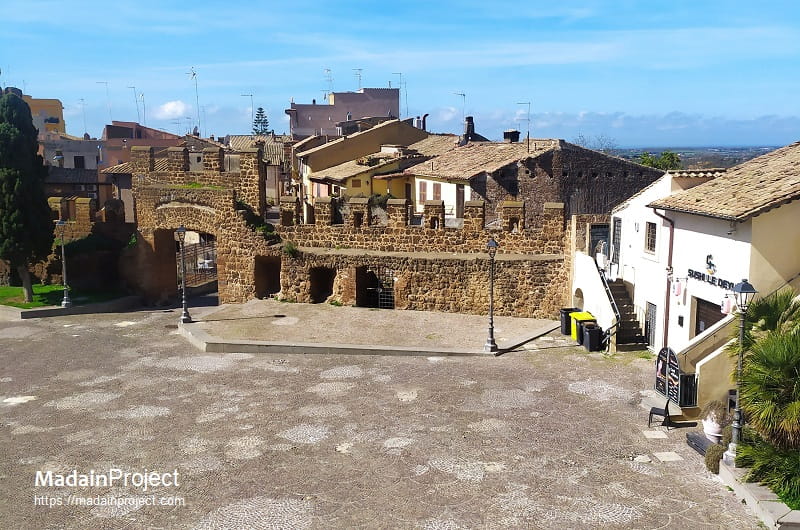

Cerveteri, known in antiquity as Caere (Etruscan: Cisra), was one of the most significant and influential city-states of the Etruscan League, flourishing primarily between the 7th and 4th centuries BCE due to its strategic proximity to the Tyrrhenian coast and its control over vital mineral resources in the Tolfa Mountains. As a preeminent maritime power, the city maintained sophisticated commercial and cultural exchange with the Hellenic world, evidenced by the profound Greek influence on its artistic output and its unique distinction of possessing a dedicated treasury at Delphi.
The site is most architecturally renowned for the Banditaccia Necropolis, a sprawling funerary complex where tumuli and rock-cut tombs were meticulously designed to replicate the domestic interiors of Etruscan dwellings, providing invaluable archaeological data on ancient urbanism and social stratification. Following a period of tentative alliance and eventual conflict with the rising Roman Republic, Caere was granted civitas sine suffragio (citizenship without the vote) in the 4th century BCE, marking the commencement of its gradual Romanization and subsequent decline in regional autonomy.
By the medieval period, the threat of malaria and Saracen incursions forced the remaining population to relocate to the nearby fortified position of Ceri, leaving the ancient site to be preserved as a monumental testament to Etruscan funerary engineering and Mediterranean geopolitical history.
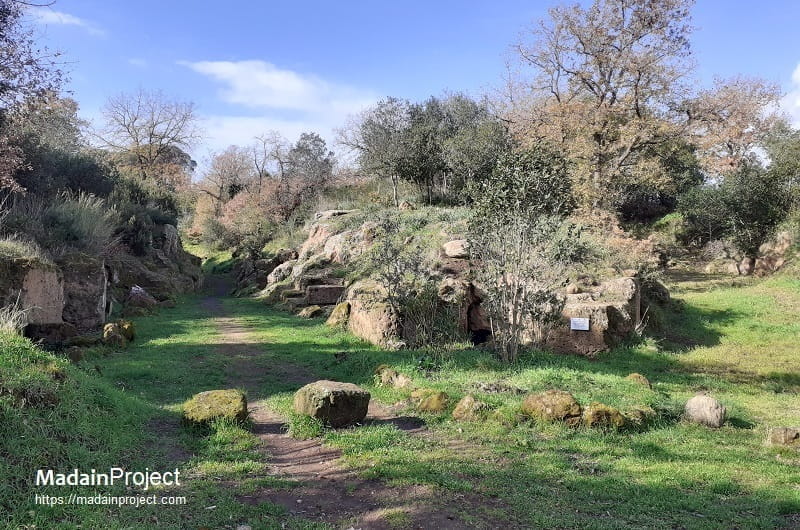
Ancient Caere
The archaeological site of Ancient Caere, situated on a defensive tufa plateau in southern Etruria, represents a critical locus for the study of Etruscan urbanization and funerary architecture from the Villanovan period through the Roman conquest. The site is divided into two primary zones: the urban plateau, which preserves remnants of the city's orthogonal layout and sacred precincts such as the Manganello temple, and the vast Banditaccia Necropolis, a UNESCO World Heritage site.
This "city of the dead" demonstrates a centuries-long evolution of sepulchral engineering, transitioning from early Iron Age shaft graves to monumental Orientalizing tumuli and eventually to the "dice tombs" of the late 6th century BCE, which mirror contemporary domestic urban planning. Excavations have yielded a sophisticated material record, including the distinctive black-walled bucchero pottery and extensive Greek ceramic imports, testifying to Caere's role as a primary Mediterranean emporium. Furthermore, the discovery of the Pyrgi Tablets at the city's maritime sanctuary provides essential epigraphic evidence for the political and religious synchronism between the Etruscans and Carthaginians, solidifying the site's status as a fundamental record of pre-Roman Italic civilization.
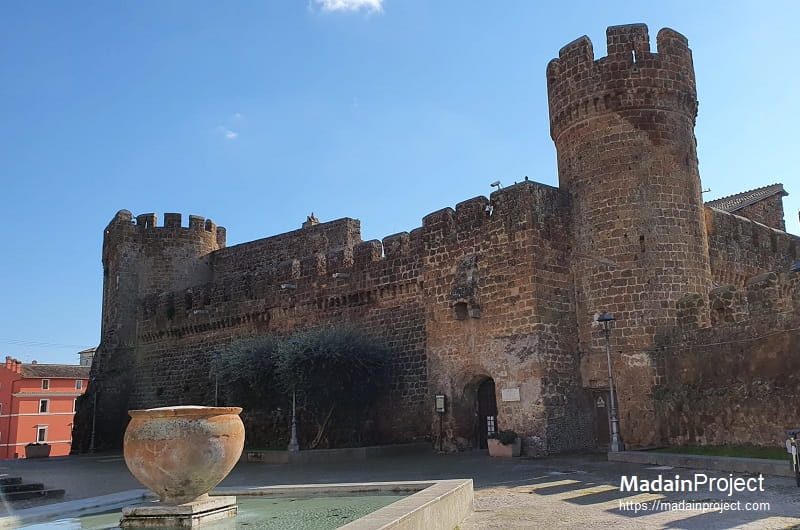
Castello Ruspoli
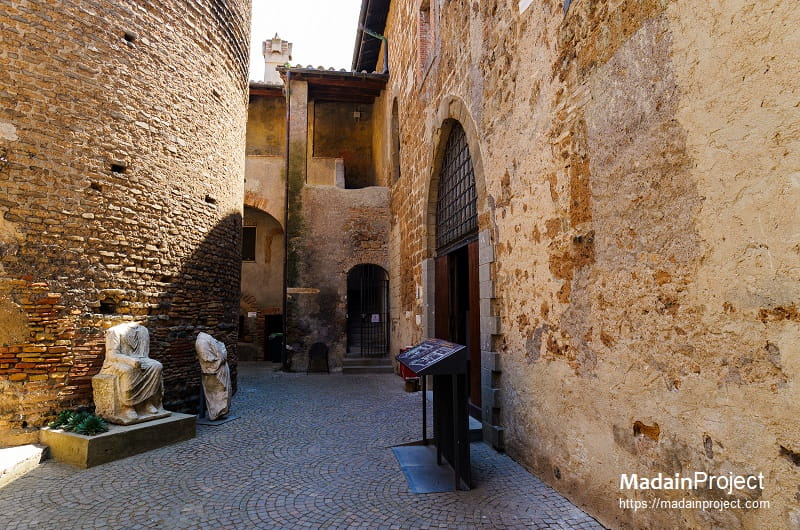
National Museum of Cerveteri
The National Archeological Museum of Cerveteri, housed within the 16th-century Palazzo Ruspoli in the historic center of the modern town, serves as the primary repository for material culture excavated from the urban plateau and the Banditaccia necropolis of ancient Caere. The institutional collection is organized chronologically and typologically, meticulously documenting the transition from the Iron Age Villanovan culture to the high Etruscan and subsequent Roman periods. Significant displays include diagnostic examples of bucchero sottile, indigenous impasto wares, and an extensive corpus of imported Attic black-figure and red-figure ceramics, which delineate the city's status as a central Mediterranean commercial hub.
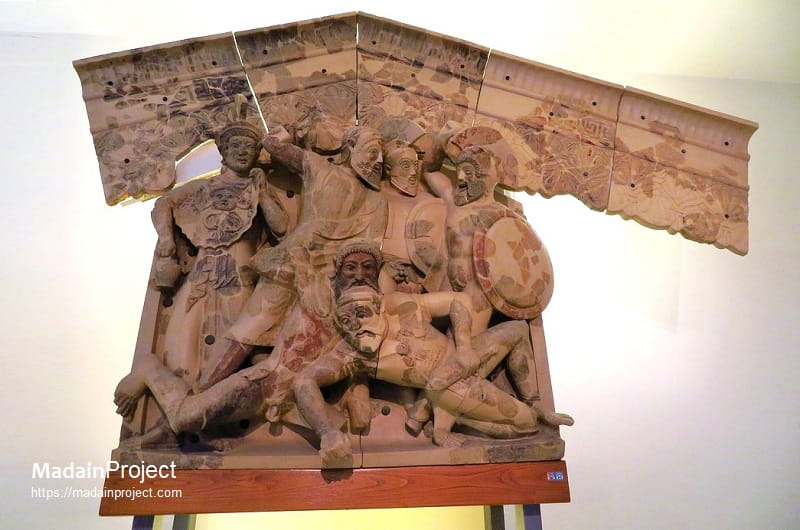
Notable among its holdings are the architectural terracottas and votive deposits recovered from the Manganello and Sant’Antonio sanctuaries, providing critical data on Etruscan religious praxis and temple ornamentation. In recent decades, the museum’s inventory has been further augmented by the repatriation of high-profile artifacts, including the Euphronios Krater and the Euphronios Kylix, which were recovered from local tomb contexts and now facilitate a more comprehensive understanding of the elite social stratification and ritualized gift-exchange prevalent in the 6th and 5th centuries BCE.
Signup for our monthly newsletter / online magazine.
No spam, we promise.

The Madain Project is an online archive of Abrahamic History and Archaeology.
Abrahamic History & Archaeology is the study of history and archaeology with respect to the three Abrahamic Faiths without considering the religious and theological aspects. The goal of Abrahamic History is to understand how and why the religious doctrines and behaviours have evlovled and changed over time. Searching for patterns in the evolution of significant cultural events such as the development of farming, the emergence of cities, or the collapse of major civilizations for clues of why and how these have influenced the three major Abrahamic religions.
Cloud Drive -
About -
Help -
Editorial Policy -
AI Policy -
Privacy Policy -
Contact
Madain Project: Encyclopedia of Abrahamic History & Archaeology.
Copyright MadainProject 2017 - 2026.


