
City of the Dead is a general descriptive term used to denote a burial landscape or a cemetery in which tombs are constructed in a house-like manner, often arranged along streets or in dense clusters that resemble an inhabited urban settlement. In such places, funerary architecture adopts domestic forms—courtyards, rooms, façades, and sometimes upper stories—creating a spatial and visual analogy between the city of the living and the city of the deceased.
The term does not refer to a single site or culture but to a recurring urban-funerary phenomenon observed across different civilizations and historical periods. Cities of the dead typically emerge where burial practices emphasize permanence, visibility, and social representation. They are often located at the margins of living cities, following religious, legal, or hygienic prescriptions that separate the dead from daily habitation while maintaining proximity for commemoration and ritual.
Over time, many such necropolises developed complex internal organization, mirroring social hierarchies, economic distinctions, and architectural fashions of the living communities that created them.
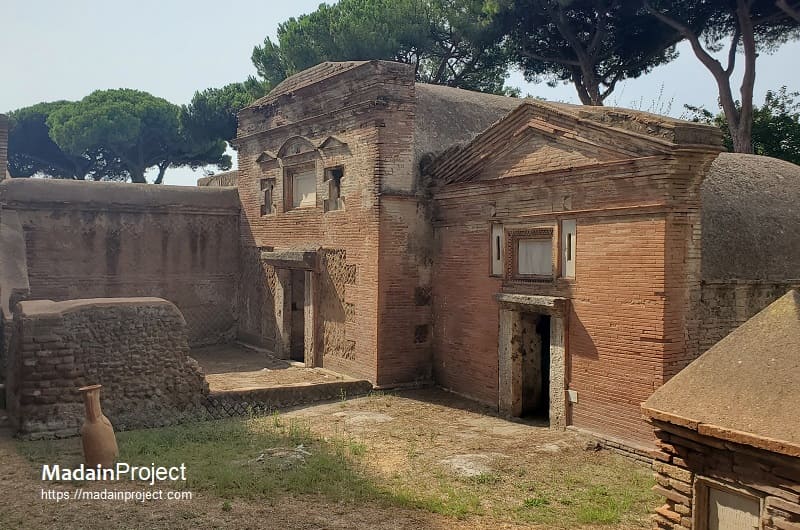
circa 50 CE

Urbanized burial grounds appeared early in human history as societies transitioned from simple interments to monumental funerary architecture. In ancient Egypt, large-scale necropolises such as those at Saqqara and Thebes already displayed planned layouts and mastaba tombs designed as eternal dwellings for the dead.
In the Greco-Roman world, laws commonly prohibited burial within city walls, leading to the development of necropolises along roads outside urban centers, where tombs took the form of houses, temples, or multi-chambered structures. Roman funerary law, reinforced by the Twelve Tables, contributed directly to the linear and suburban character of these burial cities.
In the medieval Islamic world, especially in Egypt, extensive cemetery zones evolved over centuries, incorporating mausolea, domed tombs, and charitable foundations, sometimes becoming partially inhabited. Across cultures, the city of the dead reflects changing beliefs about the afterlife, memory, and the social role of funerary space.
circa 50 CE
Cities of the dead are characterized by architectural density and domestic analogy. Tombs are frequently built with genuine or faux doors, windows, courtyards, and interior rooms intended for visitation, ritual, or symbolic residence of the deceased. Materials and decorative programs often correspond to the status of those buried, ranging from modest brick constructions to richly ornamented stone monuments. Spatial organization may follow grids, streets, or processional routes, reinforcing the impression of an urban environment. These sites often functioned as active cultural landscapes rather than static burial grounds, hosting religious ceremonies, commemorative gatherings, and, in some cases, economic or residential activity.
The term City of the Dead has been applied both strictly (to cemeteries that clearly resemble urban settlements through house-like tomb architecture) and loosely (as a metaphor for large, dense, or socially significant burial grounds). Below is a carefully delimited discussion, distinguishing between these uses and avoiding cases where the term is merely poetic or touristic.
When applied strictly, the term is used for necropolises that display an explicit urban morphology. The Etruscan necropolises of Cerveteri (Banditaccia) and Tarquinia in present day Italy are among the clearest examples. At Cerveteri, dating from the 9th to the 3rd centuries BCE, tombs were carved or built as multi-roomed structures arranged along streets, with interiors deliberately modeled on domestic houses, including columns, beams, and furniture carved in stone. Ancient authors already recognized this analogy between the city of the living and the city of the dead, making this one of the earliest true “cities of the dead” in architectural terms.
Another strict application appears in the Lycian rock-cut necropolises of southwestern Anatolia, particularly at Myra and Kaunos (4th–2nd centuries BCE). Here, tomb façades imitate wooden domestic architecture and are carved into cliff faces in dense clusters that resemble vertical urban neighborhoods. Inscriptions and reliefs reinforce the idea that these were conceived as permanent dwellings for the dead rather than simple burial markers.
In pre-Columbian Mesoamerica, Monte Albán in Oaxaca can also be described, in a strict analytical sense, as having a city-of-the-dead component. While primarily a ceremonial center, its extensive tomb complexes were integrated into the urban fabric, with multi-chambered stone tombs beneath plazas and elite residences. Archaeologically, scholars have described these burial zones as forming a parallel funerary city beneath the living one, reflecting Zapotec concepts of ancestry and civic identity.
When used loosely, the term is often applied to exceptionally large or culturally dominant cemeteries, even when their architecture does not strictly resemble domestic housing. Père Lachaise Cemetery in Paris is frequently called a “city of the dead” due to its scale, street layout, and concentration of mausolea, though most structures function as monuments rather than houses in the ancient sense. Similarly, Recoleta Cemetery in Buenos Aires is commonly described in this way because of its grid-like organization and elaborate mausoleums that visually evoke a miniature city, despite its modern, commemorative purpose.
In the historic city of Jerusalem, the Jewish cemetery on the Mount of Olives has also been referred to as a city of the dead in a metaphorical sense. Its vast extent, density of tombs, and long historical continuity—from the Second Temple period to the present—justify the label descriptively, though its funerary forms are not architecturally domestic.
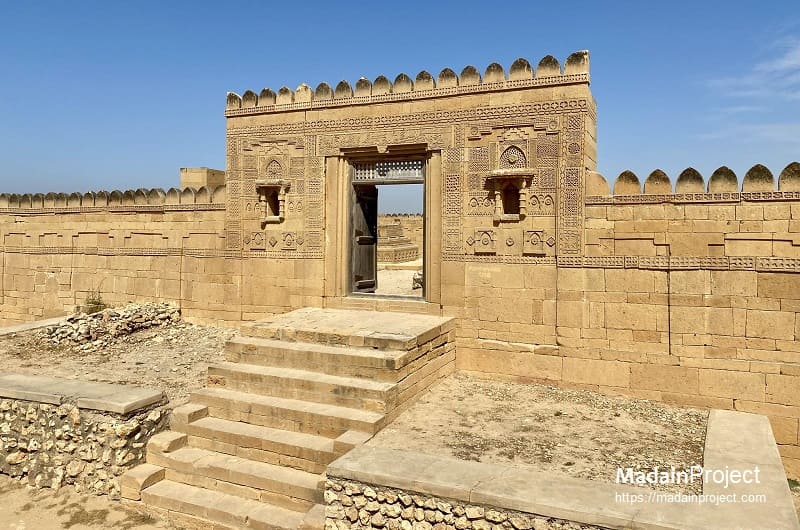
Again, in South Asia, the necropolises of Makli Hill (inspect) near Thatta in Pakistan are sometimes described as a city of the dead due to their immense scale and architectural diversity. Dating from the 14th to the 18th centuries CE, Makli contains thousands of tombs, pavilions, and mausolea arranged across an urban-scale landscape. While not house-like in form, the complexity and spatial organization of the site support a broader, looser application of the term.
In scholarly usage, therefore, City of the Dead is best understood as a descriptive category rather than a fixed typology. It is applied most rigorously to necropolises that consciously replicate urban domestic space, and more flexibly to large, organized cemeteries whose scale, density, or social role evokes an urban counterpart to the living city.
circa 50-400 CE
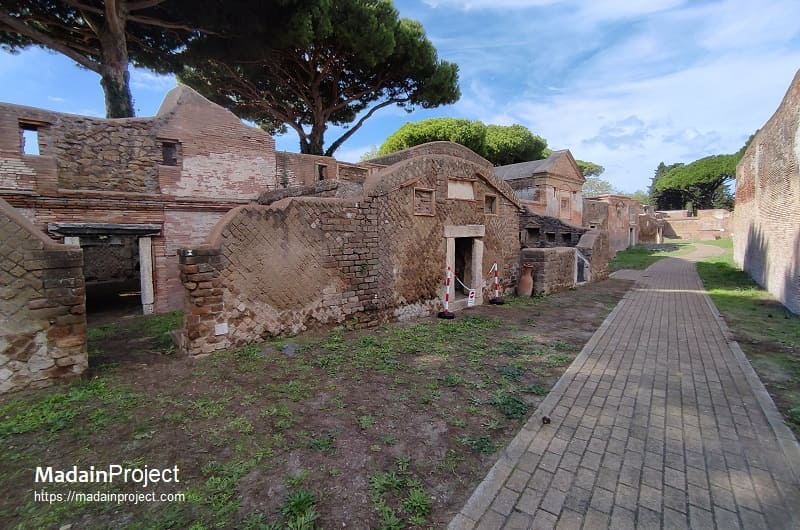
Isola Sacra Necropolis
The Isola Sacra Necropolis, located between the ancient Roman ports of Ostia Antica and Portus near the mouth of the Tiber, represents a well-preserved example of a Roman city of the dead. Primarily in use during the Roman Empire period (second and third centuries CE), it served the middle-class population associated with port administration and commerce. The necropolis is organized along a network of streets lined with brick-built tombs resembling urban houses, complete with façades, interior rooms, and decorative elements such as mosaics and reliefs. Inscriptions provide detailed evidence of family structures, professions, and funerary customs, offering insight into everyday life in the Roman Empire. The necropolis of the Isola Sacra exemplifies the Roman conception of the tomb as a permanent dwelling and a public statement of identity situated within a carefully planned funerary urbanism.
circa 650 CE-

City of the Dead (Cairo)
The City of the Dead in Cairo, commonly known as al-Qarafa, is one of the most extensive and historically continuous funerary landscapes in the world. Located on the eastern edge of the historic city, it developed from the early Islamic period onward, beginning in the seventh century CE following the Arab conquest of Egypt. Over time, it expanded into several distinct cemetery zones, including the Northern and Southern Cemeteries. The area contains mausolea of prominent figures, including Mamluk sultans such as Sultan Qaytbay, whose fifteenth-century CE funerary complex exemplifies the integration of tomb, mosque, and charitable institutions. Cairo’s City of the Dead is notable for its long-standing interaction between the living and the dead; residential occupation within tomb structures has occurred intermittently, particularly from the nineteenth century CE onward, reflecting social and economic pressures as well as the domestic design of the funerary architecture itself.
Signup for our monthly newsletter / online magazine.
No spam, we promise.

The Madain Project is an online archive of Abrahamic History and Archaeology.
Abrahamic History & Archaeology is the study of history and archaeology with respect to the three Abrahamic Faiths without considering the religious and theological aspects. The goal of Abrahamic History is to understand how and why the religious doctrines and behaviours have evlovled and changed over time. Searching for patterns in the evolution of significant cultural events such as the development of farming, the emergence of cities, or the collapse of major civilizations for clues of why and how these have influenced the three major Abrahamic religions.
Cloud Drive -
About -
Help -
Editorial Policy -
AI Policy -
Privacy Policy -
Contact
Madain Project: Encyclopedia of Abrahamic History & Archaeology.
Copyright MadainProject 2017 - 2026.


