
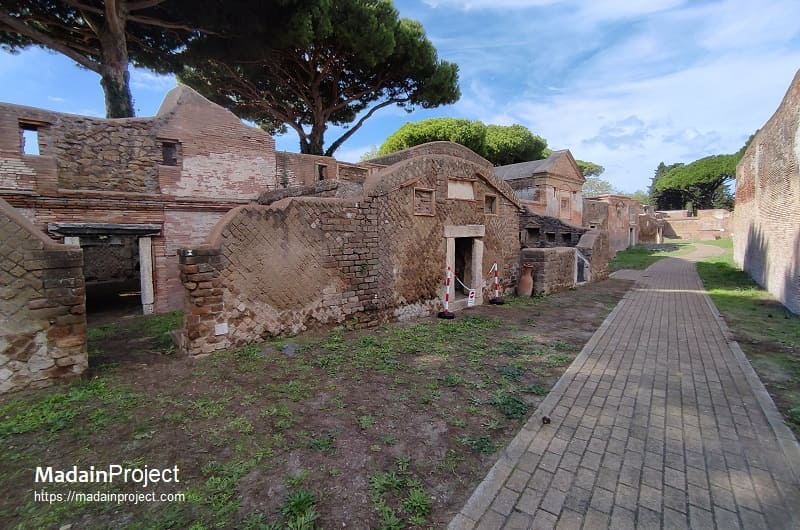
The Isola Sacra Necropolis is an extensive Roman burial ground of the Imperial period situated between the ancient cities of Ostia and Portus, serving as a funerary landscape primarily associated with the commercial and maritime communities that sustained Rome’s principal harbor complex. The Isola Sacra necropolis represents a funerary typology characterized by house-like tombs arranged along streets (a city), reflecting urban planning principles applied to burial space.
The necropolis occupies a strip of land on the Isola Sacra, a man-made island formed by the construction of the Fossa Traiana canal under the emperor Trajan. Lying outside the inhabited zones, in accordance with Roman law prohibiting burials within city boundaries, it developed along the road connecting Ostia with Portus Romae.
The site is remarkable for the density, preservation, and social coherence of its tombs, which provide unusually detailed insight into the lives, professions, and family structures of Rome’s port population during the second and early third centuries CE. Unlike elite funerary monuments in Rome itself, the Isola Sacra Necropolis reflects a predominantly middle-status milieu, composed largely of freedmen, merchants, craftsmen, and imperial service personnel.
circa 50 CE

The history of the Isola Sacra necropolis is inseparable from the artificial formation of the island itself during the early Roman Imperial period. The landmass, originally known as the Insula Portuensis, was created at the beginning of the second century CE through the large-scale engineering works commissioned by Emperor Trajan, most notably the excavation of the Fossa Traiana, a navigable canal linking the hexagonal harbor basin of Portus Romae to the Tiber River. This intervention transformed the coastal landscape and established Portus as ancient Rome’s principal maritime hub. The island was traversed by the Via Flavia, later known as the Via Severiana, which connected Portus with Ostia Antica and provided the axial route along which the necropolis developed. In accordance with Roman funerary law prohibiting burial within inhabited areas, the growing population of Portus began to establish a cemetery along this road from the late first century CE onward.
The necropolis expanded rapidly during the second and early third centuries CE, reaching its peak in parallel with the economic prosperity of Portus under the Antonine and Severan dynasties. Funerary inscriptions and monuments attest to a community largely composed of freedmen and their families, many engaged in occupations essential to the functioning of the harbor, including shipping, grain measurement and distribution, storage, construction, and imperial administration. The development of the cemetery reflects significant changes in Roman funerary practice: while early phases favored cremation, the second century saw a gradual but decisive shift toward inhumation. This transition is visible in the architectural adaptation of tomb interiors, where arcosolia for bodies were inserted alongside or in place of earlier cinerary niches.
As the available frontage along the Via Flavia became increasingly limited during the third and fourth centuries CE, burial practices grew more spatially intensive. New tombs were often constructed behind existing street façades or inserted within established family plots, resulting in a dense and layered funerary landscape. By the middle of the fourth century CE, however, new construction had largely ceased, and the necropolis entered a phase of decline that mirrored broader transformations in the harbor system and regional settlement patterns. By the sixth century CE, the site had been almost completely covered by alluvial silt and marine sand, a process that effectively sealed and preserved the tombs. It was during this late antique period that the name “Isola Sacra” came into use, first recorded by Procopius in 536 CE, likely inspired by the emergence of Christian landmarks such as the Basilica of Saint Hippolytus (Basilica di Sant' Ippolito all'Isola Sacra) as the earlier pagan cemetery fell out of use.
Antiquarian interest in the Isola Sacra necropolis emerged sporadically in the seventeenth and eighteenth centuries CE, including poorly documented explorations conducted in 1699 CE under the patronage of the Cardinal de Bouillon. Systematic archaeological investigation began only in the twentieth century CE, particularly in the 1920s and 1930s under the direction of Guido Calza, whose work was facilitated by extensive land reclamation projects. These excavations brought to light approximately two hundred funerary buildings arranged in a coherent urban-like layout. Since 1973 CE, continued research, most notably through the interdisciplinary “Isola Sacra Project”, has focused on the analysis of more than two thousand skeletal remains, yielding valuable evidence for the health, diet, demographic composition, and social mobility of the predominantly middle-status population that lived and worked in the imperial port of Rome.
circa 50 CE
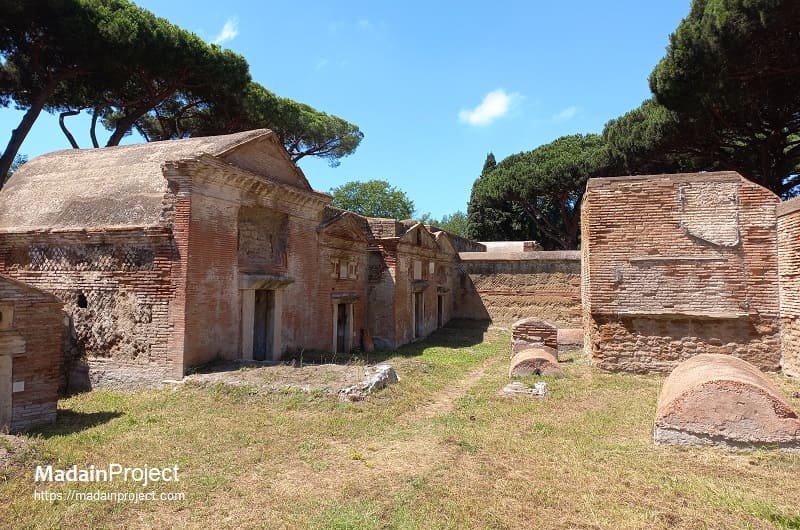
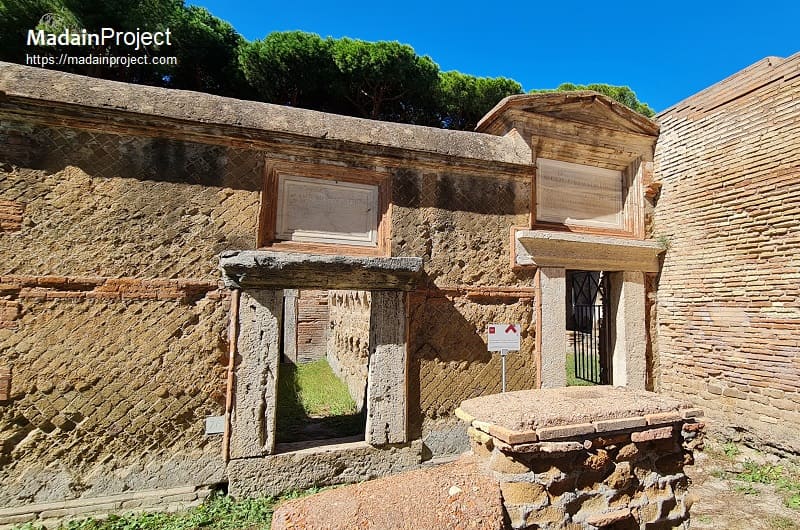
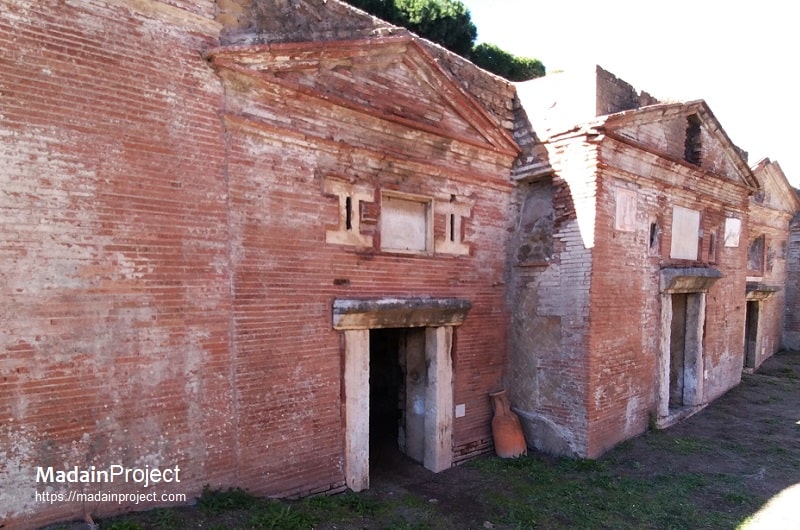
The architecture of the Isola Sacra Necropolis represents one of the most coherent and informative expressions of Roman imperial funerary design, closely adapted to the social and economic profile of the port population of Portus during the height of the Roman Empire (circa second and third centuries CE). The necropolis is organized along narrow streets, creating an urbanized funerary landscape in which rows of brick-faced mausolea line the roadways, most notably the Via Flavia. This planned arrangement emphasizes the public and commemorative function of the tombs, which were intended to be seen by travelers moving between Portus and Ostia.
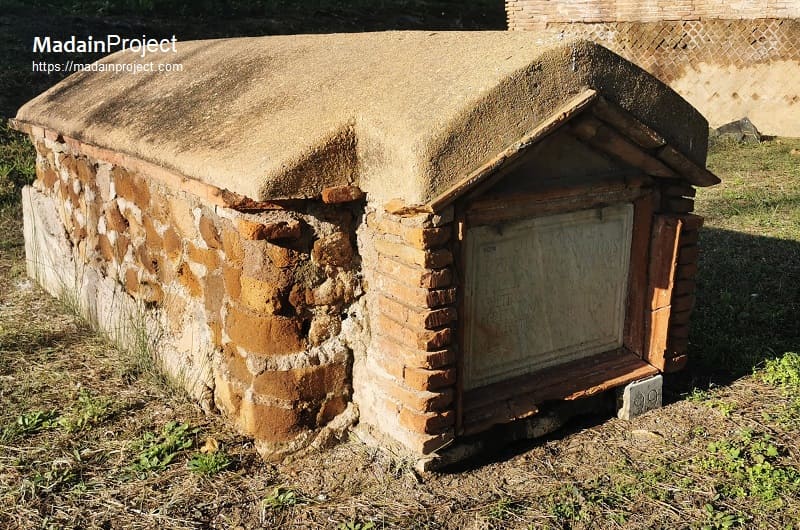
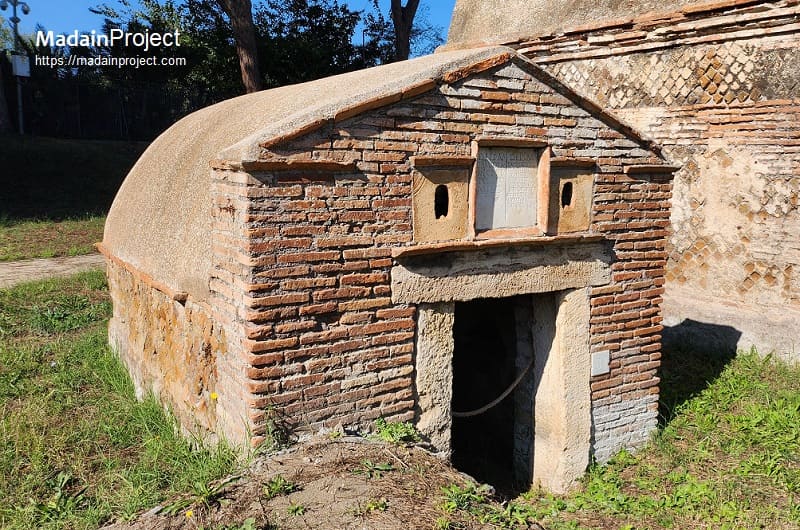
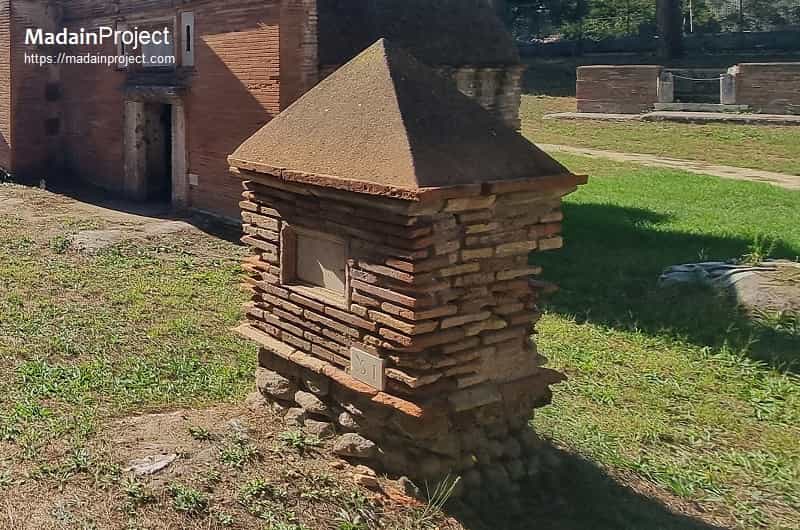
The dominant architectural form is the house tomb (tomba a cella), a freestanding rectangular structure generally measuring between ten and sixteen Roman feet in width. These tombs were constructed primarily in opus latericium, a brick-faced concrete technique that combined structural solidity with refined exterior finishes. Façades were carefully articulated and typically oriented toward the road, featuring architectural elements drawn from contemporary domestic architecture, including pilasters, cornices, and triangular gables (tympana). Arched niches and aediculae were commonly incorporated into the façades to frame inscriptions and, in some cases, portrait reliefs, reinforcing the visual presence of the deceased and their families within the funerary streetscape.
Internally, the tombs were designed to accommodate changing burial practices over time. Early second-century CE examples often contain columbaria-style walls with semi-circular niches intended for cinerary urns, reflecting the persistence of cremation in the initial phases of the necropolis. As inhumation became increasingly dominant during the second century CE, interiors were adapted or newly constructed to include arcosolia—arched recesses designed to hold sarcophagi—as well as formae, burial pits cut directly into the floor and frequently sealed with mosaic coverings. These spatial modifications illustrate the gradual and pragmatic transition between funerary rites rather than a sudden rupture in practice.
While the majority of tombs were single-story structures, a limited number of more elaborate monuments incorporated vertical complexity. Tombs such as Tomb 29 and Tomb 47 featured second floors or roof terraces (solaria), accessed by internal staircases. These elevated spaces were likely used during commemorative festivals and anniversaries, allowing families to gather and perform rituals associated with ancestor veneration. Roofs were generally flat or gently sloping, consistent with both functional needs and the architectural vocabulary of the period.
Beyond the standard chamber tombs, the necropolis also contains a range of secondary and simpler burial forms that reflect internal social differentiation within the port community. These include tombe a cassone, large chest-like masonry tombs, and tombe alla cappuccina, in which the body was covered by pitched terracotta tiles. In particularly crowded zones, such as the so-called “Field of the Poor”, burials were minimally marked, sometimes only by upright amphorae inserted into the ground. This architectural diversity is further enriched by ritual installations associated with funerary practice, including biclinia for banqueting, wells for purification rites, and ovens used in the preparation of ceremonial meals. Together, these features underscore the role of the tomb not merely as a burial container, but as a durable architectural setting for the continued social identity and ritual commemoration of the deceased.
circa 50 CE
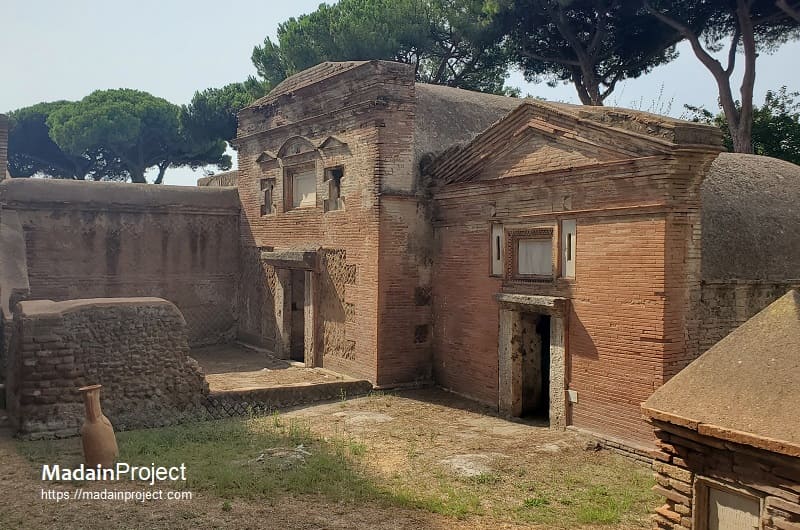
Among the most notable mausolea-structures are the "Tombe a Cella", or monumental chamber tombs, which often featured brick façades adorned with pilasters, triangular gables, and detailed terracotta reliefs depicting the professions of the deceased. These reliefs serve as vital socio-historical documents; for instance, Tomb 100 is renowned for its depictions of Scribonia Attice, a midwife, and her husband Marcus Ulpius Amerimnus, a surgeon shown performing a leg operation. Similarly, Tomb 78 contains a relief of a miller with a horse-driven millstone, illustrating the manual labor that sustained the port's economy.
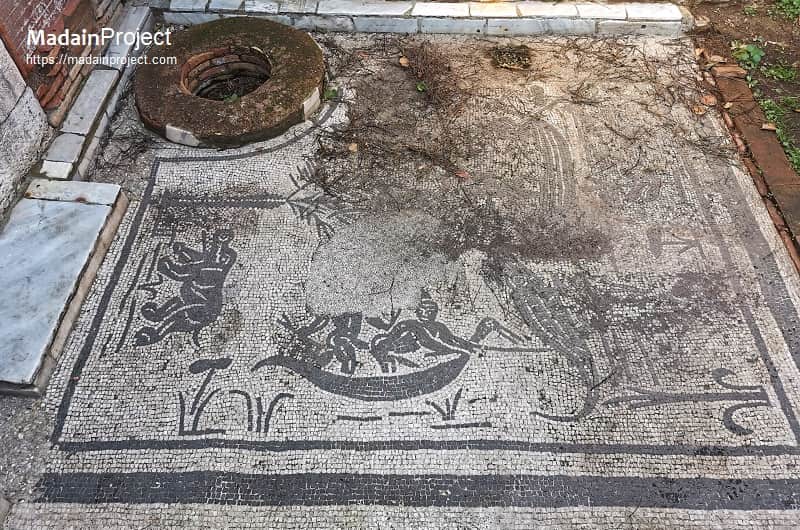
Architectural variations within the necropolis further highlight the cosmopolitan nature of the community. Tomb 29, originally identified as a blacksmith's burial but reinterpreted as that of a professional sharpener (ferramentarius), features three terracotta relief panels showing specialized tools and work scenes. Some structures also reflected maritime identities; Tomb 43 includes a mosaic of a lighthouse and two ships with a Greek inscription—"ode pausilypos"—translating to "here ends every effort", symbolizing the tomb as a final safe harbor. While the majority of tombs were rectangular one- or two-story rooms, rare forms exist, such as the brick pyramids of Tombs 1 and 51 and the aedicula-style monument of Tomb 56.
The internal decoration of these tombs demonstrates a high degree of artistic investment, with floors often covered in black-and-white or polychrome mosaics and walls decorated with mythological frescoes or stucco reliefs. Tomb 30, dating to approximately 160 CE, retains its burial chamber with three arcosolia (arched recesses) and formerly housed paintings of deities such as Serapis, Zeus, and Hera, now preserved in the Ostia Museum. Other notable interiors include Tomb 87, which features stuccoes of the Labors of Hercules and mythological scenes like Ajax abducting Cassandra, and Tomb 26, noted for its Severan-era paintings of aquatic scenes and hunting motifs. These monuments collectively illustrate the "house of the dead" concept, where burial spaces mirrored domestic life through functional features like biclinia (dining benches) for funerary feasts and wells for ritual cleaning.
Signup for our monthly newsletter / online magazine.
No spam, we promise.

The Madain Project is an online archive of Abrahamic History and Archaeology.
Abrahamic History & Archaeology is the study of history and archaeology with respect to the three Abrahamic Faiths without considering the religious and theological aspects. The goal of Abrahamic History is to understand how and why the religious doctrines and behaviours have evlovled and changed over time. Searching for patterns in the evolution of significant cultural events such as the development of farming, the emergence of cities, or the collapse of major civilizations for clues of why and how these have influenced the three major Abrahamic religions.
Cloud Drive -
About -
Help -
Editorial Policy -
AI Policy -
Privacy Policy -
Contact
Madain Project: Encyclopedia of Abrahamic History & Archaeology.
Copyright MadainProject 2017 - 2026.


