
The Temple Mount Sifting Project is a long-term archaeological initiative aimed at recovering and cataloging artifacts and materials discarded from the Temple Mount in the Old City of Jerusalem. Initiated in 2004 CE, this project involves the sifting and careful examination of soil and debris removed from the Solomon's Stables during various construction and renovation efforts. The project seeks to shed light on the complex and multifaceted history of Jerusalem, particularly the sacred and contentious Temple Mount, through the recovery of small, often overlooked, archaeological remains.
The Temple Mount Sifting Project is an extensive archaeological effort that was launched to sift through and study soil excavated from the Temple Mount, the site of the First Temple and Second Jewish Temple and an area of significant religious importance for Jews, Christians, and Muslims. This debris was removed during various construction activities, most notably during renovations conducted by the Islamic Waqf in the late 1990s and early 2000s during the construction of the al-Marwani Mosque in the underground structure colloquially known as Stables of Solomon. Despite the controversial nature of excavations at this sensitive site, the project aims to explore Jerusalem's layered historical and cultural narratives without infringing on the political complexities surrounding the Temple Mount.
The primary goal of the project is to recover, analyze, and preserve artifacts from the soil that may provide insight into the ancient and medieval history of Jerusalem. Given the strategic importance of the Temple Mount, this area has witnessed continuous occupation and development across millennia. The artifacts recovered, therefore, serve as critical evidence for understanding the city's complex historical development.
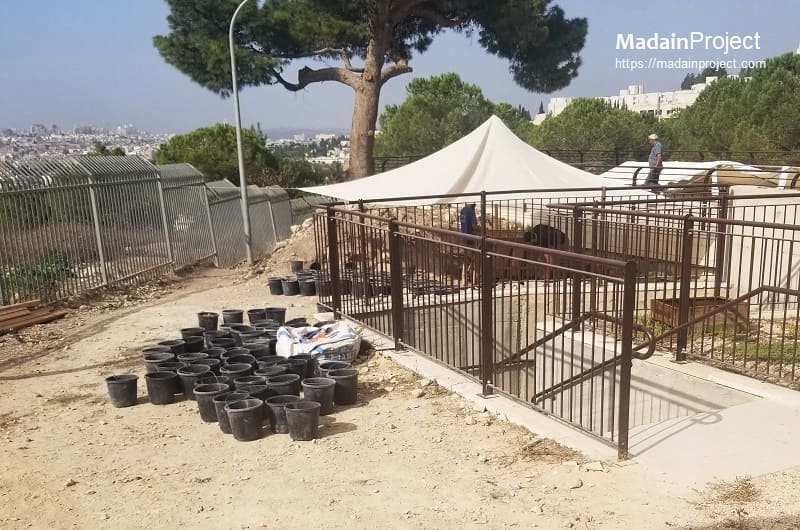
circa 2004 CE- Present

The Temple Mount Sifting Project, established in 2004 CE, arose from a significant archaeological opportunity born out of construction activities at the Temple Mount in Jerusalem. In 1996 CE, during renovation work carried out by the Islamic Waqf, large amounts of soil and debris were removed from the Temple Mount area to make way for the expansion of a prayer space. This debris, which had been accumulated from various construction and maintenance projects on the Temple Mount over many years, was dumped in a nearby areas, specifically in the Kidron Valley, without being subjected to any systematic archaeological examination.
For nearly a decade, the soil remained undisturbed until 2004 CE, when archaeologists and researchers recognized the potential of the discarded material for yielding significant archaeological finds. The accumulation of debris, which contained artifacts from multiple periods, presented a unique opportunity to gain insights into the long and complex history of Jerusalem. It was this recognition that led to the formal establishment of the Temple Mount Sifting Project.
Dr. Gabriel Barkay, a prominent Israeli archaeologist, was one of the driving forces behind the initiative. In collaboration with a team of experts, researchers, and volunteers, Dr. Barkay sought to recover and catalog artifacts from the discarded soil. The project was initially supported by the Kadoorie Archaeological Institute and later by the City of David Foundation, along with other academic and cultural institutions. The goal was clear: to recover small but significant archaeological remains that had been overlooked and potentially lost due to the haphazard disposal of the debris.
The project was not without its challenges. The sensitive nature of the site, given its religious and political significance, meant that the archaeological work had to be conducted carefully and respectfully, without causing disruption to the ongoing religious practices at the Temple Mount. Nonetheless, the sifting process, which involved manually passing the soil through fine mesh screens, was implemented as a non-invasive way to recover items without disturbing the sacred site itself.
The initiative gained momentum quickly, attracting volunteers from around the world who participated in the labor-intensive work of sifting through the debris. These efforts not only aimed to recover small artifacts, such as pottery shards, coins, and inscriptions, but also to contribute to the broader understanding of Jerusalem’s historical development, spanning from ancient times to the medieval period.
Over the years, the project has made substantial contributions to the field of archaeological research, offering new insights into the material culture of Jerusalem’s past. The finds recovered through the sifting process have been significant, including evidence of Jerusalem's development during the First Temple period, as well as artifacts from the Byzantine era and subsequent Islamic period. These discoveries have helped researchers refine their understanding of the city’s complex history, particularly in relation to its religious and cultural significance.
circa 2004 CE- Present
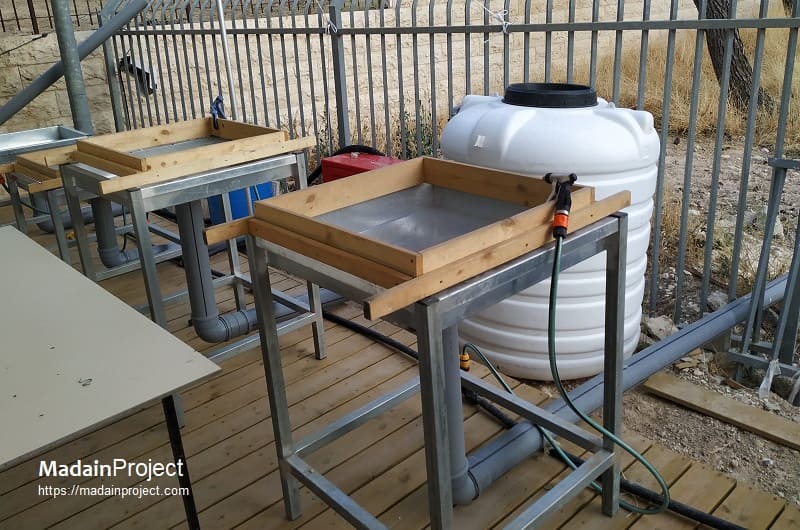
The methodology employed by the Temple Mount Sifting Project is based on careful, systematic excavation and analysis of soil samples retrieved from the Temple Mount. Initially, the bulk of debris was dumped in the Kidron Valley, but in order to preserve any potential historical artifacts, the sifting process was conducted in controlled environments to avoid contamination or loss of materials. The sifting was performed manually, with volunteers and experts using fine-mesh sieves to separate small objects from the soil.
Each batch of soil is processed in a series of steps. First, the soil is carefully sifted through mesh screens to separate larger objects from the finer particles. The fine soil and dust are then further examined under microscopes for smaller artifacts that might otherwise go unnoticed. This process ensures that even minute or fragmentary objects, such as pottery shards, coins, and bones, are recovered and cataloged.
The recovered artifacts are then analyzed in terms of their material composition, style, and historical context. Artifacts are assigned to specific chronological periods based on typological and stylistic comparisons with other known objects from the region. Specialized analyses, such as carbon dating or petrographic examination, may be conducted to provide further insights into the age and origins of particular finds.
Additionally, the project's methodology also emphasizes the importance of documentation and preservation. Every artifact recovered from the soil is carefully cataloged and stored, and digital records are maintained to ensure that all data is accessible for future research. A key goal of the project is to make the findings available to the global academic community and to provide a better understanding of the archaeological significance of the Temple Mount.
circa 2004 CE- Present
The Temple Mount Sifting Project has yielded a rich array of finds that contribute to our understanding of Jerusalem's complex history. Among the most notable discoveries are fragments of pottery, coins, and inscriptions, as well as organic materials such as bones and seeds, which help to reconstruct past environmental conditions.
The pottery recovered from the site spans a wide range of periods, from the Iron Age through to the Byzantine period. This includes both locally made pottery and imported vessels, which offer insight into trade and cultural exchange in ancient Jerusalem. The coins discovered have also proven to be particularly valuable, as they offer precise dating and help to pinpoint specific historical events, such as the reign of various kings or the Roman occupation of Jerusalem.
Among the most intriguing finds are small inscriptions and seals that shed light on the administrative and religious practices of ancient Jerusalem. One of the most famous finds includes a seal bearing the inscription of a biblical figure, which has provided further evidence for the historical context of the Jewish presence in the region during the First Temple period.
The recovery of animal bones and other organic materials has also helped to reconstruct the diet and daily life of the inhabitants of ancient Jerusalem. For example, the bones of domesticated animals, such as sheep and goats, suggest pastoral practices, while fish bones point to trade or local consumption of marine resources.
The ongoing discoveries have also contributed significantly to our understanding of the continuity of occupation at the site. Many of the recovered items date to the Byzantine and Islamic periods, illustrating the long-standing importance of the Temple Mount as a religious and political center for multiple cultures.
circa 910 CE
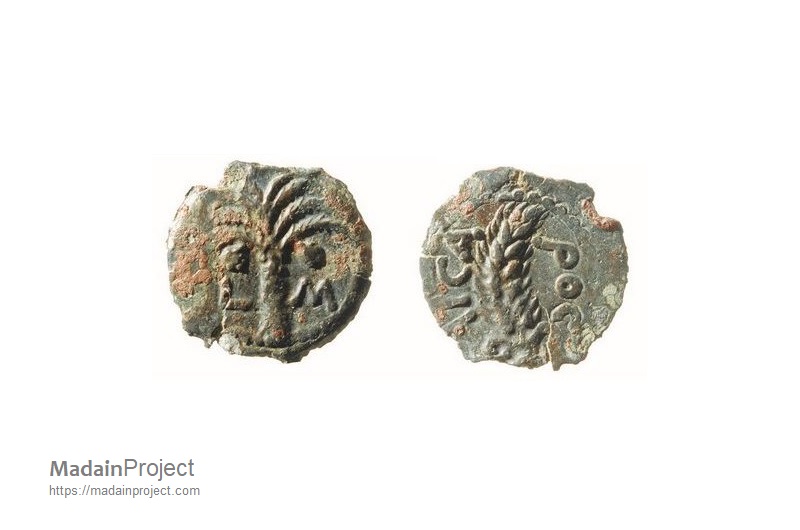
Coin of Marcus Ambivulus
This bronze prutah was minted in Jerusalem during the administration of Marcus Ambivulus (also spelled Ambibulus), who served as Prefect of Judaea under emperor Augustus from 9 to 12 CE. Ambivulus succeeded Coponius as the second Roman prefect appointed after Judaea became a Roman province in 6 CE. Coins from his tenure constitute an important corpus for understanding early Roman provincial governance and monetary production in Jerusalem during the early first century CE.
Obverse: The obverse depicts a single ear of grain, a motif frequently employed in Judaean provincial coinage for its agricultural associations and its suitability within local aniconic norms. The accompanying legend “KAICAΡOC” (“of Caesar”) identifies imperial authority and situates the coin within the broader framework of Augustan rule.
Reverse: The reverse features a stylized palm tree, another hallmark of regional iconography, symbolizing the land’s agricultural fertility and its longstanding cultural significance. The inscription “LM” denotes the 40th regnal year of Augustus, corresponding to 9/10 CE. The use of regnal dating reflects standard Roman provincial administrative practice and provides a precise chronological anchor for the coin.
This issue represents a key example of early Roman-period Jerusalem minting, combining imperial titulature with imagery acceptable to the local population and illustrating the administrative continuity of the prefecture in the early decades of Roman rule in Judaea.
circa 1020 CE
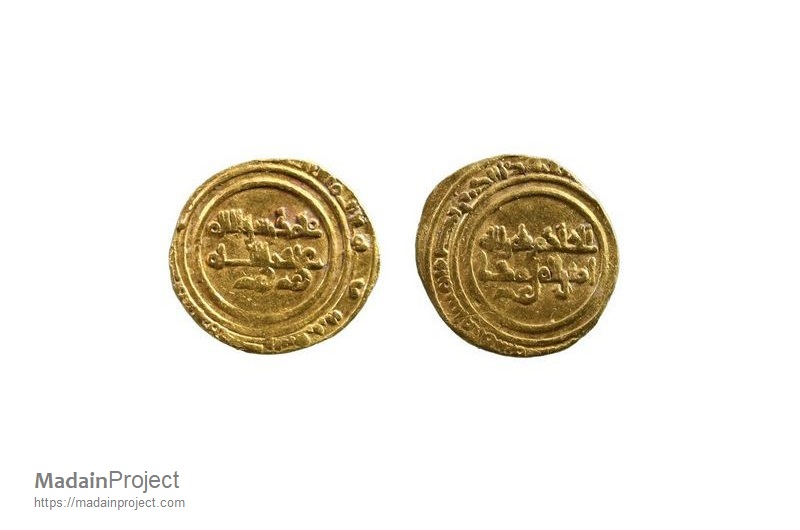
Quarter Dinar of Al-Mansūr
The Quarter Dinar, dating back to circa 1020 CE, in question was minted in the Fatimid Caliphate, likely in the year 1020 CE (395 Hijri), during the reign of Caliph al-Ḥākim bi-Amr Allāh. Al-Ḥākim, also known as al-Mansūr, was the sixth ruler of the Fatimid dynasty, which was founded by the Shi'ite Ismaili sect and had its capital in ancient Cairo. His reign, from 996 to 1021 CE, is marked by political instability, religious extremism, and significant socio-religious upheaval. Al-Ḥākim is particularly known for his declaration of divinity, which contributed to the establishment of the Druze faith, a sect that emerged around 1017 CE as a result of his proclamations and religious reforms. Al-Ḥākim’s reign ended abruptly with his mysterious disappearance in 1021 CE, a moment that has been the subject of both historical intrigue and speculation.
This quarter dinar, produced under his rule, is an example of the numismatic legacy of the Fatimid Caliphate during this period. It offers insight into the religious and political ideologies that defined al-Ḥākim’s reign, reflecting both the dynastic aspirations of the Fatimids and the theological assertions associated with al-Ḥākim himself.
Obverse: The obverse of the coin features a central inscription that reads "al-Ḥākim bi-Amr Allāh, Commander of the Faithful" (Arabic: الحاكم بأمر الله أمير المؤمنين). This title was commonly used by Fatimid caliphs, signifying their authority as both political and religious leaders. The surrounding legend bears the phrase "In the name of Allah, this coin was struck in Sicily in the (Hijri) year three hundred and ninety-five" (Arabic: بسم الله ضربت هذه الدراهم في صقلية في السنة 395), which provides key information about the coin’s place of minting and the Islamic calendar year in which it was produced. Sicily, under Fatimid control during the period, was an important regional hub, and the minting of coins there reflected the Fatimids' expansive influence in the Mediterranean.
Reverse: The reverse side of the quarter dinar features a central inscription that reads "Muhammad is the Messenger of Allah and Ali is the friend of Allah" (Arabic: محمد رسول الله وعلي ولي الله). This inscription is a clear expression of Fatimid religious doctrine, reflecting the Shi'ite emphasis on the spiritual and political authority of Ali ibn Abi Talib, the first Imam in Ismaili Shi’ism and cousin and son-in-law of the Prophet Muhammad. Surrounding this central legend is the phrase "There is no god but Allah, He has no partner with Him, Muhammad is the Messenger of Allah and Ali is the friend of Allah" (Arabic: لا إله إلا الله وحده لا شريك له محمد رسول الله وعلي ولي الله). This encapsulates the central tenets of Islamic monotheism, but also emphasizes the Fatimid perspective on Ali's special status as a divinely chosen figure within the Islamic faith.
The coin serves as both a religious and political statement, aligning the Fatimids with the broader Shi'ite tradition while asserting the legitimacy of al-Ḥākim’s rule. The inscriptions, particularly the invocation of Ali's role as "the friend of Allah," underscore the sectarian nature of the Fatimid dynasty's religious practices, which were distinct from the Sunni orthodoxy that dominated much of the Islamic world at the time.
Signup for our monthly newsletter / online magazine.
No spam, we promise.

The Madain Project is an online archive of Abrahamic History and Archaeology.
Abrahamic History & Archaeology is the study of history and archaeology with respect to the three Abrahamic Faiths without considering the religious and theological aspects. The goal of Abrahamic History is to understand how and why the religious doctrines and behaviours have evlovled and changed over time. Searching for patterns in the evolution of significant cultural events such as the development of farming, the emergence of cities, or the collapse of major civilizations for clues of why and how these have influenced the three major Abrahamic religions.
Cloud Drive -
About -
Help -
Editorial Policy -
AI Policy -
Privacy Policy -
Contact
Madain Project: Encyclopedia of Abrahamic History & Archaeology.
Copyright MadainProject 2017 - 2026.


