
A mikveh (Hebrew: mikveh, “collection” or “gathering [of waters]”) is a ritual bath used in Judaism for the attainment of ritual purity (ṭaharah) through full-body immersion in naturally sourced water. The institution is rooted in the purity regulations of the Torah, especially the legal sections of Leviticus and Numbers, which prescribe water immersion for the removal of certain states of ritual impurity (ṭum’ah). In classical Jewish law (halakhah), a mikveh must contain a minimum volume of naturally gathered water—traditionally defined as forty se’ah (approximately 500–760 liters depending on rabbinic calculation)—and must be connected to a natural water source such as rainwater, a spring, or groundwater. The water must not be “drawn” (mayim she’uvim) through vessels in a manner that invalidates its ritual status.
The mikveh functions as a central institution of Jewish ritual life, regulating transitions between states of ritual impurity and purity as defined in halakhic tradition. Unlike hygienic bathing, the mikveh is not primarily concerned with physical cleanliness but with compliance with religious law governing sacred status and participation in communal or covenantal life. The conceptual framework of ritual purity originates in biblical priestly legislation, where contact with certain bodily emissions, corpses, or other sources of impurity temporarily restricts participation in sacred activities, particularly those associated with the ancient Temple in Jerusalem.
Immersion in a mikveh is required or prescribed for several religious purposes. These include purification after certain bodily states described in biblical law, ritual preparation in some communities before the Yom Kippur or Shabbat, immersion of utensils acquired from non-Jews before their use in food preparation, and the ritual conversion process into Judaism. In Orthodox and many Conservative Jewish communities, married women immerse following the completion of the menstrual cycle in accordance with the family purity laws (niddah). In all cases, immersion requires the complete submersion of the unclothed body so that water contacts every part of the skin without obstruction.
Rabbinic literature elaborated and systematized these regulations after the destruction of the Temple in 70 CE. The tractate Mishnah Mikva'ot provides detailed legal definitions concerning acceptable water sources, measurements, and construction techniques for valid ritual baths. Rabbinic authorities developed sophisticated engineering solutions to ensure that the required quantity of natural water remained halakhically valid even when supplemented by ordinary water for comfort and maintenance.
Although many biblical purity regulations became largely symbolic after the Temple’s destruction, the mikveh retained practical significance in several areas of Jewish life. These include marital law, conversion rites, and the preparation of ritual objects. In contemporary Jewish communities, mikva’ot (plural of mikveh) often serve as community institutions supervised by religious authorities and maintained according to precise halakhic standards.

circa 1450 BCE- Present

The origins of ritual immersion in Judaism lie in the priestly legislation of the Hebrew Bible. The purity codes of Leviticus describe washing or bathing in water after various sources of ritual impurity, including bodily emissions, skin diseases, and contact with a corpse. These early prescriptions did not specify the architectural form of a ritual bath but required washing in water as a means of restoring ritual status.
Archaeological evidence indicates that purpose-built immersion pools began to appear in the late Second Temple period (second century BCE–first century CE). Numerous stepped ritual baths have been excavated in Jerusalem, Qumran, and other settlements in Judea and Galilee. These installations exhibit standardized features such as plastered basins, descending staircases, and partitions separating entry and exit paths, suggesting widespread adherence to shared ritual norms.
Following the destruction of the Second Temple by Roman forces, many purity laws connected to Temple worship ceased to have practical application. Rabbinic authorities nonetheless preserved the institution of the mikveh, adapting its use primarily to marital purity and conversion. The codification of these laws in the Mishnah and later in the Talmud established detailed legal frameworks governing the collection and maintenance of ritual waters.
During the medieval period, mikva’ot were constructed in Jewish communities across Europe, North Africa, and the Middle East, often located near synagogues or communal centers. Archaeological discoveries in cities such as Speyer and Worms reveal monumental subterranean mikva’ot dating from the twelfth and thirteenth centuries. In the modern era, Jewish communities worldwide continue to build and maintain mikva’ot, frequently integrating contemporary plumbing systems while preserving the halakhic requirement that the core water supply originate from natural sources such as collected rainwater.
circa 1450 BCE- Present
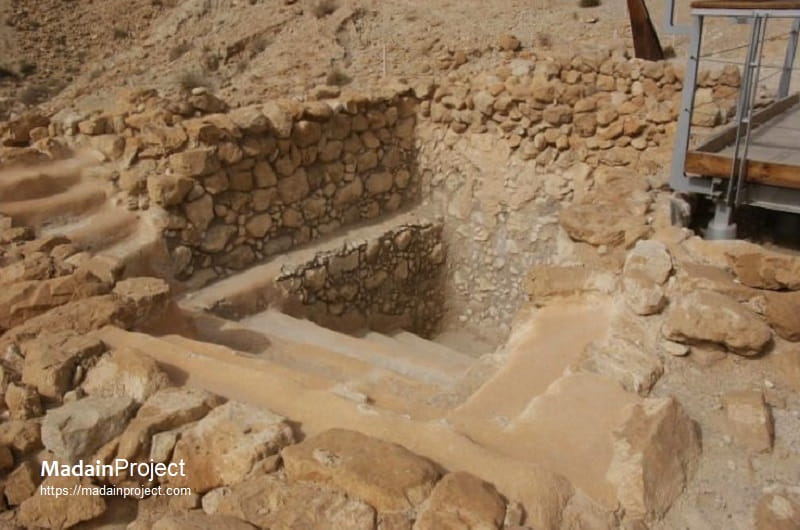
The architectural design of a mikveh reflects strict legal requirements governing the collection, containment, and accessibility of ritual water. At its most basic level, a mikveh consists of a basin large enough to hold the minimum halakhic volume of forty se’ah of water, constructed so that naturally gathered water—typically rainwater—forms the primary ritual element. The basin is usually lined with waterproof plaster, stone, or modern materials to prevent leakage and contamination.
Traditional mikva’ot are commonly built partially or entirely below ground level. This configuration facilitates the natural collection of rainwater and ensures structural stability. Access to the immersion pool is typically provided by a staircase descending into the water, allowing gradual immersion of the body. In many historical examples, such as medieval installations in Speyer, the mikveh chamber lies deep underground and is reached through a vaulted passage or tower-like entrance structure.
Rabbinic law distinguishes between the reservoir of natural water and the immersion pool itself. In many modern designs, rainwater is stored in a separate cistern that is halakhically connected to the immersion pool through a small aperture or channel, enabling the pool to be filled with ordinary tap water while retaining ritual validity through contact with the collected rainwater. This system allows for temperature control, filtration, and sanitation without compromising legal requirements.
Contemporary mikva’ot often incorporate additional architectural spaces, including preparation rooms where users wash and remove any physical barriers to immersion. These facilities may include showers, dressing areas, and inspection rooms supervised by attendants in communities where halakhic practice requires oversight. Despite modern adaptations, the essential architectural principle remains unchanged: the presence of a body of water derived from a natural source and configured so that full-body immersion can occur in accordance with Jewish ritual law.
circa

Sanhedrin Mikveh
The Sanhedrin Mikveh, discovered in 2009 CE within the Western Wall Tunnels, is a monumental ritual bath dating to the late Second Temple period (circa 1st century CE). Situated approximately 20 meters west of the Western Wall near Wilson’s Arch, the installation is integrated into the western hall of a sophisticated ashlar structure characterized by high-quality Herodian-style craftsmanship.
Archaeologists, including Alexander Onn of the Israel Antiquities Authority, hypothesize that this building served as an administrative center, possibly the "Council House" (Boule) or the "Chamber of Hewn Stone" (Lishkat haGazit) mentioned by Josephus and in Talmudic literature as the meeting place of the Sanhedrin. The mikveh features 11 descending steps and was likely added to the pre-existing structure to accommodate the increasing ritual purification needs of pilgrims and officials. Its discovery highlights the integration of halakhic purity standards into the civic architecture of Jerusalem during its final decades before the Roman destruction in 70 CE.
circa

Large Mikveh at the Ophel
The so-called Large Mikveh of the Ophel (sometimes also refered to as the Mikveh of the Priests), situated within the Jerusalem Ophel Archaeological Park at the foot of the Temple Mount’s southern wall, represents one of the most significant Second Temple-period ritual installations excavated in the historic city of Jerusalem. Characterized by its monumental scale—measuring approximately 9.8 by 8.2 meters—the structure is distinguished by a sophisticated architectural design featuring circumferential stone-paved staircases that descend toward a central immersion basin.
Strategically positioned near the Huldah Gates, the primary southern access point for pilgrims, the mikveh’s proximity to the sacred precinct suggests a specialized function, likely serving the priestly class or accommodating the high volume of ritual purification required by the masses during the Pilgrimage Festivals. Stratigraphic analysis indicates at least three phases of modification during the 1st century CE, reflecting the evolving cultic and administrative needs of the period. The presence of hydraulic plaster and associated stone vessel fragments—archaeological correlates for strict adherence to halakhic purity laws—underscores the installation’s critical role in the socio-religious infrastructure of late Second Temple-period Jerusalem.

Signup for our monthly newsletter / online magazine.
No spam, we promise.

The Madain Project is an online archive of Abrahamic History and Archaeology.
Abrahamic History & Archaeology is the study of history and archaeology with respect to the three Abrahamic Faiths without considering the religious and theological aspects. The goal of Abrahamic History is to understand how and why the religious doctrines and behaviours have evlovled and changed over time. Searching for patterns in the evolution of significant cultural events such as the development of farming, the emergence of cities, or the collapse of major civilizations for clues of why and how these have influenced the three major Abrahamic religions.
Cloud Drive -
About -
Help -
Editorial Policy -
AI Policy -
Privacy Policy -
Contact
Madain Project: Encyclopedia of Abrahamic History & Archaeology.
Copyright MadainProject 2017 - 2026.


