
TT99 (Theban Tomb 99) refers to a numbered private tomb in the Theban necropolis of ancient Egypt. TT99 specifically designates the burial monument of the official Senneferi, a high-ranking administrator associated with the royal administration during the Eighteenth Dynasty of the New Kingdom.
The tomb forms part of the extensive group commonly known as the “Tombs of the Nobles”, a complex of non-royal elite burials situated on the west bank of the river Nile opposite modern Luxor. These tombs were constructed for high officials, administrators, and members of the royal bureaucracy, reflecting both their status within the pharaonic state and their participation in funerary cult practices associated with the afterlife.
TT99 is located in the necropolis of Sheikh Abd el-Qurna, part of the larger Theban necropolis on the west bank of the Nile opposite the ancient city of Thebes (modern Luxor). The monument served as the burial place of Senneferi, an elite official who held the title of Overseer of the Seal and was associated with the administration of the temple estates of Amun during the reign of the Eighteenth Dynasty pharaoh Thutmose III. The tomb thus belongs chronologically to the New Kingdom, a period characterized by the political expansion and administrative complexity of the Egyptian state.
The monument has been known to scholars since the late nineteenth century, although systematic archaeological investigation began much later. Since 1992 CE, research and excavation of the tomb complex have been conducted by a project affiliated with the University of Cambridge under the direction of Egyptologist Nigel Strudwick. These investigations have clarified aspects of the tomb’s construction, decoration, and later history of use and reuse.
Beyond its architectural and decorative features, the tomb is notable for the discovery of an inscribed limestone ostracon bearing hieratic and hieroglyphic characters arranged according to an early Semitic alphabetical order known as the “Halaham” sequence. This inscription, dated to approximately the fifteenth century BCE, represents one of the earliest known attestations of alphabetic writing connected to the later development of the Hebrew alphabetic tradition.
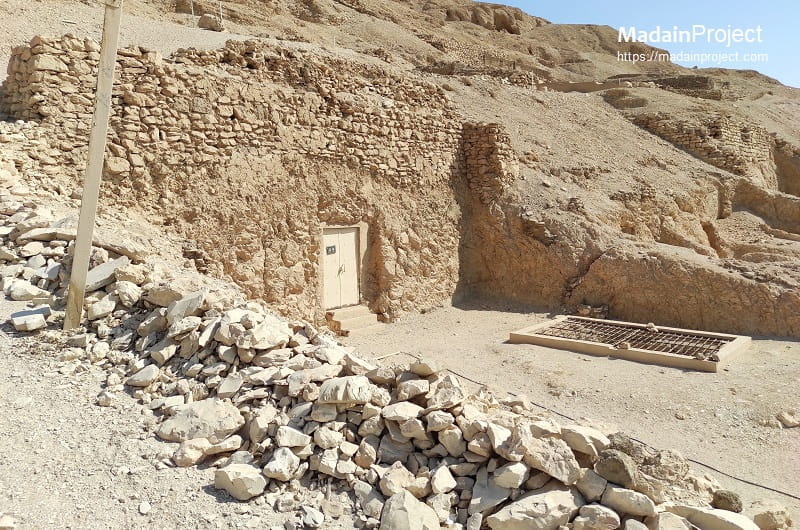
circa 1500 BCE

The architectural layout of TT99 (Theban Tomb 99) corresponds broadly to the standard design of elite private tombs constructed during the Eighteenth Dynasty. The complex comprises three principal components: an open forecourt, a decorated cult chapel cut into the rock, and subterranean burial chambers intended for the interment of the deceased and funerary equipment.
The approach to the tomb begins with an open courtyard approximately ten meters in width. This courtyard functioned as a transitional ritual space where funerary ceremonies associated with burial and commemorative cult practices could be performed. From the courtyard, an entrance leads into the rock-cut chapel of the tomb, which served as the primary locus for offering rituals conducted by surviving family members and priests.
The chapel follows the characteristic inverted T-shaped plan typical of many New Kingdom Theban private tombs. The plan begins with a broad transverse hall carved into the rock, whose walls contain decorated reliefs depicting scenes from the life and official duties of Senneferi as well as ritual activities associated with the funerary cult. A short corridor extends from this transverse hall and leads to an inner chamber arranged perpendicular to the first hall. This rear hall contains structural pillars and additional decorated surfaces representing offering scenes and symbolic representations of the deceased’s participation in the afterlife.
Beyond the chapel spaces, deeper subterranean chambers were intended for the burial itself. These spaces housed the coffin and funerary assemblage of the tomb owner and were physically separated from the cult chapel above. Such a spatial organization reflects the conceptual division within Egyptian funerary architecture between areas accessible for ritual activity and the protected burial environment reserved for the body of the deceased.
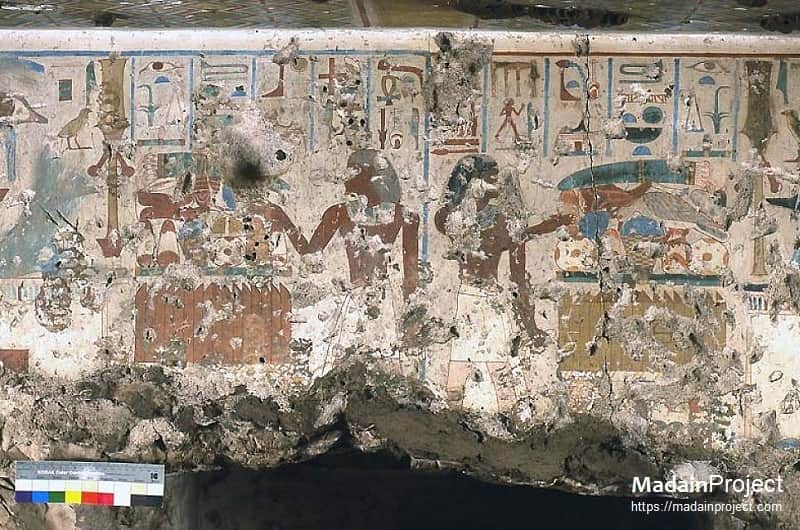
Decorative programs within the chapel illustrate scenes of Senneferi presenting offerings, receiving royal commissions, supervising laborers, and participating in ritual acts before deities such as Osiris. These iconographic elements combine biographical representation with religious symbolism, reinforcing the deceased’s social status and ensuring his continued existence within the Egyptian conception of the afterlife.
circa 1500 BCE
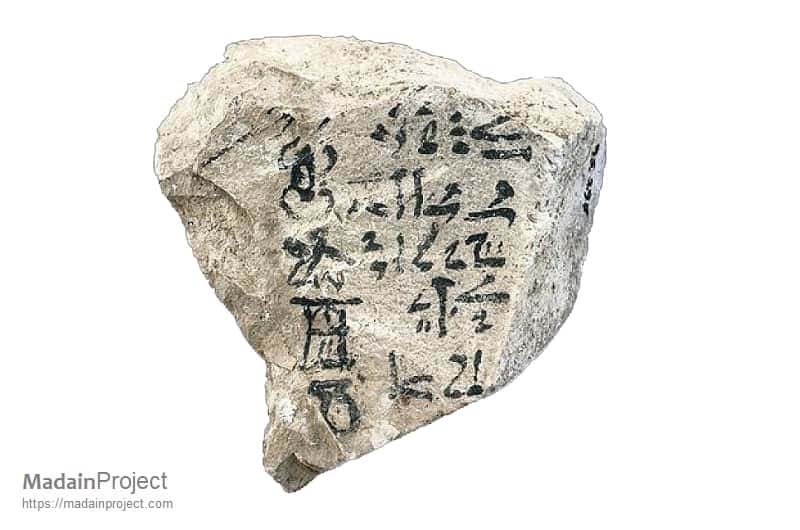
HLHM Ostracon
The HLHM Ostracon, also known as the Halaḥam abecedary, constitutes a significant epigraphic find recovered from the vertical shaft of Tomb TT99 in the Theban Necropolis. This limestone flake preserves a sequence of characters that represents the earliest known instance of the South Semitic letter order, predating previous examples by several centuries. The inscription, dated to the mid-18th Dynasty (circa 1450 BCE) during the reign of Thutmose III, displays a hybrid of hieratic Egyptian script used to phonetically render a non-Egyptian linguistic sequence. Its discovery within the burial context of the high official Senneferi provides critical evidence for the intercultural exchange and linguistic diversity present in New Kingdom Thebes, specifically regarding the transmission of alphabetic precursors between the Levant and Egypt.
Signup for our monthly newsletter / online magazine.
No spam, we promise.

The Madain Project is an online archive of Abrahamic History and Archaeology.
Abrahamic History & Archaeology is the study of history and archaeology with respect to the three Abrahamic Faiths without considering the religious and theological aspects. The goal of Abrahamic History is to understand how and why the religious doctrines and behaviours have evlovled and changed over time. Searching for patterns in the evolution of significant cultural events such as the development of farming, the emergence of cities, or the collapse of major civilizations for clues of why and how these have influenced the three major Abrahamic religions.
Cloud Drive -
About -
Help -
Editorial Policy -
AI Policy -
Privacy Policy -
Contact
Madain Project: Encyclopedia of Abrahamic History & Archaeology.
Copyright MadainProject 2017 - 2026.


