
The Protogeometric Period is a phase of early Greek history conventionally dated to circa 1050/1025–900 BCE, situated within the broader context of the Greek Dark Ages. The designation derives from the emergence and predominance of an early artistic style of pottery (see Protogeometric art), a ceramic tradition characterized by refined craftsmanship, the use of the fast wheel, improved firing techniques, and the controlled application of dark slip to create simple linear and curvilinear decorative motifs. The Protogeometric Period was succeeded by the Geometric Period (circa 900–700 BCE), which witnessed the further elaboration of ceramic decoration and significant social and political transformations in the Greek world.
The period, falling at the beginning of the Iron Age, followed the collapse of the Mycenaean palatial system in the late second millennium BCE and reflects processes of regional consolidation, demographic reorganization, and technological adaptation. Archaeological evidence indicates a revival of long-distance contacts in the Aegean and eastern Mediterranean, as well as developments in settlement patterns and funerary practices.
Ancient Athens played a leading role in the development and dissemination of the Protogeometric style, with Attica and parts of central Greece emerging as principal production centers. From these regions the style spread to other areas of the Greek world, serving as a marker of broader cultural cohesion during a time of limited written documentation.
circa

The Protogeometric Period (circa 1050/1025–900 BCE) is characterized by technological and formal innovations in ceramic production, regional consolidation of communities, the reorganization of funerary practices, and the gradual re-establishment of interregional exchange networks following the collapse of the Mycenaean palatial system (circa 1200 BCE). Archaeological evidence forms the primary basis for reconstruction, as contemporary written sources are absent.
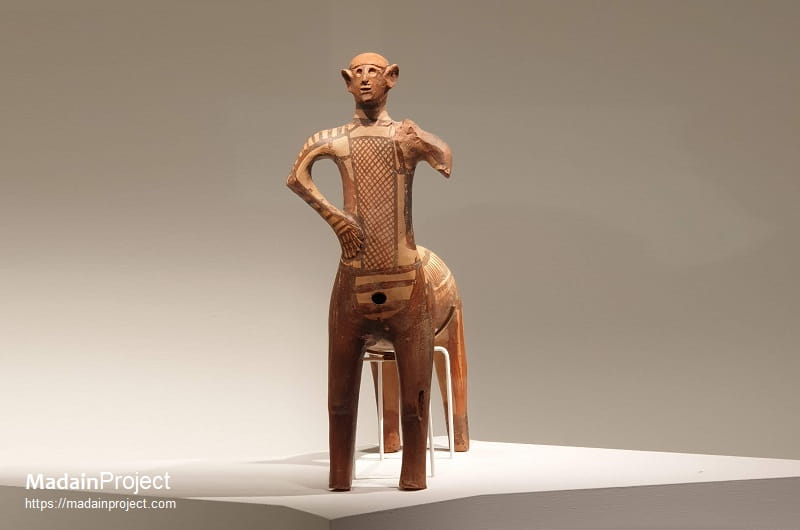
In pottery production, the period is defined by the Protogeometric style, first systematically identified in Attic material from the Kerameikos cemetery at Athens. Technical improvements included the consistent use of the fast wheel, more controlled kiln atmospheres producing a lustrous dark slip, and a reduction of decorative fields in favor of carefully placed motifs. Ornamentation consisted primarily of concentric circles and semicircles executed with multiple brushes attached to a compass, horizontal bands, and reserved panels. Attica, particularly Athens, emerged as a leading production center, with related workshops in Euboea (notably Lefkandi), Boeotia, and Thessaly. The standardization of vessel shapes, including amphorae, oinochoai, skyphoi, and kraters, reflects increasing technical specialization.
Settlement patterns indicate nucleation and regional stabilization after the demographic contraction of the twelfth and eleventh centuries BCE. Sites such as Athens, Lefkandi on Euboea, and Argos show continuity from the Late Helladic IIIC period into the tenth century BCE. Architectural remains consist primarily of apsidal and oval domestic structures constructed with mudbrick on stone socles. The large apsidal building at Toumba, Lefkandi (circa 1000–950 BCE), interpreted as a monumental elite structure, provides evidence for social differentiation and emergent hierarchical organization.
Funerary practices constitute a major source of evidence for social and ideological structures. In Attica, cremation became the dominant rite, replacing the inhumation typical of the Mycenaean period. The Kerameikos cemetery at Athens documents the use of large Protogeometric amphorae and kraters as grave markers by the late tenth century BCE. In contrast, inhumation remained common in regions such as Thessaly and parts of the Peloponnese. Grave goods, including weapons, jewelry, and imported objects, indicate increasing social stratification and the presence of warrior elites.
Religious and cultic activity during the Protogeometric Period is primarily attested archaeologically through continuity at earlier cult sites and the gradual reactivation of sanctuaries. Evidence from sites such as Kalapodi (Phocis) and the Heraion at Samos suggests the persistence or re-establishment of localized cult practices by the late tenth or early ninth century BCE. Ritual deposition in graves and the emergence of hero cult precursors, particularly at Lefkandi, indicate evolving forms of commemorative and ancestor-focused practices.
Politically, the period was characterized by small-scale, regionally organized communities rather than centralized states. The disappearance of palatial bureaucracies after circa 1200 BCE resulted in decentralized authority structures. Material evidence from elite burials and monumental domestic buildings suggests the rise of local chieftaincies or aristocratic households. There is no evidence for formalized polis institutions during this period; these developed gradually in the subsequent Geometric Period.
Economically, the Protogeometric Period witnessed the reactivation of maritime exchange networks, particularly in the Aegean and eastern Mediterranean. Finds of Near Eastern objects at Lefkandi, including Cypriot and Levantine imports dated to the tenth century BCE, attest to renewed long-distance contacts. Metalworking, especially in iron, became increasingly widespread, marking the consolidation of Early Iron Age technologies.
circa 1050/1025–1000 BCE
Early Protogeometric Period
The Early Protogeometric phase is conventionally dated to circa 1050/1025–1000 BCE. It represents the initial development of the Protogeometric ceramic style in Attica, especially at Athens. Decoration was relatively sparse, emphasizing concentric circles, semicircles, and horizontal bands. Vessel shapes were more standardized than in the preceding Submycenaean phase. Settlement evidence indicates continuity at key sites such as Athens and Lefkandi. Cremation begins to appear more consistently in Attic cemeteries during this phase, though regional variation remained significant.
circa 1000–950 BCE
Middle Protogeometric Period
The Middle Protogeometric phase, dated approximately to circa 1000–950 BCE, is marked by increased technical refinement and wider regional distribution of the style. Decorative schemes became more balanced and proportionally organized, with greater precision in compass-drawn motifs. The Toumba building at Lefkandi, dated to the mid-tenth century BCE, belongs to this phase and reflects emerging elite display. Evidence of Near Eastern imports at Euboean sites indicates intensifying external contacts. Social differentiation becomes more visible in burial assemblages, particularly in Attica and Euboea.
circa 950–900 BCE
Late Protogeometric Period
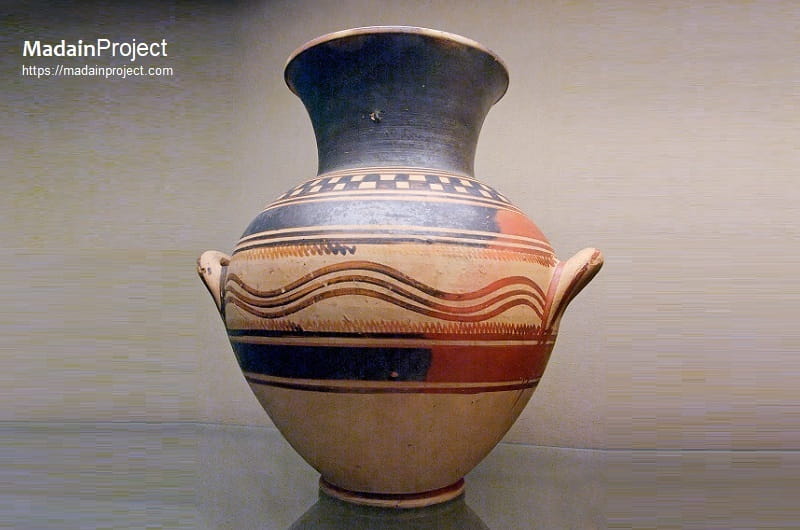
The Late Protogeometric phase, dated to circa 950–900 BCE, shows increased decorative density and the gradual transition toward the more elaborate linear ornamentation of the Geometric Period. In Attica, large funerary vessels serving as grave markers become more prominent in the Kerameikos cemetery. Regional stylistic variations become clearer, though Attic influence remained significant. Long-distance exchange networks were further consolidated, particularly through Euboean maritime activity. By circa 900 BCE, Protogeometric conventions gave way to Early Geometric decorative systems, marking the beginning of the Geometric Period.
Signup for our monthly newsletter / online magazine.
No spam, we promise.

The Madain Project is an online archive of Abrahamic History and Archaeology.
Abrahamic History & Archaeology is the study of history and archaeology with respect to the three Abrahamic Faiths without considering the religious and theological aspects. The goal of Abrahamic History is to understand how and why the religious doctrines and behaviours have evlovled and changed over time. Searching for patterns in the evolution of significant cultural events such as the development of farming, the emergence of cities, or the collapse of major civilizations for clues of why and how these have influenced the three major Abrahamic religions.
Cloud Drive -
About -
Help -
Editorial Policy -
AI Policy -
Privacy Policy -
Contact
Madain Project: Encyclopedia of Abrahamic History & Archaeology.
Copyright MadainProject 2017 - 2026.


