
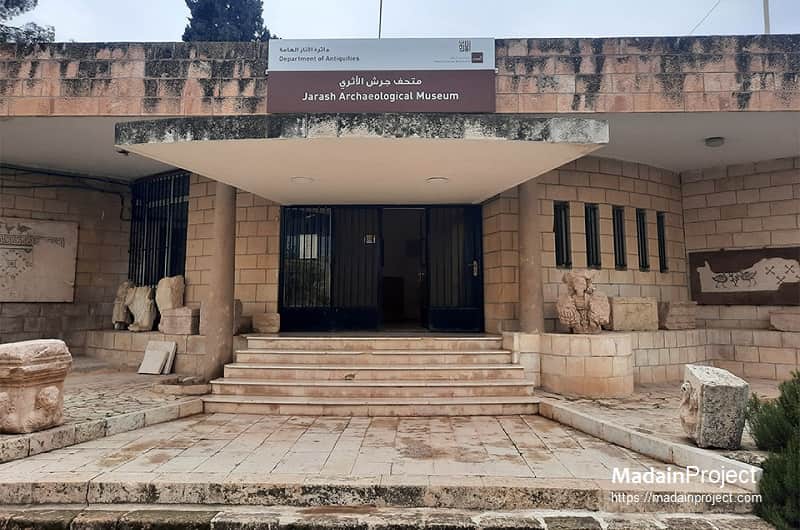
The Jerash Archaeological Museum, located in the ancient city of Jerash in northern Jordan, is an institution dedicated to the preservation, study, and exhibition of artifacts from the Greco-Roman period and earlier. Situated near the archaeological site of ancient Gerasa it serves as a vital resource for understanding the historical and cultural legacy of the region, offering insight into the development of Jerash, a city that was once part of the Roman Decapolis. The museum’s extensive collections span thousands of years of human history, from the Neolithic period through to the Islamic period, with a particular emphasis on the Roman and Byzantine eras.
Jerash, once known as Gerasa, is one of the most significant and best-preserved ancient cities in the Near East. The Jerash Archaeological Museum, situated near the entrance to the archaeological site, was established to house and display the wealth of material culture uncovered in and around the city. Opened in 1988 CE, the museum is a cornerstone in Jordan’s efforts to preserve and interpret its archaeological heritage. The museum’s design allows for a seamless integration with the surrounding archaeological landscape, providing visitors with a contextual understanding of Jerash’s historical significance.
The exhibits within the museum are arranged in a chronological sequence, offering a comprehensive overview of the region's cultural and architectural development. While the museum primarily focuses on the Roman period, it also highlights the influence of earlier and later civilizations in the area, including the Hellenistic, Byzantine, and Islamic periods. The museum’s collections are drawn from numerous excavations at Jerash and nearby sites, reflecting the rich and diverse history of this ancient city.
circa 220-749 CE

The Jerash Archaeological Museum’s collections are a testament to the city’s long and varied history. Among its most notable holdings are a significant number of Roman statues, inscriptions, and mosaics. The museum's Roman collection is one of its most impressive features, with sculptures such as a life-size statue of the emperor Hadrian, who visited Gerasa in 129 CE. This statue underscores the importance of Jerash within the Roman Empire and highlights the city's architectural grandeur, which included the construction of monumental structures like the Oval Plaza, the Temple of Artemis, and the Hadrian Arch.
In addition to sculptures, the museum houses a remarkable collection of mosaics that once adorned the floors of wealthy Roman and Byzantine homes. These mosaics, many of which depict mythological themes, animals, and daily life, provide valuable insights into the artistic techniques and social practices of ancient Jerash. The depiction of the god Bacchus, for instance, in a mosaic from the 5th century CE, reflects both the religious practices of the period and the skill of local artisans.
Another significant aspect of the museum’s collection is its collection of inscriptions. Numerous Latin and Greek inscriptions, many of which are tombstones and dedicatory stones, are displayed throughout the museum. These inscriptions shed light on the social and political life of the inhabitants of Jerash, providing information about local elites, civic structures, and the relationship between Jerash and the broader Roman Empire. For instance, an inscription dedicated to the emperor Marcus Aurelius reflects the city’s role as a loyal and prosperous part of the Roman provinces.
The museum also exhibits numerous artifacts from the earlier and later periods. Neolithic pottery and tools found in the region provide evidence of the long human habitation of the area, while Byzantine-era artifacts such as pottery, coins, and religious icons demonstrate the continued significance of Jerash in the post-Roman period. Of particular interest is a collection of early Christian artifacts, including a well-preserved mosaic floor from a Byzantine church, illustrating the transition from pagan to Christian religious practices in the region.
The Islamic section of the museum, although smaller than the Roman and Byzantine displays, offers important insights into the later history of Jerash. Artifacts from the early Islamic period, such as pottery, coins, and inscriptions, highlight the city’s continued role as a regional hub of culture and commerce during the Umayyad era and Abbasid period.
In addition to these permanent exhibits, the Jerash Archaeological Museum hosts temporary exhibitions and educational programs aimed at engaging the public with the ongoing archaeological work in the region. These programs often focus on the latest excavations in Jerash and its surrounding areas, providing visitors with up-to-date information on the ongoing study of the city’s rich historical layers.
The museum’s careful curation and organization of these artifacts contribute to a deeper understanding of Jerash's place in the broader history of the Mediterranean and the Near East. It not only showcases the material culture of the city but also provides context for the political, social, and religious developments that shaped the ancient world. Through its collections, the Jerash Archaeological Museum stands as both a repository of historical knowledge and a testament to the enduring legacy of Jerash itself.

Signup for our monthly newsletter / online magazine.
No spam, we promise.

The Madain Project is an online archive of Abrahamic History and Archaeology.
Abrahamic History & Archaeology is the study of history and archaeology with respect to the three Abrahamic Faiths without considering the religious and theological aspects. The goal of Abrahamic History is to understand how and why the religious doctrines and behaviours have evlovled and changed over time. Searching for patterns in the evolution of significant cultural events such as the development of farming, the emergence of cities, or the collapse of major civilizations for clues of why and how these have influenced the three major Abrahamic religions.
Cloud Drive -
About -
Help -
Editorial Policy -
AI Policy -
Privacy Policy -
Contact
Madain Project: Encyclopedia of Abrahamic History & Archaeology.
Copyright MadainProject 2017 - 2026.


