
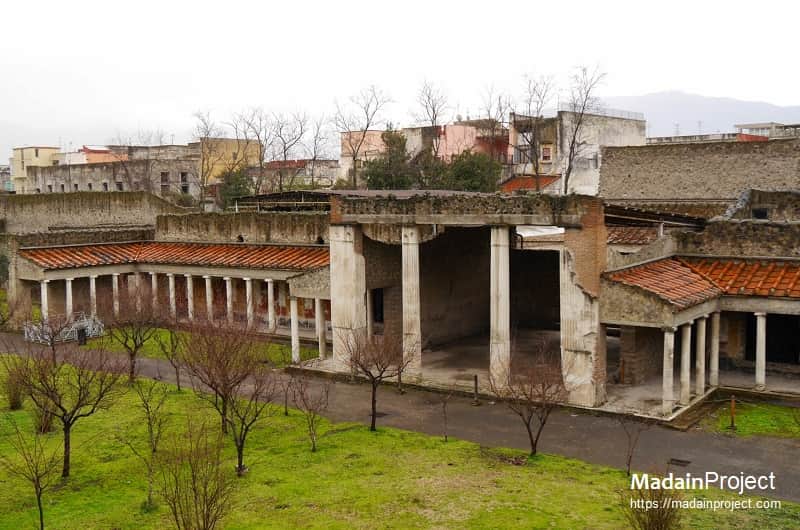
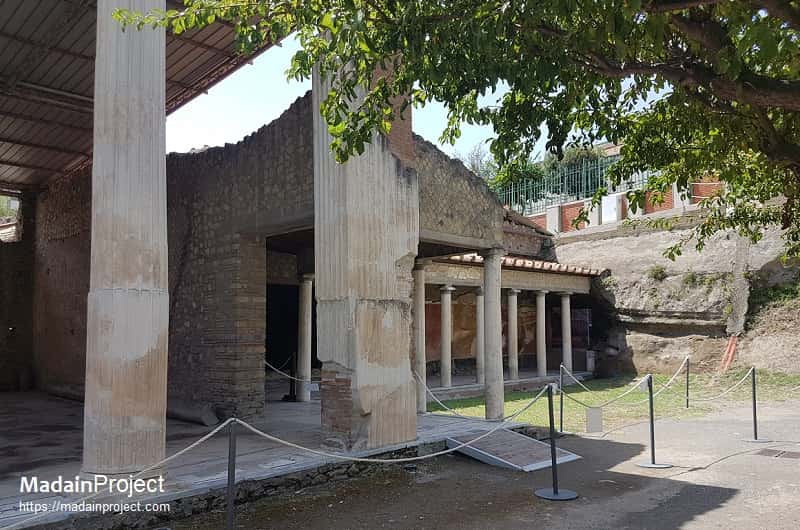
The Villa Poppaea, also known as Villa Oplontis or Oplontis Villa A, is an ancient luxurious Roman seaside villa (villa maritima) situated in Torre Annunziata, between Naples and Sorrento in Southern Italy.
It is situated some three hundred meters west of the Villa of Lucius Crassius Tertius. Buried and preserved by the eruption of Vesuvius in 79 CE, the Villa Poppaea lies about 10 meters (33 feet) below the modern ground level, similar to the nearby cities of Herculaneum, Stabiae and Pompeii. The high quality of its decorations and construction suggests it was owned by Emperor Nero. A pottery shard found at the site, bearing the name of a freedman of Poppaea Sabina, Nero's second wife, indicates that the villa may have been her residence when she was away from Rome, which gives the villa its popular name.
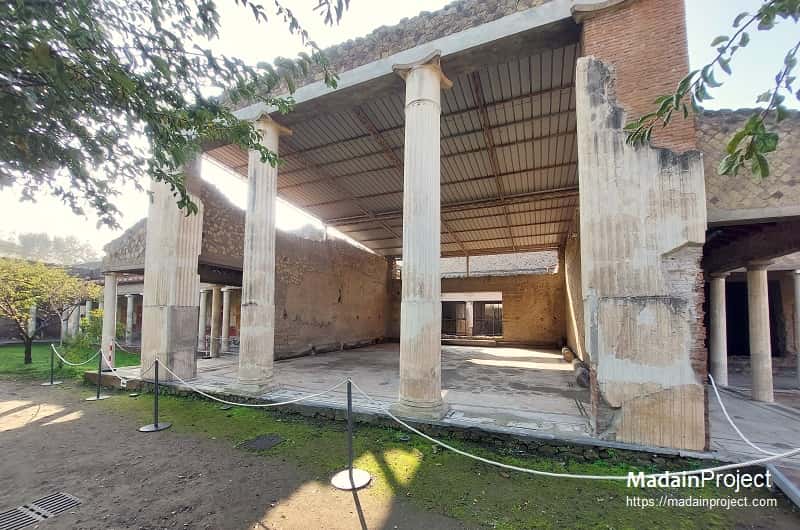
The villa was lavishly adorned with fine works of art. Its marble columns and capitals distinguish it as particularly luxurious compared to others in the region, which typically featured stuccoed brick columns. Many artifacts from Oplontis are preserved in the Naples National Archaeological Museum. However, parts of the villa that lie beneath modern structures remain unexcavated.

circa 50 BCE

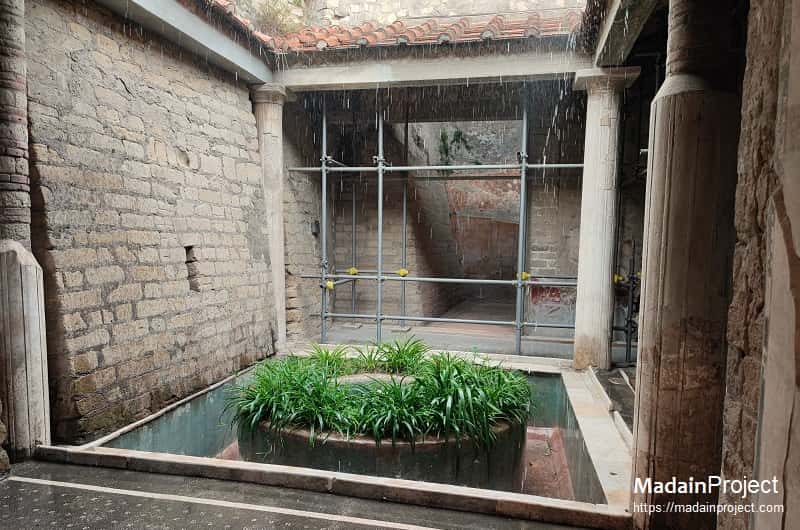
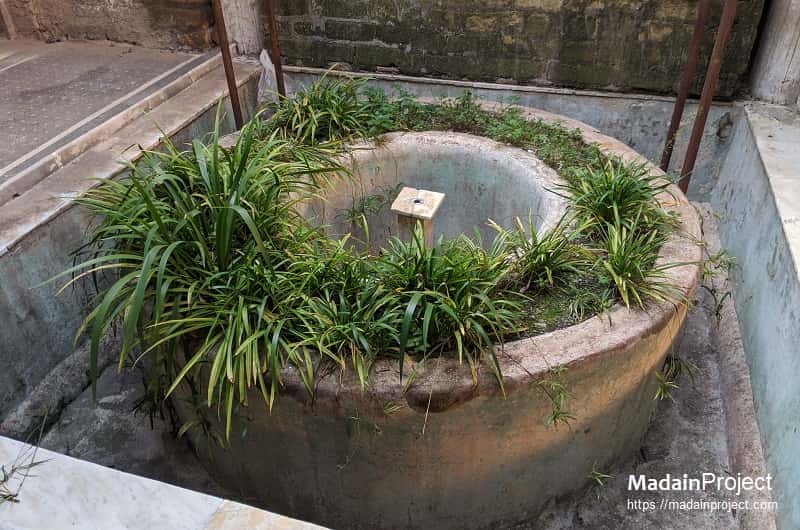
Enclosed Small Viridarium
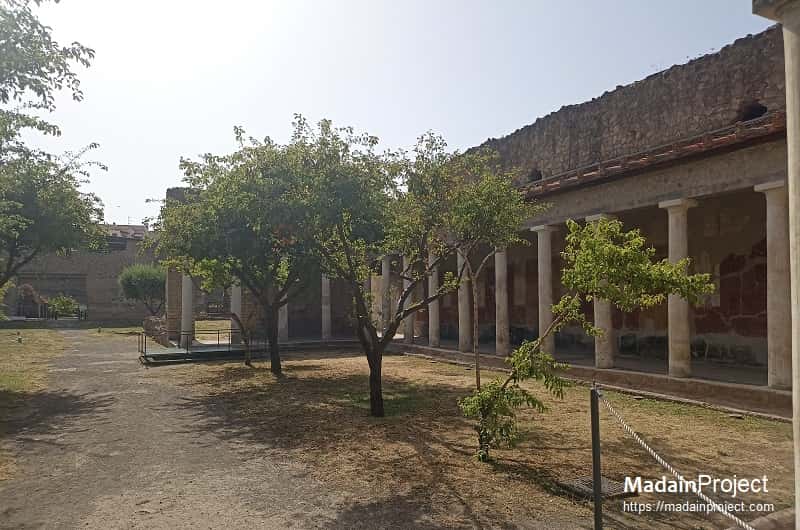
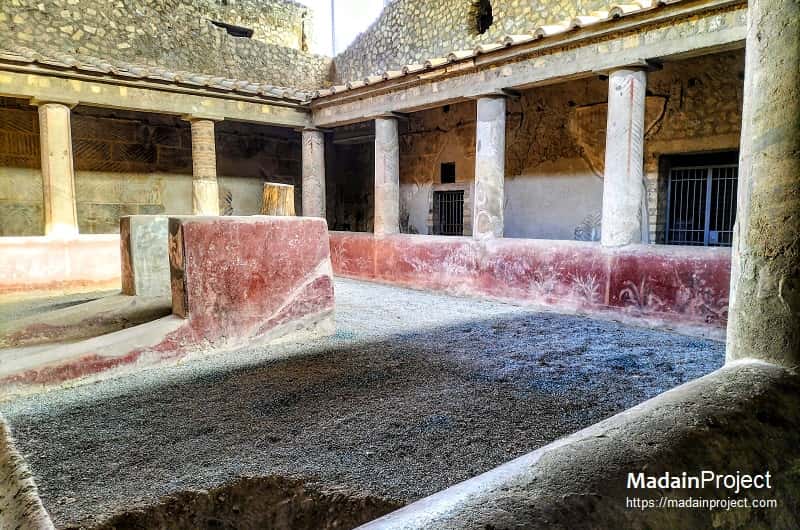
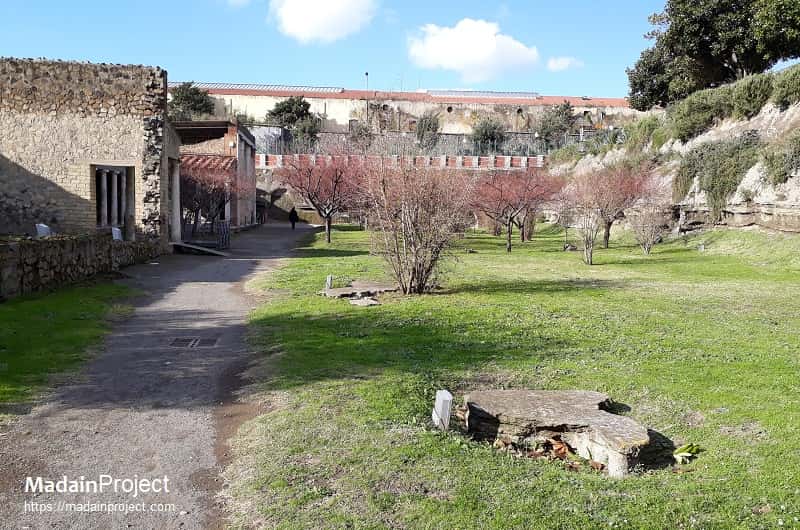
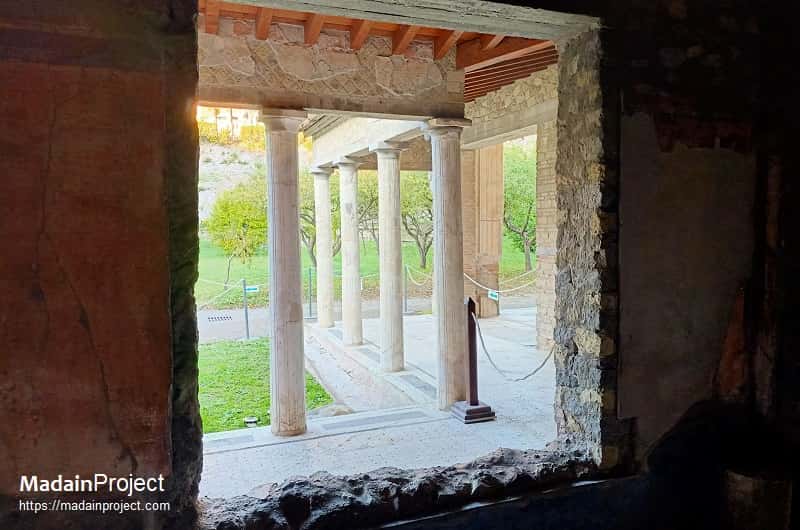
The small enclosed viridarium (garden room 87 in some scholarly plans) in the Villa Poppaea at Oplontis is a salient example of Roman garden design that integrates nature with trompe-l'œil painting techniques to create an immersive visual experience. These spaces, situated in the eastern wing of the villa, were unroofed and open to the air, designed specifically for viewing from adjacent covered dining rooms (triclinia) rather than for physical access or strolling.
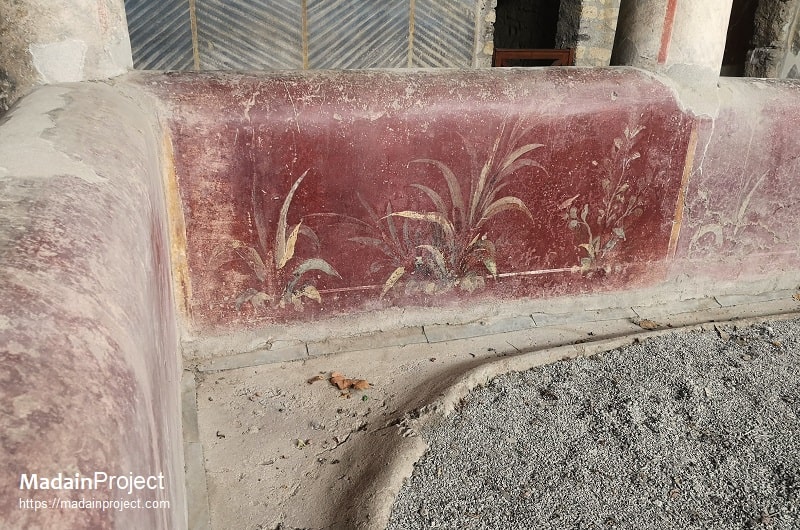
The architectural design utilizes an enfilade of windows to create alternating vistas of light and dark spaces, encouraging the viewer's eye to focus on the carefully framed garden scenes. The walls of the viridarium are decorated with Fourth Style frescoes, framed with false columns, depicting a low frieze with realistic images of plants, birds, and fountains, which served to visually extend the actual planted area within the small confines of the space. Paleobotanical studies have indicated that actual plants, possibly including boxwood hedges and ornamental flowers, were present in the garden, enhancing the illusionistic effect of a lush natural environment. This integration of real and painted elements reflects the Roman pursuit of otium (leisure), creating a contemplative and aesthetically rich environment for the villa's elite inhabitants and their guests.
circa 50 BCE
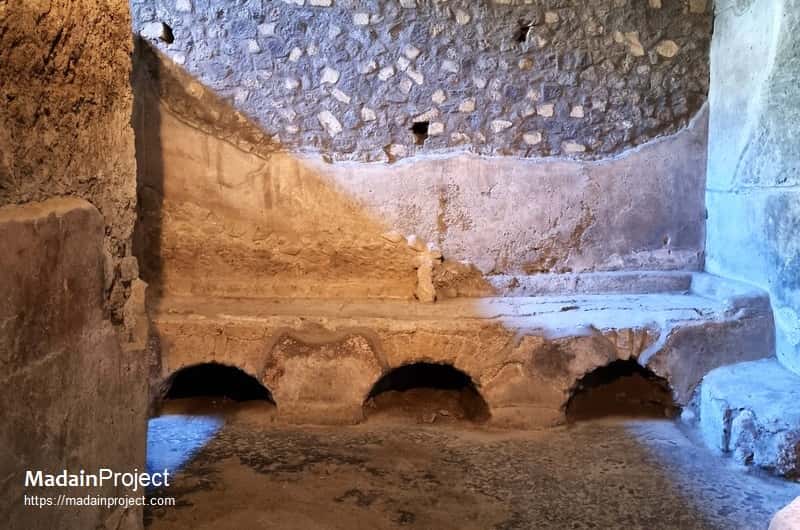
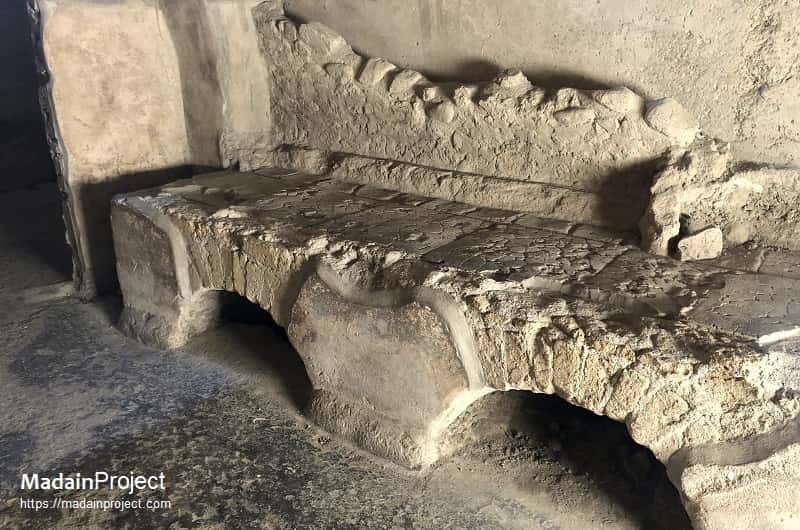
Kitchen
The kitchen (room 41 in scholarly plans) of the Villa Poppaea at Oplontis is a functional service area situated behind the main atrium, designed to support the extensive culinary demands of an elite Roman household. The primary feature is a long, fixed masonry counter (focus), which served as the hearth where charcoal and embers were placed for cooking. Beneath this counter were several small, arched compartments (inspect) used for storing wood and other fuel. Adjacent rooms functioned as pantries or storerooms, highlighting a clear spatial organization of the culinary process. The structure also indicates efficient use of space, with evidence suggesting a wooden mezzanine, now lost, which likely provided accommodation for kitchen slaves or servants. The practical design and the connection to a private bath complex, which was heated from this area, underscore the integration of essential utility services within the villa's overall luxurious and expansive plan for otium.
circa 50 BCE
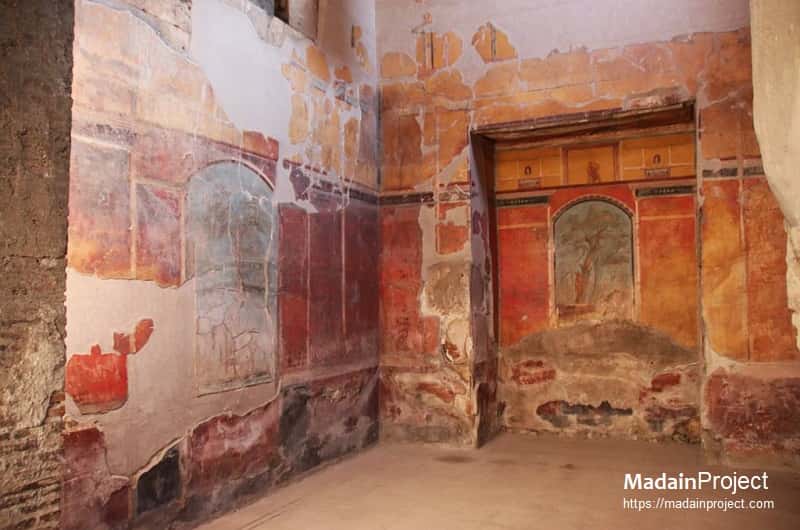
Caldarium
The frescoes in the caldarium that depict Hercules in the Garden of the Hesperides (inspect) are rendered in the "Third Style" (also known as the Ornate Style), a period dating from approximately 25 BCE to 40 CE as identified by August Mau. In this style, the emphasis on realistic perspective is set aside in favor of a flatter appearance and elongated architectural forms. These forms often create the illusion of a shrine surrounding a central scene, which frequently features mythological themes. The artistic approach focuses more on decorative elegance and intricate designs rather than on achieving a realistic depiction of space and depth.
circa 50 BCE
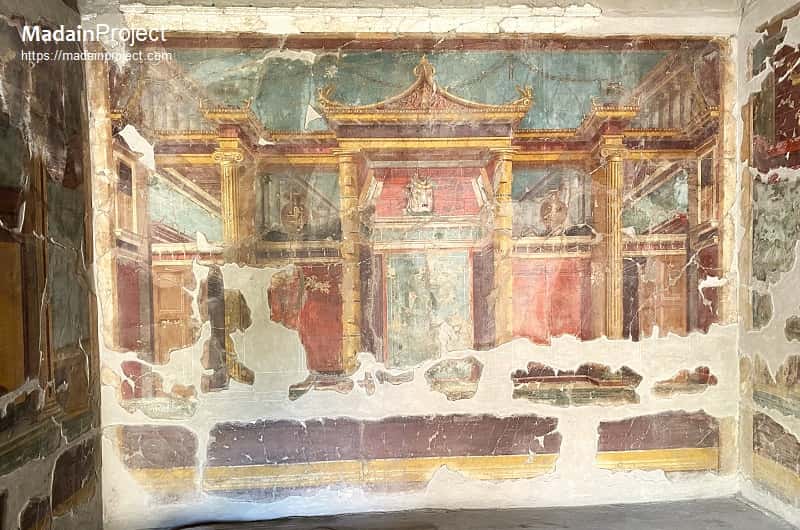
Frescoes
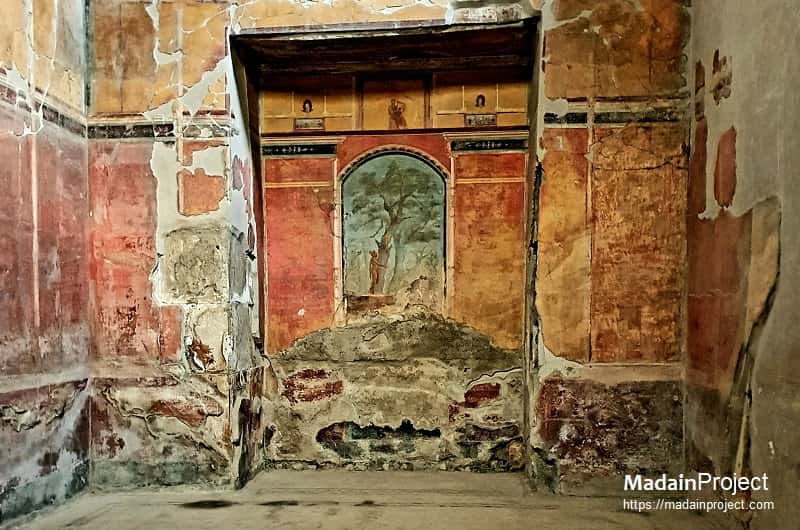
Much like the numerous frescoes preserved by the catastrophic eruption of Mount Vesuvius, the wall decorations of the Villa Poppaea are notable for their vivid form and rich color. These frescoes predominantly exemplify the "Second Style" (also known as the Architectural Style) of ancient Roman painting, a period dating approximately from 90 to 25 BCE. This classification was established by August Mau in 1899 CE. The frescoes are distinguished by their intricate details, which include illusionistic architectural elements such as trompe-l'œil windows, doors, and painted columns, creating a captivating and deceptive sense of depth and space on flat surfaces.
Signup for our monthly newsletter / online magazine.
No spam, we promise.

The Madain Project is an online archive of Abrahamic History and Archaeology.
Abrahamic History & Archaeology is the study of history and archaeology with respect to the three Abrahamic Faiths without considering the religious and theological aspects. The goal of Abrahamic History is to understand how and why the religious doctrines and behaviours have evlovled and changed over time. Searching for patterns in the evolution of significant cultural events such as the development of farming, the emergence of cities, or the collapse of major civilizations for clues of why and how these have influenced the three major Abrahamic religions.
Cloud Drive -
About -
Help -
Editorial Policy -
AI Policy -
Privacy Policy -
Contact
Madain Project: Encyclopedia of Abrahamic History & Archaeology.
Copyright MadainProject 2017 - 2026.


