
The tomb or mausoleum of Noah (Turkish: Hz. Nuh Turbesi or Nuh Peygamberin Kabri) in Nakhchivan is an Islamic funerary monument in the city of Nakhchivan, Azerbaijan, traditionally identified in local and national narratives as the tomb of the biblical and Qurʾānic prophet Noah (Nūḥ), and architecturally constituted as a mausoleum incorporating the remnants of an earlier structure within the historic core of the city’s Old Fortress (Kohna‑gala).
The Mausoleum of Noah occupies a significant place in the cultural landscape of Nakhchivan, one of the oldest continuously inhabited urban centres in the South Caucasus and the capital of the Nakhchivan Autonomous Republic. Its designation as the purported burial site of Noah reflects deep‑rooted local traditions that tie the origins of the city — and by extension the region — to the patriarchal figure of Noah, who is esteemed in Judeo‑Christian and Islamic scriptures and traditions. This association has both religious and symbolic resonance, informing pilgrimage practices as well as contemporary heritage promotion.
circa 3000-2000 BCE
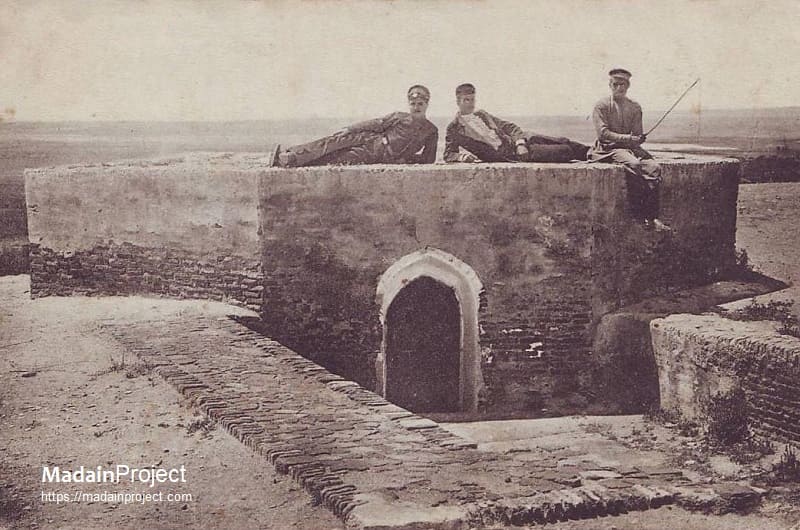
Historically, the site now known as the Mausoleum of Noah was part of a larger medieval structure located within the southern precincts of the Old Fortress area of Nakhchivan city. Early descriptions by 19th‑century Russian and European observers note that local Armenian Christian communities regarded the location as a holy site, describing an unadorned, earth‑covered building revered for its association with Noah. The structure at that time was characterized as a low, featureless tomb, and was part of a pilgrimage tradition extending into the late 19th and early 20th centuries. The original medieval edifice, with its Christian and pilgrimage associations, was destroyed under Soviet authorities in the mid‑20th century, leaving primarily the lower level or crypt of the earlier building extant beneath accumulated earth and debris.
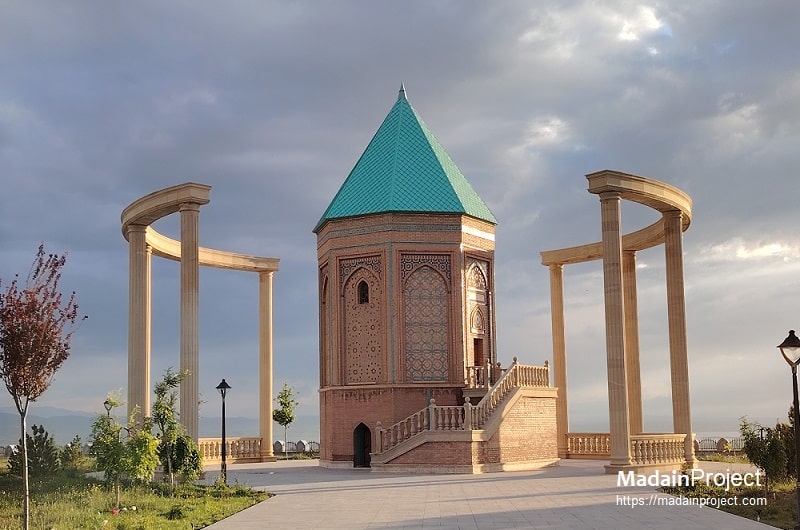
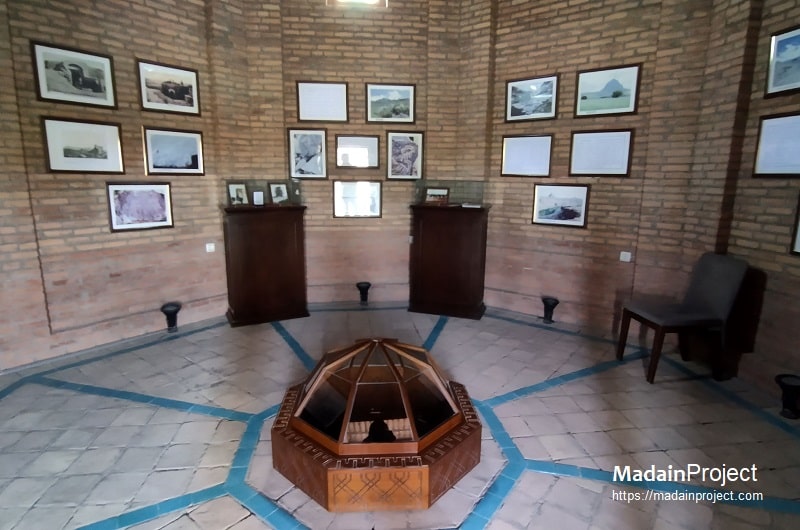
In 2006, the present mausoleum was constructed over these remains as part of a state‑led restoration project directed by authorities of the Nakhchivan Autonomous Republic. The rebuilt structure was integrated into the Nakhchivan Castle History and Architecture Museum Complex, aligning the monument with other elements of the city’s historic fabric and facilitating controlled access for visitors. The reconstruction incorporates the remnants of the original lower storey, interpreted as a crypt, and features an octagonal plan with a conical roof rising above the site. The incorporation of an octagonal glass viewing enclosure in the central section allows visitors to observe the burial vault while preserving the underlying historic fabric.
The veneration of the mausoleum in contemporary Azerbaijani Shia Islamic practice reflects both religious devotion and national cultural heritage narratives. Within local tradition, the cenotaph is associated with relics of Noah, symbolized by a central stone column in the burial chamber, though there is no archaeological evidence confirming the presence of ancient human remains, and the attribution to the biblical prophet is rooted in legend rather than historical verification. The role of the mausoleum within regional heritage promotion underscores broader efforts to link Azerbaijan’s historic sites with figures of ancient prophetic significance, enhancing the site’s visibility among pilgrims and cultural tourists alike.
circa 3000-2000 BCE

Architecturally, the Mausoleum of Noah manifests characteristics typical of medieval funerary monuments in the Caucasus, particularly those associated with Islamic crypts and tower mausoleums. The octagonal plan and conical roof are features found in regional mausoleums dating from the medieval period, though the exact date of the original construction remains debated; some sources cite an early origin as early as the 8th century, while others contend that the visible remnants more plausibly reflect later medieval phases, potentially within the broader Ildegizid era of the 12th century.
The restored mausoleum stands approximately 15.50 metres in height and measures roughly 7.50 metres in width, comprising the lower crypt, elevated mausoleum body, and superstructure roof. Construction materials include brick and stone consistent with regional building practices, and ornamentation is restrained, emphasizing geometric and structural clarity over figural decoration. Internally, the burial vault is reached via a ladder and is defined by the central column — the symbolic locus of Noah’s tomb — rather than by elaborate epigraphic or decorative programmes.
Signup for our monthly newsletter / online magazine.
No spam, we promise.

The Madain Project is an online archive of Abrahamic History and Archaeology.
Abrahamic History & Archaeology is the study of history and archaeology with respect to the three Abrahamic Faiths without considering the religious and theological aspects. The goal of Abrahamic History is to understand how and why the religious doctrines and behaviours have evlovled and changed over time. Searching for patterns in the evolution of significant cultural events such as the development of farming, the emergence of cities, or the collapse of major civilizations for clues of why and how these have influenced the three major Abrahamic religions.
Cloud Drive -
About -
Help -
Editorial Policy -
AI Policy -
Privacy Policy -
Contact
Madain Project: Encyclopedia of Abrahamic History & Archaeology.
Copyright MadainProject 2017 - 2026.


