
Aegae (Αἰγαί) was the original capital of the ancient Macedonian kingdom, functioning as its dynastic, religious, and ceremonial center from the early Archaic period until the administrative capital shifted to Pella, while retaining its primary role as the royal burial place of the Macedonian kings.
Located in lower Macedonia at the foothills of the Pierian Mountains, Aegae corresponds to the modern site of Vergina in northern Greece. Unlike later Macedonian capitals that emphasized administration and commerce, Aegae embodied dynastic legitimacy. It was the place where Macedonian kings were acclaimed, buried, and honored through ritual and monumental architecture. The city’s prominence derived not from urban density but from its symbolic authority, expressed through its palace complex, sacred spaces, and extensive royal necropolis. Archaeological discoveries in the twentieth century confirmed Aegae as a central locus of Macedonian political ideology and material culture, especially during the reigns of Philip II and Alexander III.
circa 337 BCE

Aegae emerged as the principal seat of the Macedonian royal house, the Argead dynasty, traditionally traced to Perdiccas I during the Early Iron Age of the first millennium BCE. Ancient literary sources, including Herodotus and Thucydides, identify Aegae as the ancestral capital where kings ruled and were buried according to established custom. By the fifth century BCE, while political administration increasingly gravitated toward ancient Pella due to its access to maritime routes, Aegae remained the ceremonial heart of the kingdom.
The city reached its architectural and political zenith in the fourth century BCE under Philip II. Philip transformed Aegae through the construction of a monumental palace complex that articulated Macedonian kingship in stone and space. In 336 BCE, Aegae became the setting of one of the most consequential events in Greek history: the assassination of Philip II during a public festival celebrating the marriage of his daughter Cleopatra to Alexander of Epirus. The assassination occurred in the city’s theater and directly preceded the accession of Alexander III, later known as Alexander the Great. Despite the empire-building focus of Alexander’s reign, Aegae continued to function as the burial ground of the royal house, reinforcing its enduring dynastic role even as political power expanded far beyond Macedonia.
Following the Roman conquest of Macedonia region in the second century BCE, Aegae declined and was gradually abandoned. Its location faded from memory until systematic archaeological work in the nineteenth and twentieth centuries re-established its identity and historical significance.
circa 337 BCE
Necropoles
The necropoles of Aegae constitute one of the most important burial complexes in the ancient Greek world. The Great Tumulus, a massive artificial mound, enclosed several royal tombs, including the richly furnished Tomb II, widely identified (though disputed by some) as the burial of Philip II. Discovered intact in 1977 by CE the archaeologist Manolis Andronikos, this tomb contained gold regalia, weapons, armor, and painted wall decorations, offering unparalleled insight into Macedonian royal ideology, funerary practice, and craftsmanship. The necropolis demonstrates a deliberate emphasis on monumental burial as a means of reinforcing dynastic continuity and legitimacy.
circa 337 BCE

Royal Palace
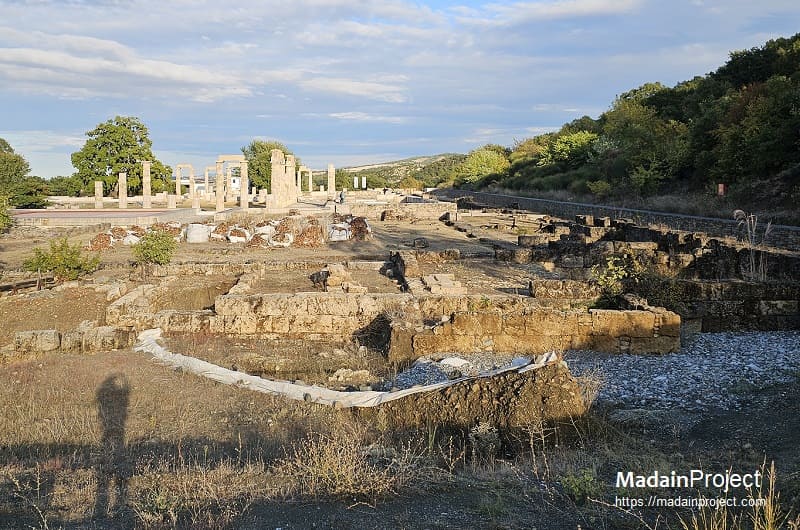
The royal palace of Aegae, situated on a commanding terrace overlooking the surrounding plain, was among the largest and most sophisticated buildings in classical Greece. Constructed primarily during the reign of Philip II, the palace combined residential, administrative, and ceremonial functions. Its layout featured a vast peristyle courtyard, banquet halls used for symposia, and richly decorated floors with pebble mosaics. The architectural scale and refinement of the palace articulated the transformation of Macedonian kingship into a hegemonic power within the Greek world, blending local traditions with pan-Hellenic architectural language.
circa 337 BCE
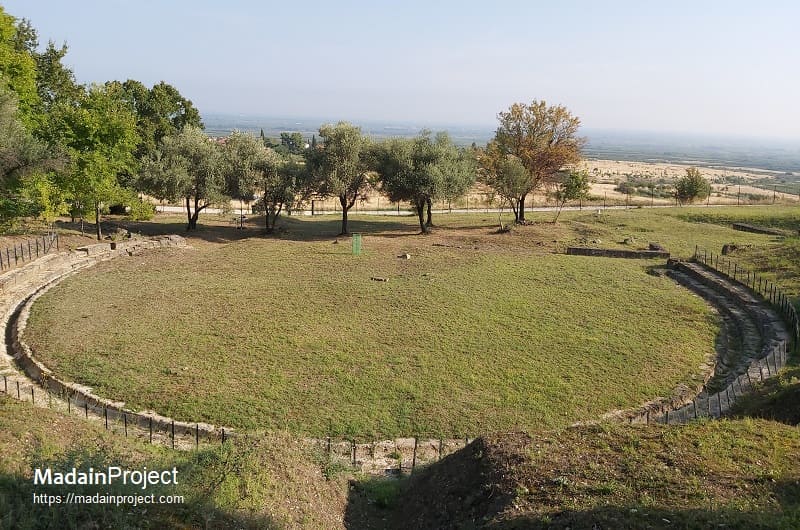
Theater
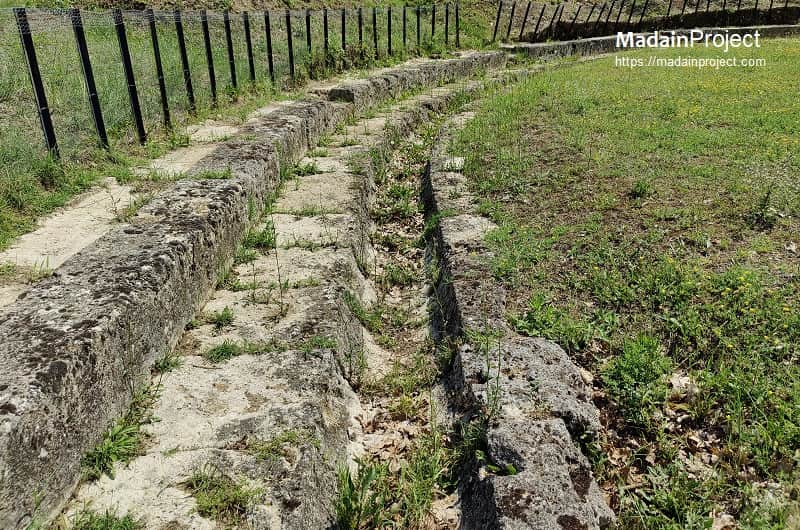
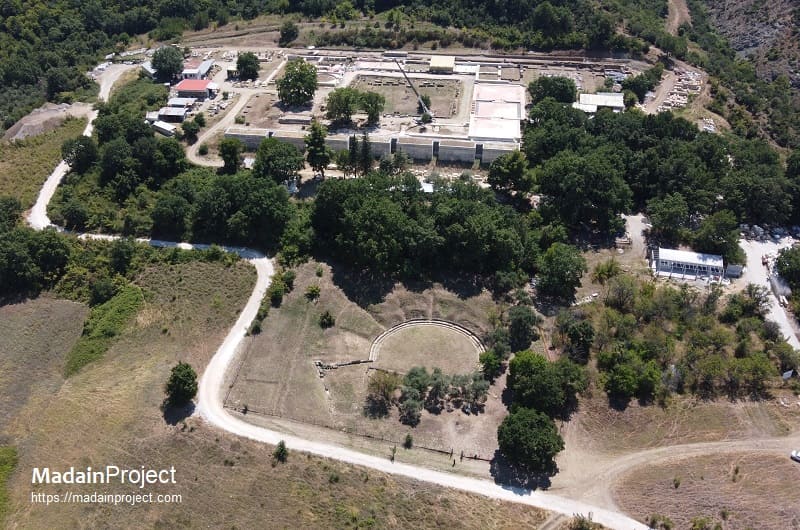
The ancient theater of Aegae was closely integrated into the palace complex and played a central role in public ceremonial life. It was here that Philip II was assassinated during a festival attended by Macedonian nobles and foreign envoys. The theater functioned not merely as a performance space but as a political arena where royal authority was displayed and contested before the assembled elite. Its proximity to both palace and necropolis underscores the interconnectedness of ritual, power, and mortality in the spatial organization of Aegae.
Signup for our monthly newsletter / online magazine.
No spam, we promise.

The Madain Project is an online archive of Abrahamic History and Archaeology.
Abrahamic History & Archaeology is the study of history and archaeology with respect to the three Abrahamic Faiths without considering the religious and theological aspects. The goal of Abrahamic History is to understand how and why the religious doctrines and behaviours have evlovled and changed over time. Searching for patterns in the evolution of significant cultural events such as the development of farming, the emergence of cities, or the collapse of major civilizations for clues of why and how these have influenced the three major Abrahamic religions.
Cloud Drive -
About -
Help -
Editorial Policy -
AI Policy -
Privacy Policy -
Contact
Madain Project: Encyclopedia of Abrahamic History & Archaeology.
Copyright MadainProject 2017 - 2026.


