
The Ophel or Ophlas meaning fortified hill or risen area, is the biblical name given to a certain part of a settlement or city that is elevated from its surroundings. In the Bible the Ophel refers to the elevation in two cities: the City of David in the Old City of Jerusalem, and at Samaria, the ancient capital of the Kingdom of Israel.
Ophel is a term historically used in Semitic languages, particularly in Hebrew, to denote a fortified or elevated area within a city, often associated with defense, authority, or prominence. In linguistic and textual studies, the word is derived from a root conveying the sense of swelling, rising, or bulging, reflecting its spatial connotation as a raised or prominent part of urban landscapes. Its appearances in ancient texts—ranging from biblical references to classical descriptions of urban structures—demonstrate that the term functioned both literally, to describe topographical features, and metaphorically, to indicate zones of strategic or symbolic importance.
As a conceptual designation, Ophel signifies more than mere elevation; it encapsulates the interrelation between physical geography and sociopolitical power. In urban contexts, areas referred to as ophel were typically distinguished from ordinary residential districts by their fortification, commanding views, or proximity to central authorities. This dual role of the ophel as both a defensive stronghold and a locus of governance or ceremonial activity reflects broader patterns in ancient urban planning, where elevated precincts were deliberately constructed to assert control, facilitate surveillance, and embody hierarchical authority.
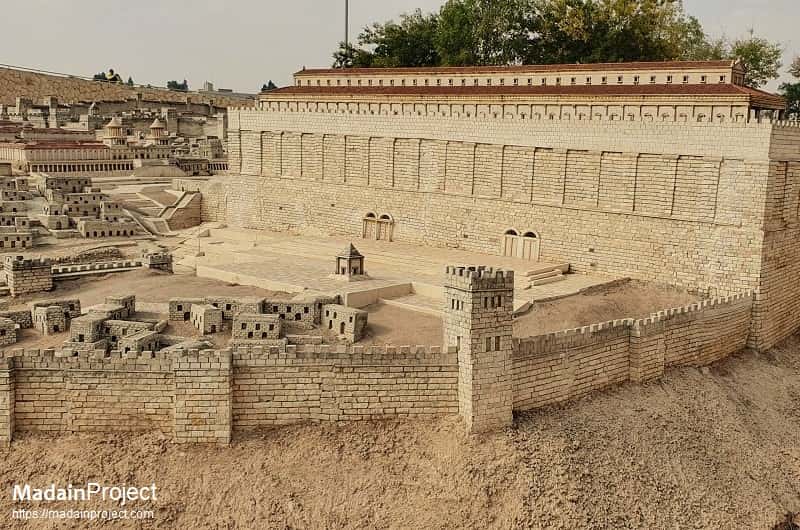
circa 900 BCE
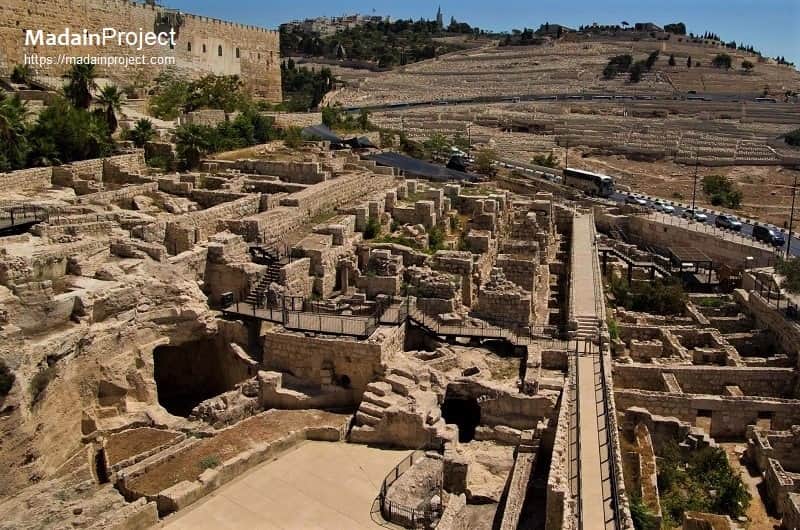
Jerusalem
The location of the Jerusalem Ophel of the Hebrew Bible is easy to make out from the references from 2 Chronicles 27:3; 33:14 and Nehemiah 3:26, 27: it was on the eastern ridge, which descends south of the Temple, and probably near the middle of it. This area may also be the location of Acra, the fortified compound built by Seleucid emperor Antiochus Epiphanes following his sack of the city in 168 CE.
Signup for our monthly newsletter / online magazine.
No spam, we promise.

The Madain Project is an online archive of Abrahamic History and Archaeology.
Abrahamic History & Archaeology is the study of history and archaeology with respect to the three Abrahamic Faiths without considering the religious and theological aspects. The goal of Abrahamic History is to understand how and why the religious doctrines and behaviours have evlovled and changed over time. Searching for patterns in the evolution of significant cultural events such as the development of farming, the emergence of cities, or the collapse of major civilizations for clues of why and how these have influenced the three major Abrahamic religions.
Cloud Drive -
About -
Help -
Editorial Policy -
AI Policy -
Privacy Policy -
Contact
Madain Project: Encyclopedia of Abrahamic History & Archaeology.
Copyright MadainProject 2017 - 2026.


