
The Masjid al-Taneem (مسجد التنعيم), also known as Masjid Ayesha, is a mosque in the al-Hil area about 5 miles (about 7 kilometers) away from the Holy Kaaba, in at-Taniem, which is near Mecca, it is the boundary of Haram therefore pilgrims can put on Ihram.
This is not the Miqat so it is not compulsory to wear Ihram here. Nowadays It is the nearest and most convenient location to enter into Ihram for those residing within the boundaries of the Haram. Residents of Mecca who wish to perform Umrah visit this mosque in order to enter into the state of Ihram so that the condition of travelling for Umrah is fulfilled, before returning back to the city of Mecca (for Umrah).
The mosque covers an area of approx. 6000 square meters. The facilities for baths, ablution and changing, available for pilgrims and those who come to offer regular prayers are situated on the east side of the mosque.

circa 620 CE

This mosque is also known as Masjid -e- Ayesha (the mosque of Aiesha) since Muhammad's wife Ayesha had put her Ihram (restriction on pilgrimage) from this place once. This was allowed by the prophet as a special case when Ayesha could not complete her umra on account of being in an impure state due to menstrual period. Ayesha's brother who accompanied her to Taneem and back did not perform another umra along with his sister, understanding that it was a special allowance made for Ayesha or any woman who happens to becoming impure due to her menstrual period.
circa 1990s CE
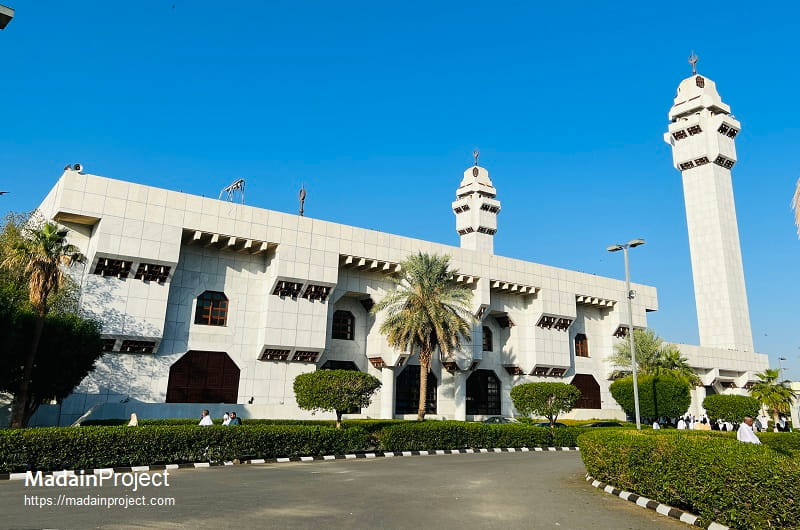
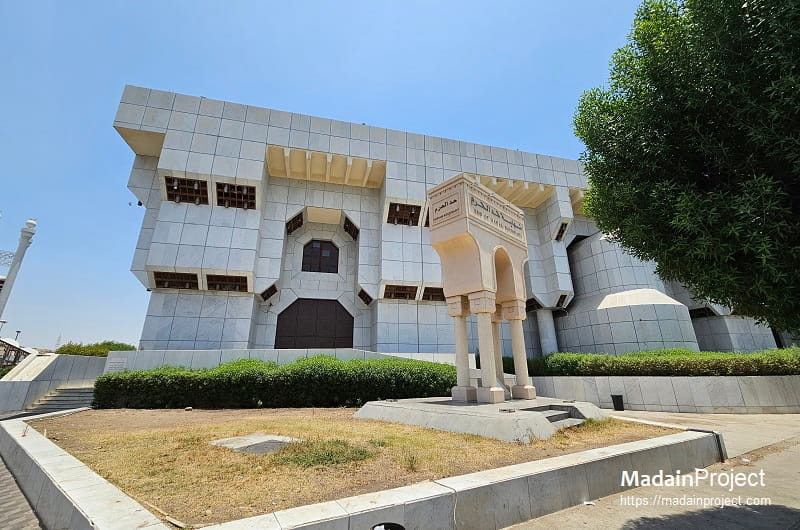
The current structure, which represents a modern reconstruction completed during the reign of King Fahd bin Abdulaziz, was built at a cost of approximately 100 million Saudi Riyals. The mosque occupies a total site area of 84,000 square meters, though the primary prayer building itself covers a footprint of 6,000 square meters. Architecturally, the building is defined by its synthesis of modern Saudi-Islamic design and traditional decorative motifs, featuring a rectangular plan that serves an estimated capacity of 15,000 worshippers.
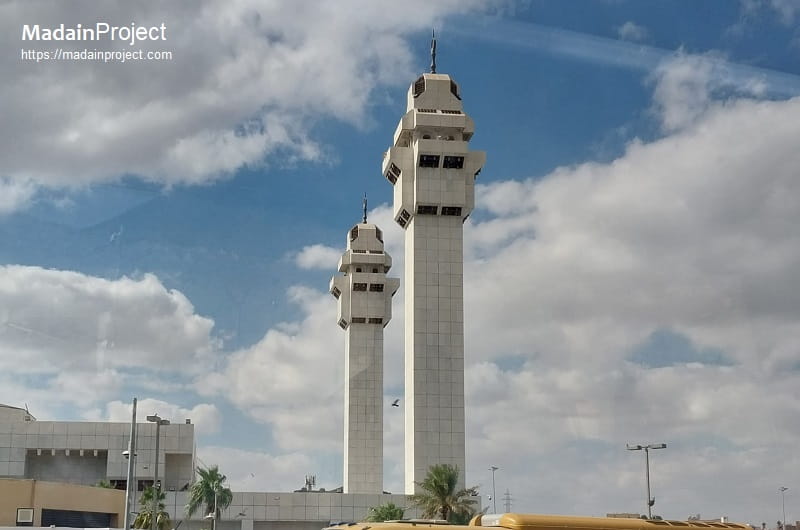
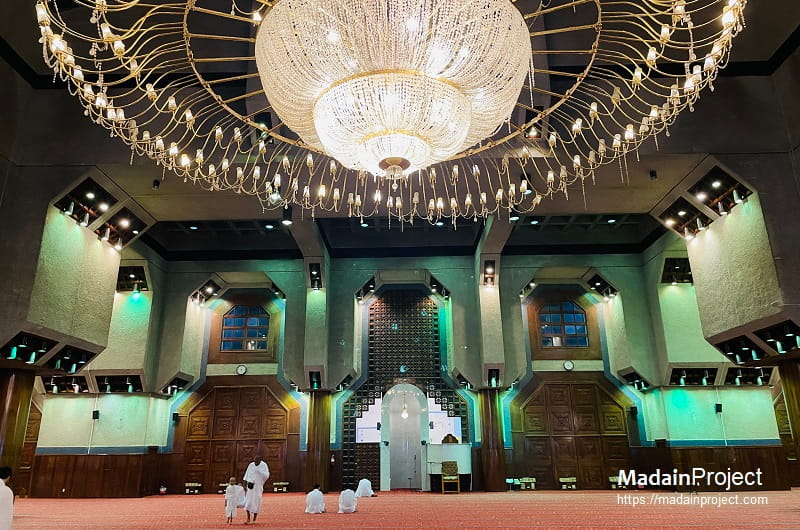
The vertical profile of the mosque is dominated by two soaring minarets (inspect) that serve as regional visual markers for the Miqat boundary. Its exterior is characterized by high, arched windows and grand wooden doors that allow for substantial natural lighting and ventilation in the hot desert climate. Structurally, the mosque utilizes angular white stone masonry and modern reinforced concrete, with its interiors finished with luxury carpets and intricate Islamic calligraphy.
As a specialized facility for Ihram (ritual preparation), the architecture incorporates extensive supporting infrastructure, including comprehensive bath and ablution facilities, dedicated changing rooms for both men and women, and shaded outdoor courtyards to manage the heavy flow of pilgrims.

Signup for our monthly newsletter / online magazine.
No spam, we promise.

The Madain Project is an online archive of Abrahamic History and Archaeology.
Abrahamic History & Archaeology is the study of history and archaeology with respect to the three Abrahamic Faiths without considering the religious and theological aspects. The goal of Abrahamic History is to understand how and why the religious doctrines and behaviours have evlovled and changed over time. Searching for patterns in the evolution of significant cultural events such as the development of farming, the emergence of cities, or the collapse of major civilizations for clues of why and how these have influenced the three major Abrahamic religions.
Cloud Drive -
About -
Help -
Editorial Policy -
AI Policy -
Privacy Policy -
Contact
Madain Project: Encyclopedia of Abrahamic History & Archaeology.
Copyright MadainProject 2017 - 2026.


